Bats at Center Parcs, Sherwood Forest

Center Parcs in Sherwood Forest has consistently had very high numbers of bats, and have 8 of the 12 Nottinghamshire species currently using or having previously used the site. Specifically, they regularly have maternity roosts of soprano pipistrelles in the buildings during the summer (sometimes 300+ bats in one roost), as well as regular sightings of common pipistrelle, brown long-eared and Daubenton’s.

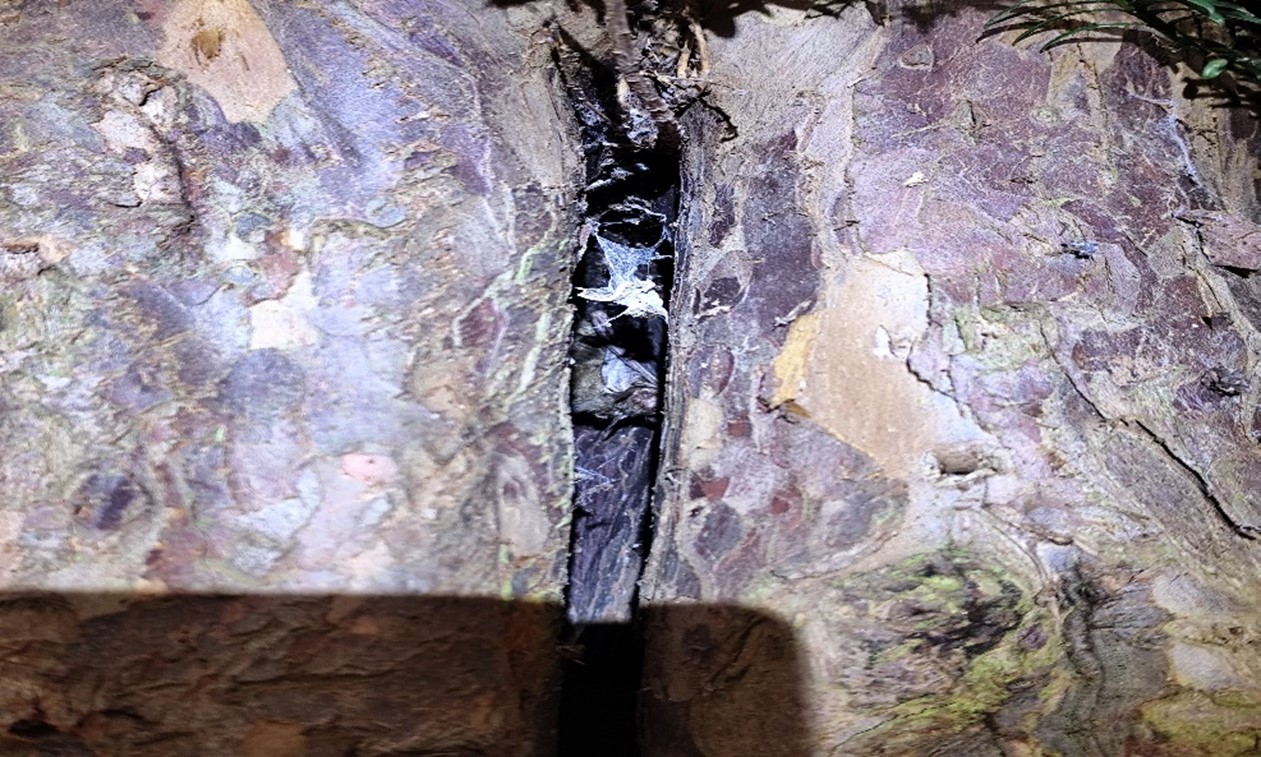
Brown Long Eared Bat hibernating in a Yew Tree

During their regular bat box checks with licensed volunteers, they also have had great numbers of Leisler’s and a couple of findings of Natterer’s. As Center Parcs is a holiday Village, and routine refurbishments repairs are required on buildings regularly, as well as forestry operations, the Senior Conservation Ranger, Kate Doull, remains a key person involved in this process to ensure our bat roosts and potential bat habitats are protected.

[Many Thanks to Kate Doull from Center Parcs, Sherwood Forest, for providing the news and photo for this blog]

News from the Welbeck Estate

The Welbeck Estate are currently working with the Environment Agency on a study which models the feasibility of re-naturalising the River Poulter at Cuckney, where it is currently disconnected from its floodplain.  This study will assess factors such as flood risk, to ascertain the possibility of a river restoration scheme here to better connect the Poulter to the floodplain, helping to improve natural processes, and it would be hoped to also improve fish passage.

The Welbeck Estate

Alongside this work, many areas along the River Poulter were once home to functioning water meadows, including the Cuckney water meadows just downstream of the location of this study. The Estate are currently mapping the biodiversity value of these habitats to learn more about the species being supported on these sites.

[Many Thanks to Amy Taylor from the Welbeck Estate for providing the news and image for this blog]

Growing Together: Rushcliffe’s Tree Planting Success

In 2025, Rushcliffe Borough Council worked with local partners and residents to make a big impact through a free tree planting scheme. Here’s how they have been growing together:

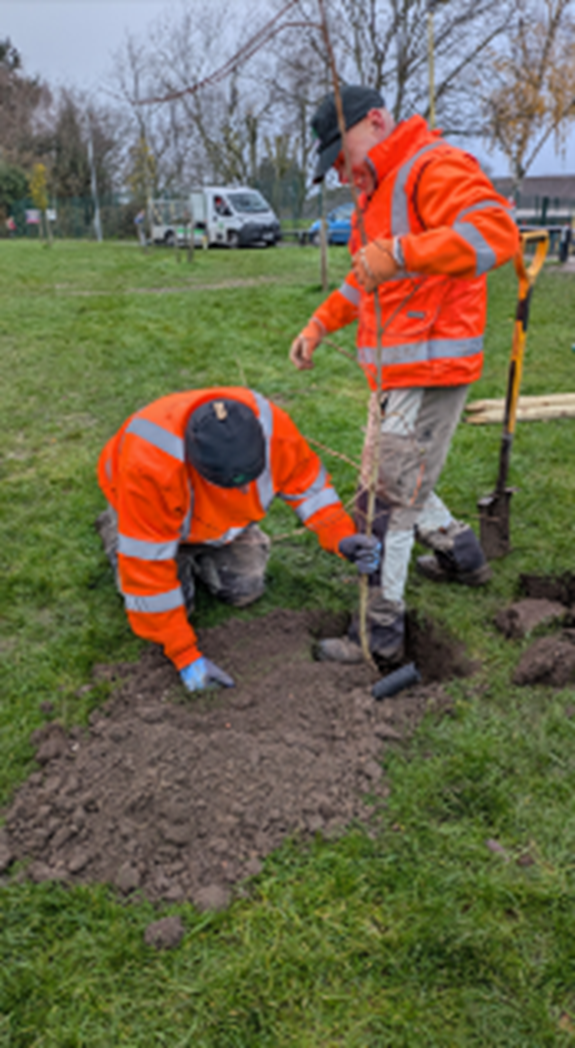
Steve & Chris from Streetwise planting a Field Maple at Greythorn Drive Park West Bridgford.

Community Free Tree Planting Scheme 2025

At the beginning of December 2025, Streetwise delivered and planted 75 trees across six local parish councils, two community groups, and at a Rushcliffe Borough Council owned site.  Streetwise will undertake a two-year watering service (2026-27) to help these trees thrive in future years.

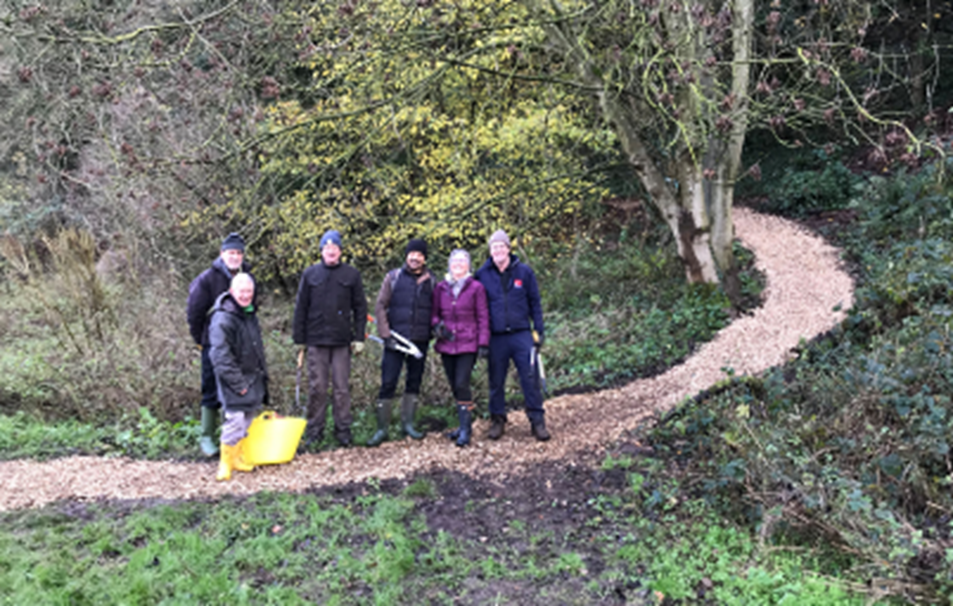
Members of the Radcliffe Nature Conservation Group, one of the community groups that received free trees.

Resident Free Tree Scheme 2025

In October last year, Rushcliffe Borough Council invited residents to take part in their free tree giveaway. During National Tree Week (22-30 November 2025), 1,000 householders received their trees, supplied by Alba Trees that were delivered straight to their doors by Royal Mail.

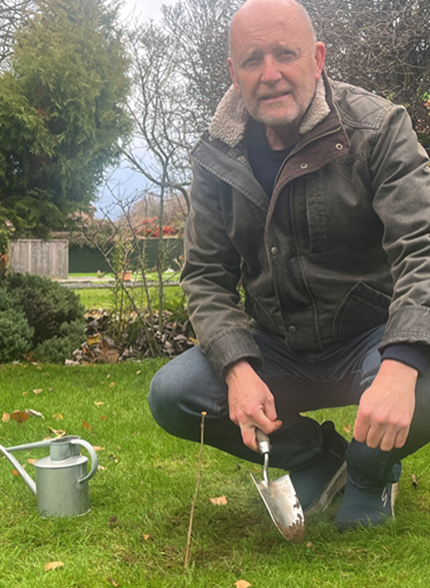
David a local resident & Tree Warden planting a wild cherry in his garden.

Tree Wardens – Local Champions

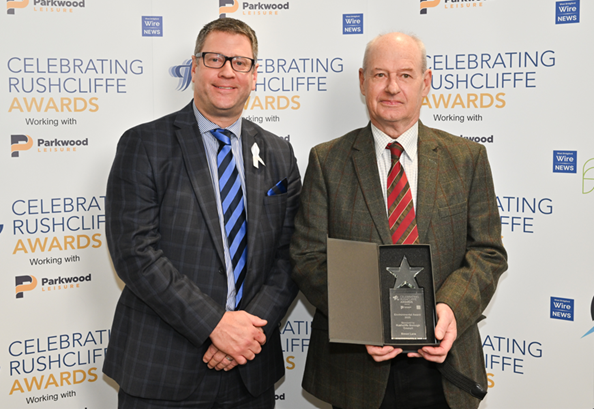
Rushcliffe Borough Council’s Tree Wardens are volunteers who champion trees in their communities. They survey for pests and diseases, plant and care for trees, and lead local initiatives. In February 2026, 16 Parish/Town Councils had appointed Tree Wardens.  Rushcliffe Borough Council were proud to celebrate their work at the Celebrating Rushcliffe Awards in December last year, where Simon Lane, Tree Warden for Hickling & Hickling Pastures, won the Environmental Group Award.

Celebrating Rushcliffe Awards 2025- RBC CEO Adam Hill presenting Simon with the Environment Award.

Looking Ahead

These schemes are just the beginning. Rushcliffe Borough Council has acquired a 21.54-hectare site at Upper Broughton, now named Rushcliffe Wood, which will feature 13 hectares of new woodland with over 12,700 native trees and 3,000 shrubs. This landmark project will complement our community planting efforts and help offset carbon for years to come.

Want to get involved? Keep an eye out for future tree and wildflower schemes, and learn more about the nature initiatives at Rushcliffe Borough Council

[Many Thanks to Sandrina Finocchio-Daniels and Paul Phillips from Rushcliffe Borough Council for providing the news and images for this blog]

Gedling House Woods and Meadows

The Friends of Gedling House Woods have been undertaking habitat management work at Gedling House Woods and Gedling House Meadow Local Nature Reserves to enhance the site’s biodiversity.

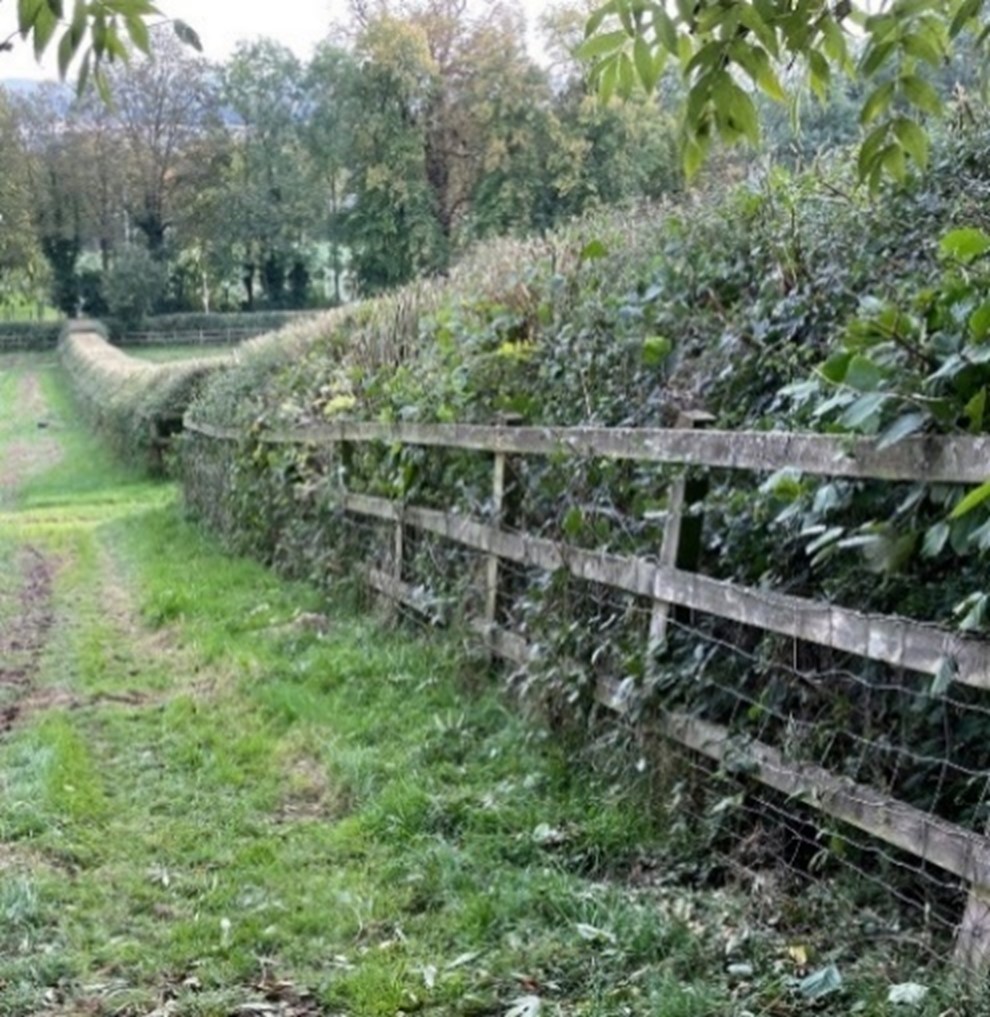
The work has involved improving the woodland habitat by thinning out the woodland by removing/coppicing some of the trees and shrubs to allow an increase in light reaching the ground encouraging a greater diversity of woodland ground flora. In addition, the group has also adopted a lighter approach to cutting the meadow hedges, which are now maintained at approximately 2 metres by 2.5 metres, providing an improved resources for wildlife creating a great feature to allow species to move safely around the site.

Meadow Hedges have now been cut more sympathetically in order to work for local wildlife

Along the roadside edge, volunteers have been selectively thinning younger trees to promote a mix of smaller, more manageable species in marginal areas, while gradually removing those that would grow much taller. In addition, self‑seeded, poor‑quality sycamores have been removed from a 100‑year‑old hawthorn copse to prevent them from spreading into the neighbouring wildflower meadow.

To further support meadow diversity, an extra flock of sheep has been introduced to the site to graze the secondary growth, helping to reduce the greensward and create more favourable conditions for wildflowers.

[Many Thanks to Sarah Spotswood from Gedling Borough Council, for providing the news and photo for this blog]

Dormice in Nottinghamshire!

Record numbers of Dormice have been recorded in Nottinghamshire woodlands, making 2025 an exceptional year!  Early season breeding helped to boost autumn numbers as Dormouse born early in the year were then able to go onto breed in September / October. Numbers in other areas in the county recovered after a poor 2024 season.

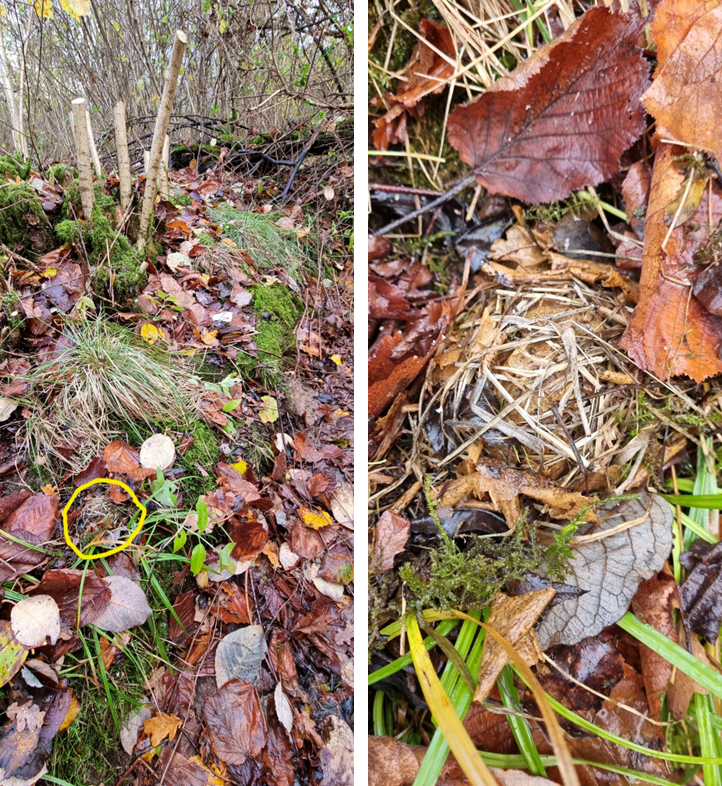
(L to R) Yellow marking shows nest in situ; Close up of hibernation nest

In 2020, a male Dormouse was recorded in a nestbox in a privately owned woodland, however, no Dormouse evidence has been recorded since.  The boxes were checked in October of this year by a licenced dormouse surveyor from NDG, recording a very chubby female Dormouse in torpor.  The woodland owner, was delighted to hear that Dormice are still present in the woodland and has begun a programme of woodland management, including hazel coppicing, canopy opening, and oak planting.

Currently, the Dormouse group is in the midst of their winter programme, with monthly sessions focussed on assisting the Nottinghamshire Wildlife Trust rangers to complete this year’s coppicing. During one of the sessions, a group member was lucky enough to discover a dormouse hibernation nest during a standard fingertip search around the coppice stool they were working on. The nest was confirmed as occupied after listening out for the tell-tale sounds of Dormouse snores!

[Many Thanks to Lorna Griffiths from the Nottinghamshire Dormouse Group, for providing the news and photos for this blog]

Spalford Warren & Volunteer Conservation Work

Work across Nottinghamshire Wildlife Trust’s (NWT) reserves has continued at pace as they manage, restore, and enhance some of the county’s rarest habitats. Recent tasks have included aftermath grazing on the grasslands which are Sites of Special Scientific Interest (SSSI) at Ashton’s Meadow and Besthorpe Meadow, along with ongoing work to create wood pasture at Idle Valley Nature Reserve.

Aftermath grazing is the practice of bringing livestock onto a meadow after the hay has been cut, allowing them to graze the fresh regrowth. This helps keep nutrient levels low, prevents scrub encroachment, and maintains the open, species‑rich structure that many rare plants and insects depend on.

The livestock are currently conservation-grazing a rich mosaic of habitats: calcareous, neutral, and acid grasslands, as well as fen and heathland sites. Their grazing plays a vital role in maintaining these landscapes for the specialist wildlife that depends on them.

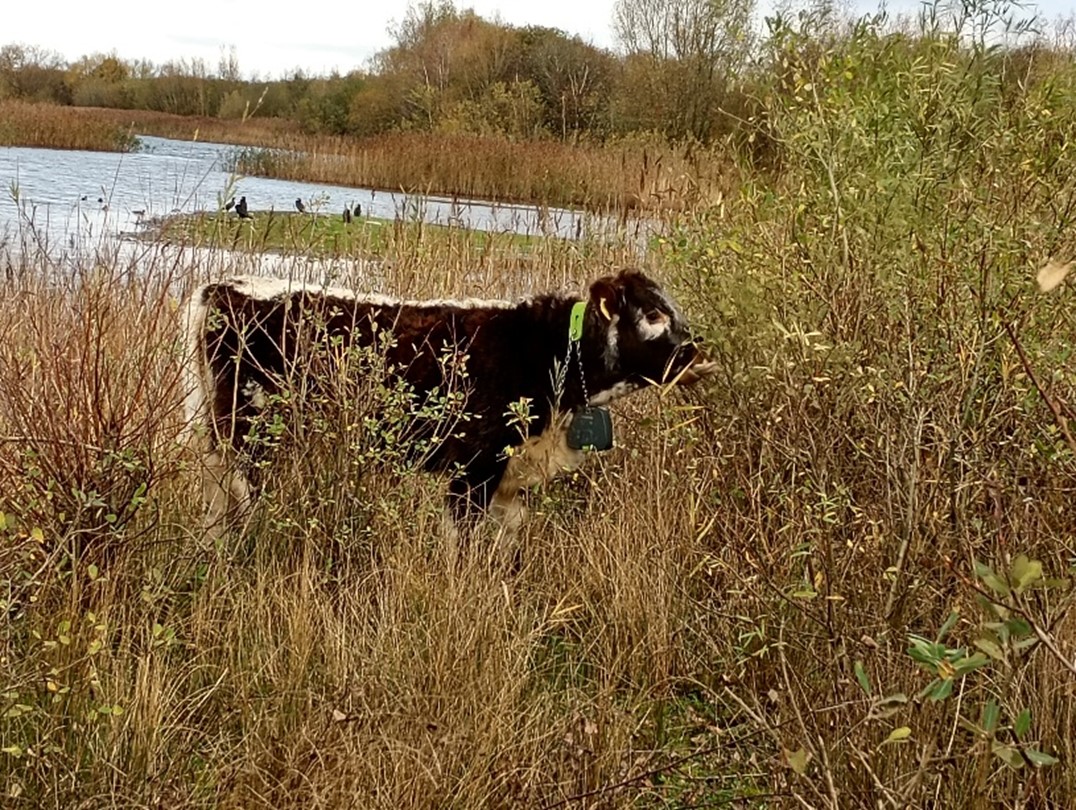
A longhorn calf tackling willow in the beaver area

This year NWT is especially pleased to have established a dedicated volunteer group for Spalford Warren SSSI, a site which is home to rare aeolian sand heathland. This is a type of heathland shaped by the wind, formed through the movement and deposition of sand and other fine particles. These landscapes are typically open and sparsely vegetated, occurring where little plant cover exists to stabilise the shifting sands. Over time, as vegetation establishes, these habitats become more stable and resilient, providing a secure environment for both the sand and the specialist wildlife that depends on them.

NWT are also delighted to highlight the amazing contribution of their fantastic volunteers. Their dedication is essential to delivering the reserve management work, and their enthusiasm and support are already making a real difference.

[Many Thanks to Janice Bradley and Erin McDaid from Nottinghamshire Wildlife Trust for providing the news and images for this blog]

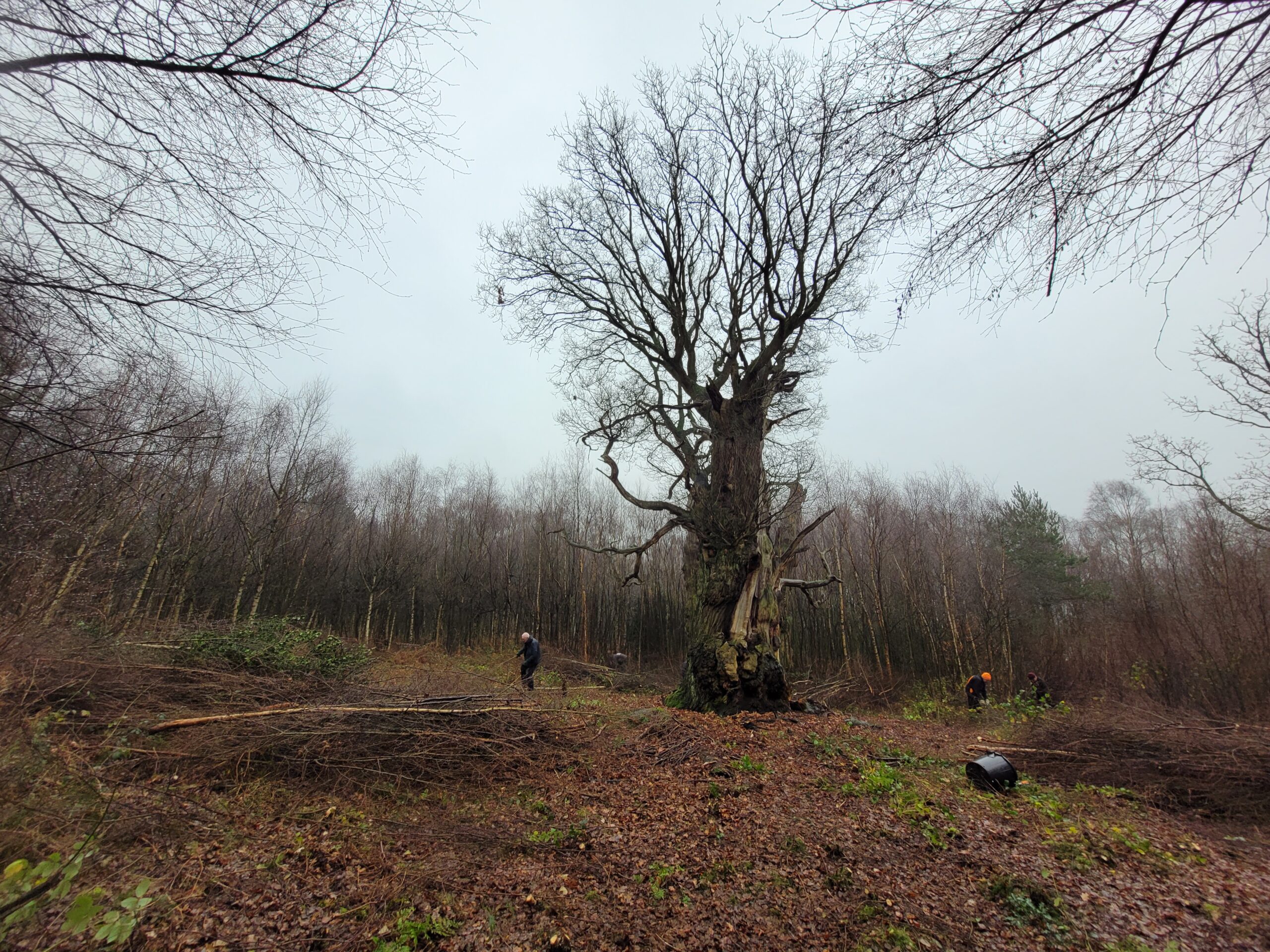
Haloing Veteran Oaks in Sherwood Forest

In winter 2025, volunteers working with Forestry England focused their attention on haloing veteran oaks in Sherwood Forest. They made good progress however there is still plenty to do.  This work on the smaller trees and shrubs around the trees is happening ahead of further works that are planned with chainsaws on larger trees and shrubs. This work will increase the space around the veteran trees reducing pressure from the surrounding vegetation.

Haloing (also known as halo clearance) is the removal of the surrounding vegetation from veteran tree canopies. This process is undertaken in order reduce competition for resources. Where branches have been shaded by other trees and vegetation, they will die off, so this work is essential to increase the trees ability to get light, water and nutrients so it can make more food to maintain itself.

Other benefits include improved soil conditions and reduced stress to aid the trees vitality all while creating habitat for lichens, fungi, birds and invertebrates helping to restore an ecological balance typical of a more open forest environment.

[Many Thanks to Amy Chandler from Forestry England for providing the news and images for this blog]

Cultivating the Future: The Friends of Wollaton Park Tree Nursery

At the edge of Wollaton Park, a quiet transformation is taking root. For many, Wollaton is synonymous with its historic Hall and iconic deer herd, but a new, vital chapter of the park’s story is being written by a dedicated team of volunteers working in the shadow of the Walled Garden.

The Friends of Wollaton Park (FoWP) tree nursery project is a long-term commitment to enhancing the biodiversity and climate resilience of our cherished green space.

From Small Saplings to a Greener Future
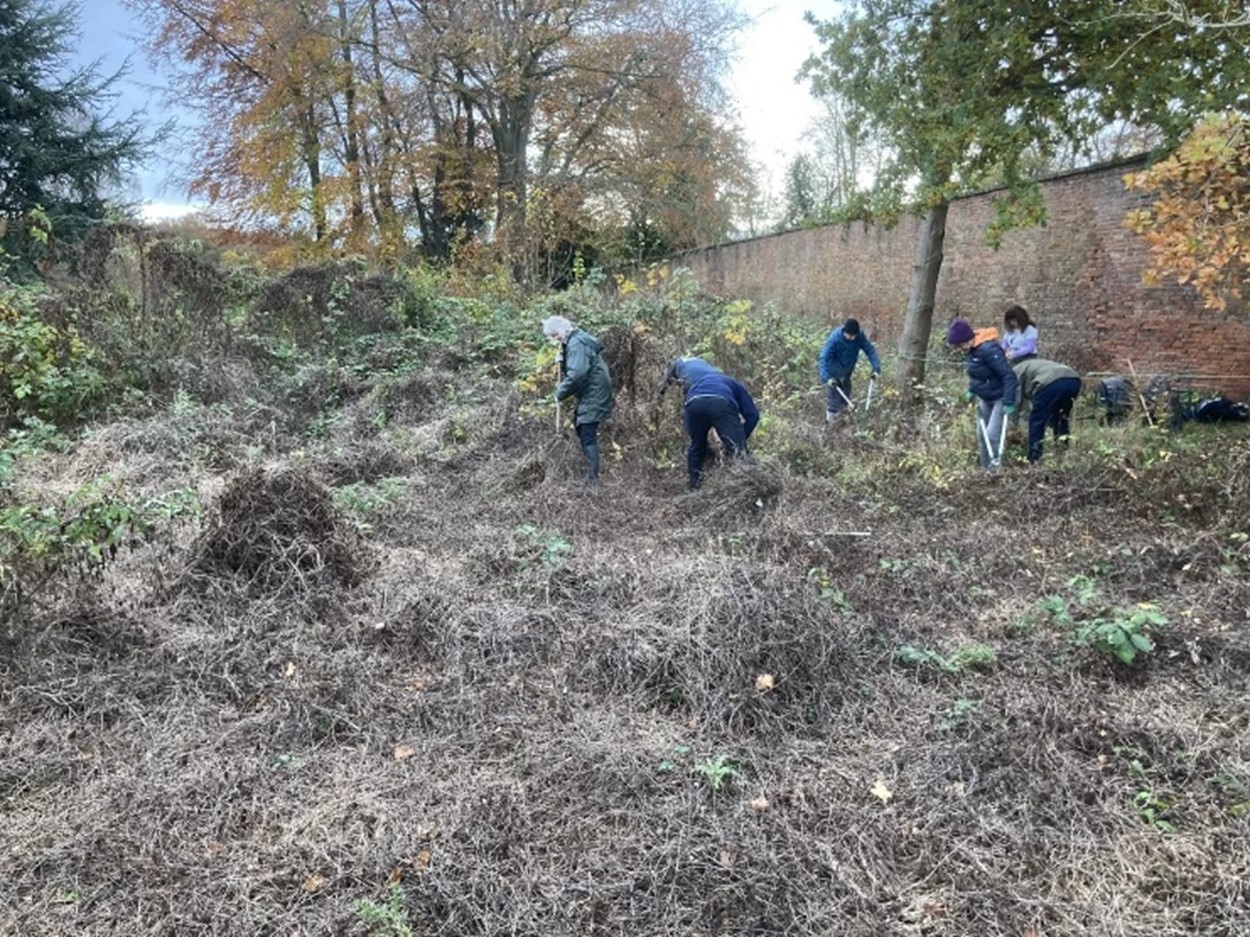
Starting point, November 2024

The project began in late 2024 by creating a dedicated space where young trees could be nurtured before being established within the wider parkland. During that inaugural session in December 2024, a team of 12 volunteers prepared the ground and successfully planted the first fifty saplings.
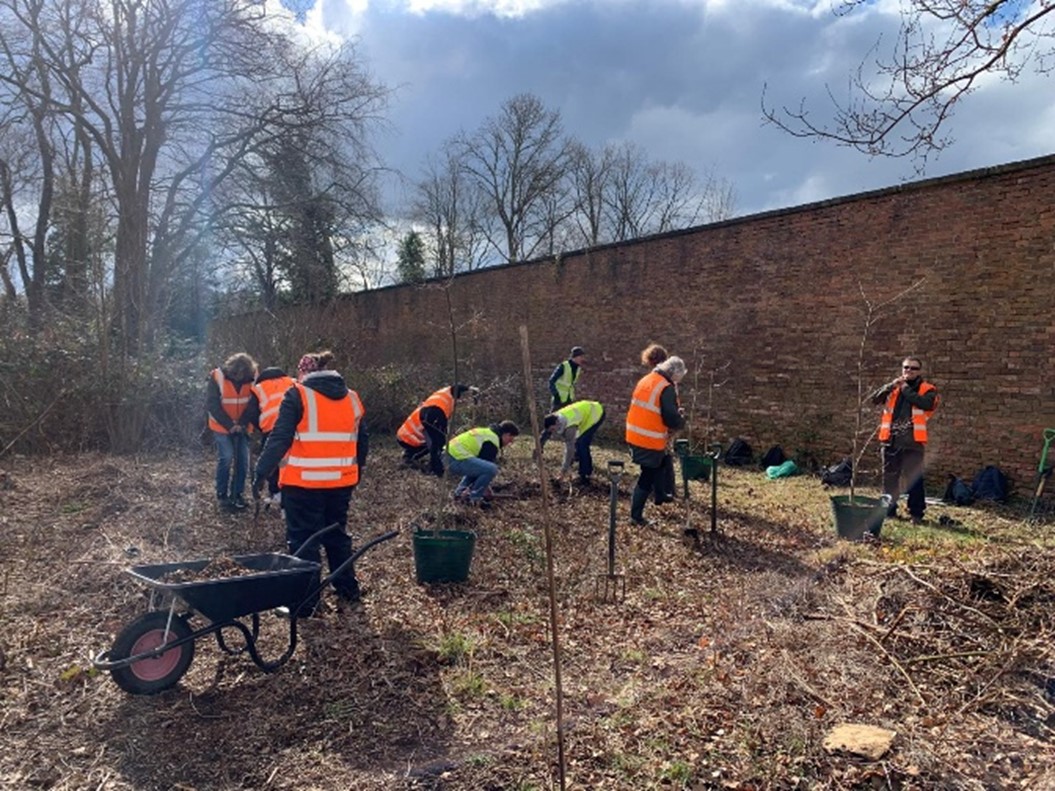
Initial tree planting, March 2025

During 2025, the boundaries were extended and further trees were planted, requiring hands-on physically demanding work to maintain the saplings from watering, and to keep bindweed under control.
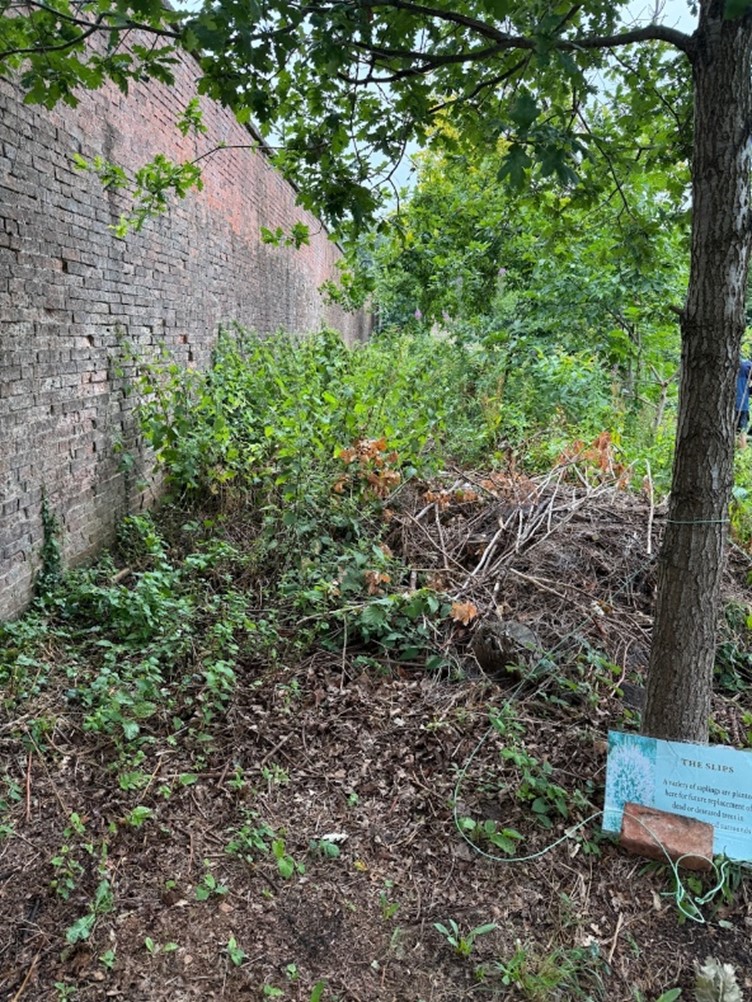
Further site clearance, July 2025

In January 2026, a team of eight volunteers spent the day moving and spreading vast quantities of bark and wood chips, which contribute to moisture retention, weed suppression, and soil health, ensuring the young trees have the best possible start in life.
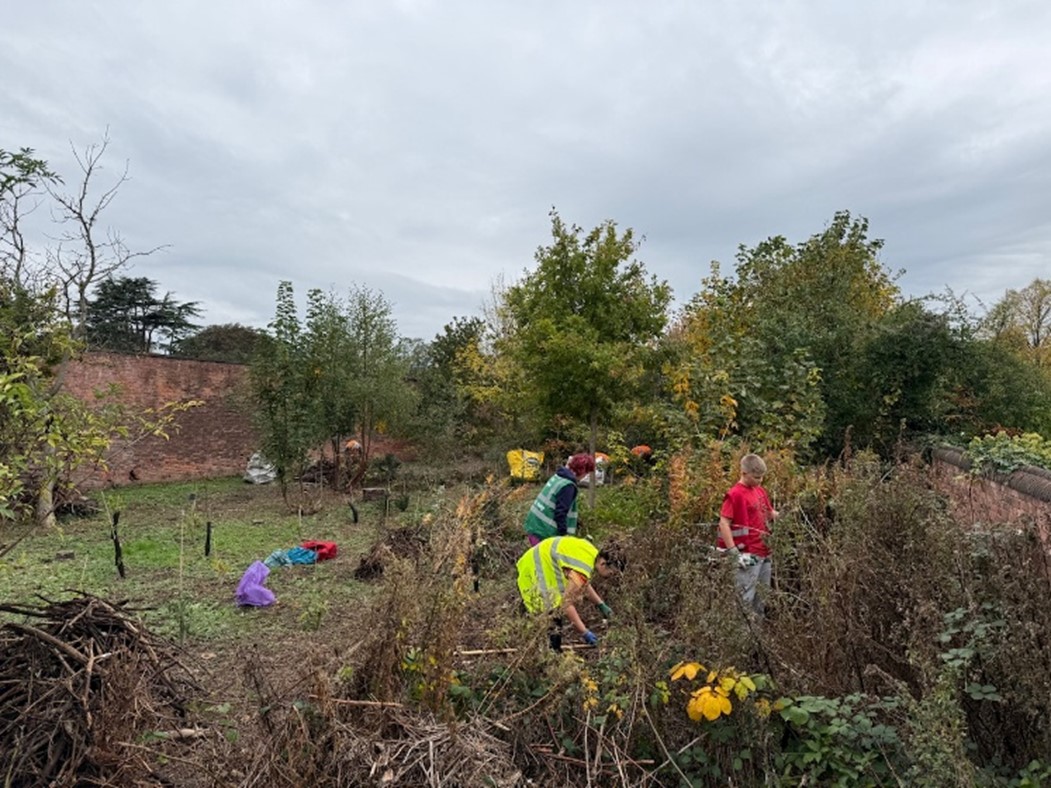
More site clearance, October 2025

The nursery currently supports over 120 saplings across a wide range of species, including Beech, Birch, Cherry, Cockspur Thorn, Elder, Horse Chestnut, Lime, Maple, Oak, Rowan, Sweet Chestnut, Walnut, Whitebeam, Willow, and Yew. These trees were sourced as self-sets from the park’s formal and walled gardens or provided through generous donations.
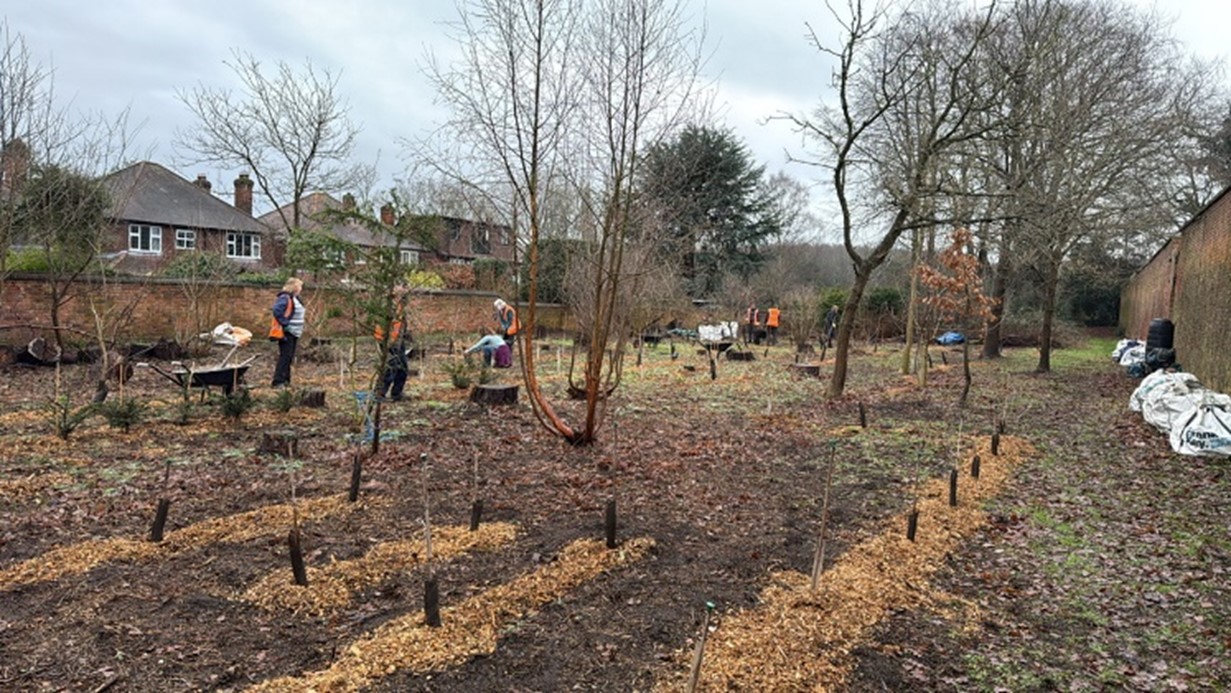
Bark spreading, January 2026

Community, Conservation, and Climate

What makes this initiative particularly special is the spirit of community that drives it. The nursery has become a hub for people to come together, learn, and contribute directly to conservation. Whether they are seasoned gardeners or first-time volunteers, those who step into the nursery are playing a direct role in the park’s environmental future.

Get Involved

The success of the tree nursery is a testament to what can be achieved when a community works together for the benefit of nature. As FoWP look ahead, the nursery remains a symbol of hope: a place where the trees of tomorrow are being raised, one sapling at a time.

If you are passionate about local biodiversity and want to get your hands dirty for a great cause, keep an eye on the Friends of Wollaton Park website for upcoming volunteer opportunities. Whether you are a regular or new to the team, there is always a place for you in the nursery.

Let’s continue to grow a greener, more resilient Woolaton Park, together.

[Many Thanks to Colin Robbins from The Friends of Woolaton Park, for providing the news and photos for this blog]

Waterway & Reedbed Management

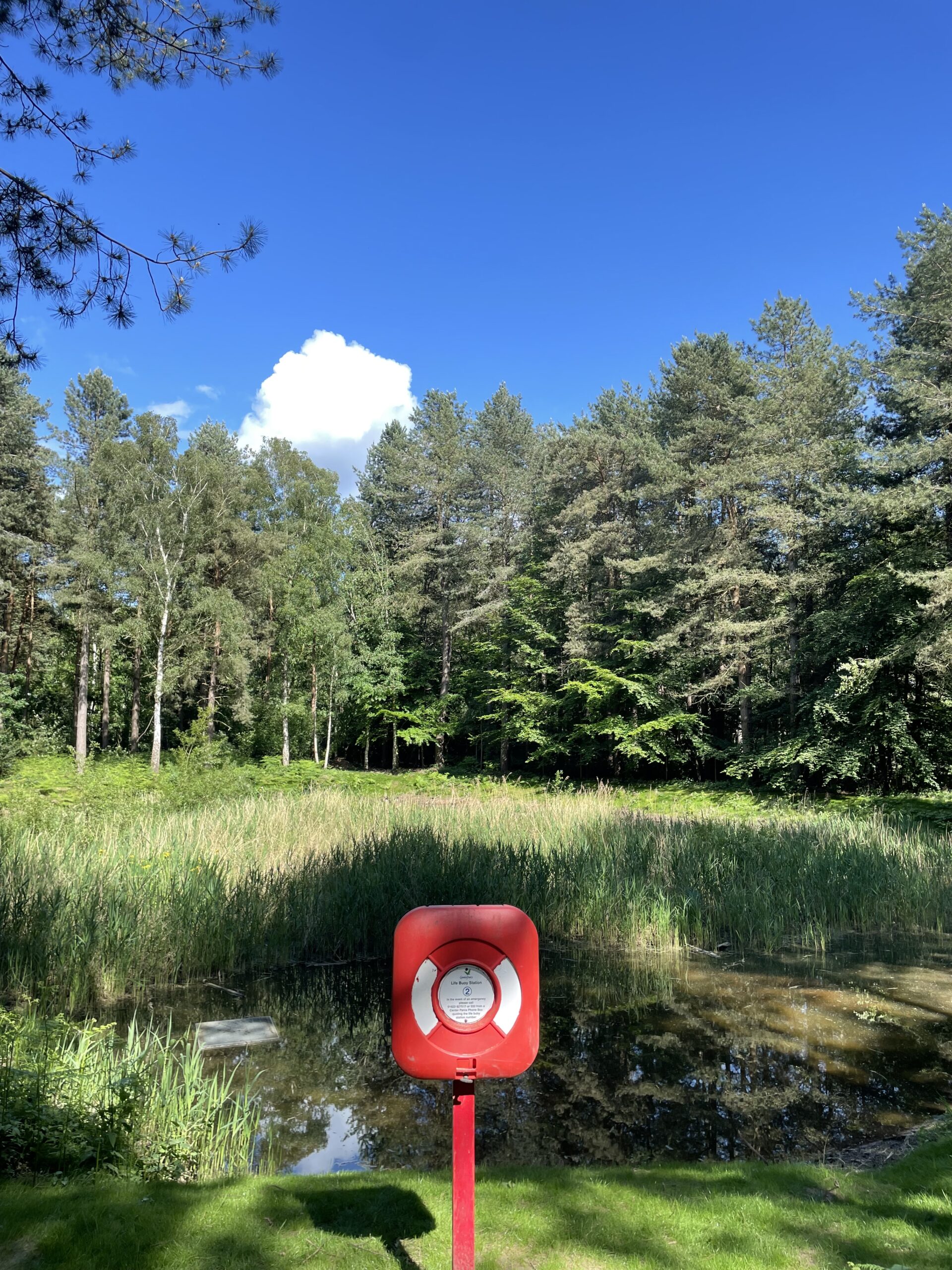
At Center Parcs in Sherwood Forest, there is a complex system of rivers and ponds that runs throughout the Village, and part of their conservation management is to ensure these waterways are maintained efficiently so that the aquatic life, specifically amphibians, can thrive.

The ponds and rivers at Center Parks Sherwood Forest are continuously managed for maintenance of waterways and wildlife

Amphibian torching counts are conducted every spring, and the numbers of common toads & frogs are always good. To ensure that the numbers are maintained, water quality is improved where possible. This involves increasing suitable waterside vegetation, in some places trialling reed transplanting from the largest reedbed area on site.

In the following weeks, undesirable species will be thinned out, and reeds will be rotationally cut. The wetlands also have the potential support reed warblers and reed buntings. There are also regular sightings of kingfisher on the main lake and side rivers. Asa result Center Parcs are actively seeking ways to maintain and provide suitable nesting habitat for them, in particular on the banks of the lake islands.

[Many Thanks to Kate Doull from Center Parcs, Sherwood Forest, for providing the news and photo for this blog]

Bat Surveys with The Sherwood Forest Trust

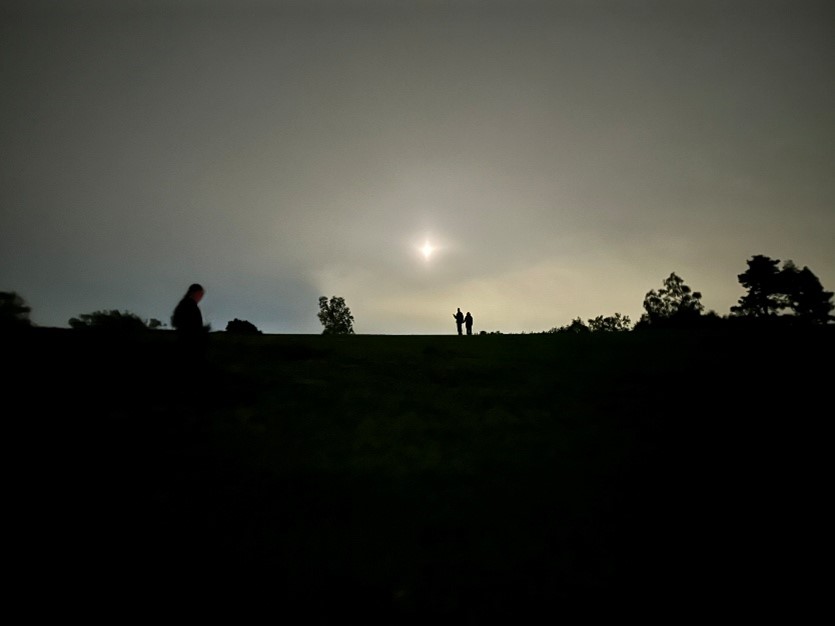
During autumn 2025, Erin and Graeme (Sherwood Forest Trust) conducted bat surveys across sites that are part of the ‘Sherwood’s no longer forgotten Heathland’ project. Some of these surveys were just done alone, but at the golf courses that are part of the project, members of the clubs were invited to have a look at what is around on the courses after dark. This was a good way of engaging with people who often question the work being carried out and want to know why it’s being done.

The team conducts bat surveys for Sherwood’s No Longer Forgotten Healthland Project

Surveying at Coxmoor golf course showed that they have an active bat population that consists of at least 4 species of bat. This information will go into the future management plans and decisions being made in relation to the courses’ play.

Oak Tree heath showed its importance as a food source for several bat species in the area. In 2026 the Sherwood Forest Trust hopes to explore more of the food source side of things by doing some more invert and moth surveying.

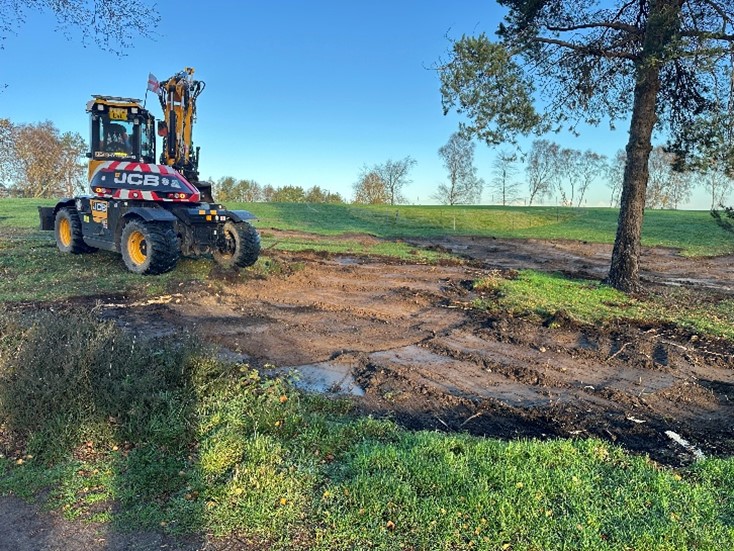
Heather scrapes being created at Coxmoor Golf Club

The Sherwood Forest Trust has been creating some heather scrapes at Coxmoor Golf Club to expand the area covered by heathland. The work was carried out in mid-November, although there is plenty more to do over the next 3 years.  More plans are being made in order to help to restore and maintain the precious heathlands of Sherwood.

[Many Thanks to Graeme Turner from The Sherwood Forest Trust for providing the news and images for this blog]