




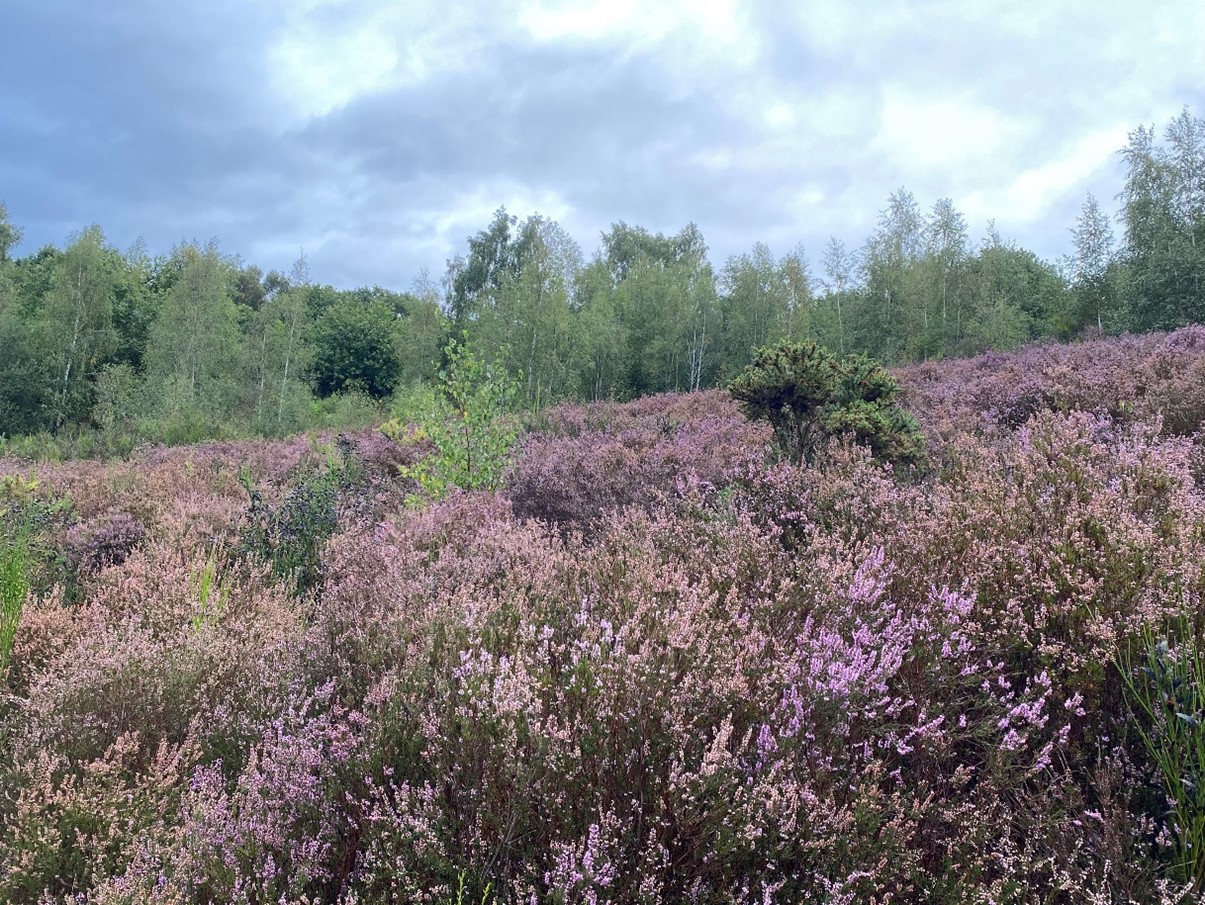


Grizzled Skipper Project

The grizzled skipper is a locally rare butterfly. The project is supported by local volunteers who undertake practical habitat management as well as surveying and monitoring the butterfly during the flight season (April-June)....read more
Nottinghamshire & Nottingham’s LNRS
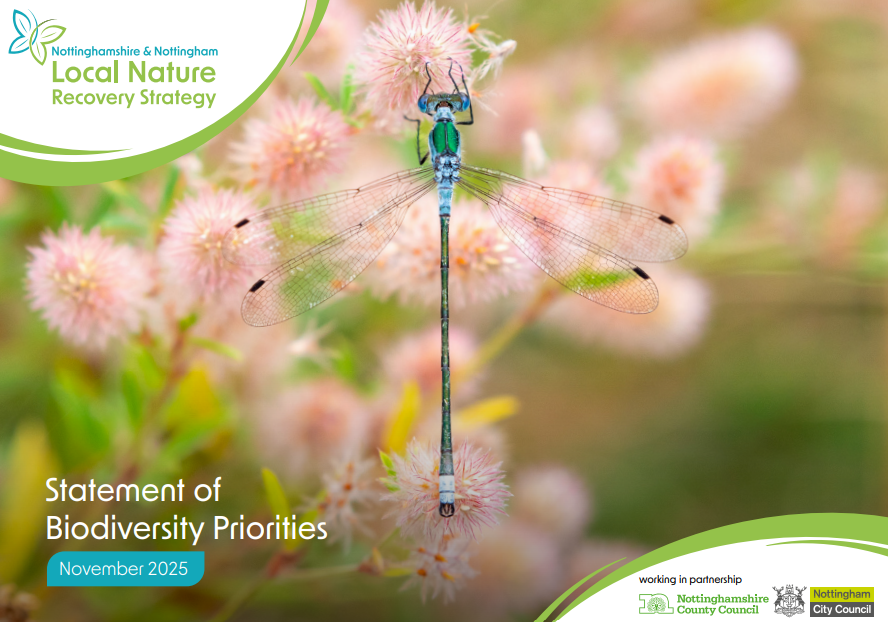
The Local Nature Recovery Strategy (LNRS) is a strategy to improve the state of nature by identifying priorities for nature recovery, identifying locations and habitats to improve which will have the greatest benefit for the environment, and influence local planning policy for nature recovery... read more
Nottinghamshire Wildlife Trust
 Nottinghamshire Wildlife Trust (NWT) believes that everyone should have the opportunity to live in a healthy, wildlife-rich natural world. Sadly our environment is under threat like never before, and Nottinghamshire Wildlife Trust is committed to working with others to limit and reverse the impacts of the nature and climate emergencies, and to inspire individuals to take action for nature...read more
Clearwing Moth Surveying in Nottinghamshire
Melanie Penson, Conservation Officer for Butterfly Conservation East Midlands, recently held three training courses in Sherwood Forest, focused on identifying clearwing moth larval host trees. Clearwings are day-flying moths and their larvae are internal feeders, with all but one of our nine species boring into trees or shrubs where they can be larvae for at least two years.
Nottinghamshire is home to two Regionally Important species of clearwing – the Welsh Clearwing (Synanthedon scoliaeformis) and the Large Red-belted Clearwing (Synanthedon culiciformis), though neither species are found outside the Sherwood Forest area. Both species use birch trees as their larval hosts, with Welsh Clearwings favouring mature birch trunks and the Large Red-belted preferring birch stumps to lay their eggs. Over the two training days, 25 Welsh Clearwing larval host trees, and one Large Red-belted Clearwing larval host tree were identified and mapped.
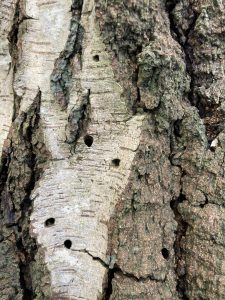 Welsh Clearwing exit holes.
Image: Kayleigh Woodhouse
Melanie said: “the majority of Welsh larval signs found would have been historic (Welsh was certainly present long before its discovery in 2008) but the aim was to show people what to look for, what type of trees and where to search”.
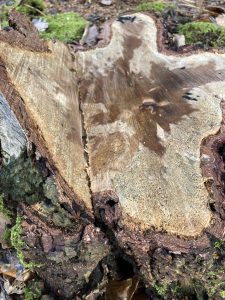
Large Red-belted Clearwing exit hole (bottom of picture)
Image: Kayleigh Woodhouse
Both species are affected by climate change, as they are upland species; Welsh Clearwings in particular are more geared to cooler summers. As Nottinghamshire is at the south-east edge of the Welsh Clearwing range in the UK and might also be at the lowest elevation above sea level, impacts of climate change will be felt here first. It is therefore essential that we maintain records of the distribution of these species so that we can monitor these effects.
Further training days are planned for 2024 – please contact Melanie at harfangneige2018@gmail.com for more information. Melanie will also be delivering further information on East Midlands clearwings at the upcoming Nottinghamshire Biodiversity Action Group Forum.