




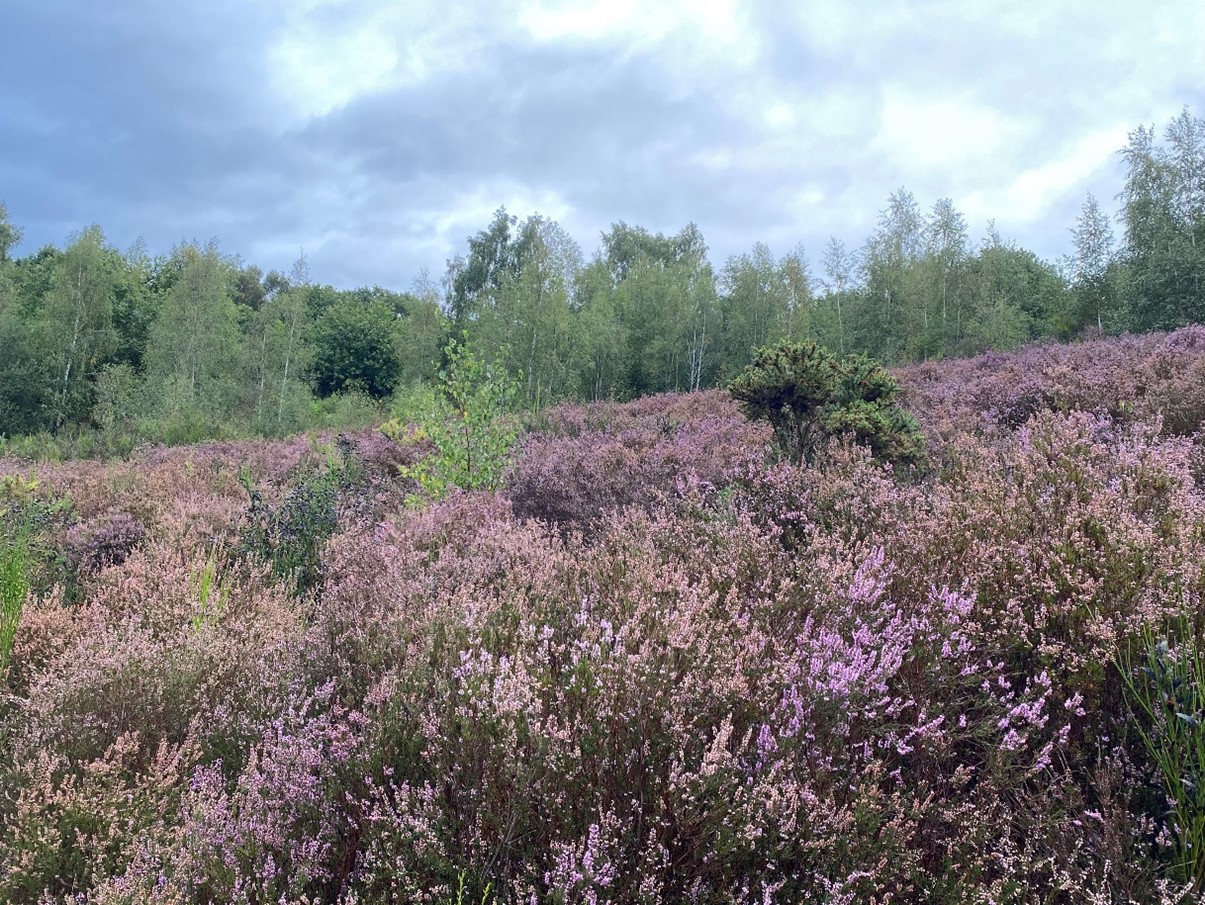


Grizzled Skipper Project

The grizzled skipper is a locally rare butterfly. The project is supported by local volunteers who undertake practical habitat management as well as surveying and monitoring the butterfly during the flight season (April-June)....read more
Nottinghamshire & Nottingham’s LNRS
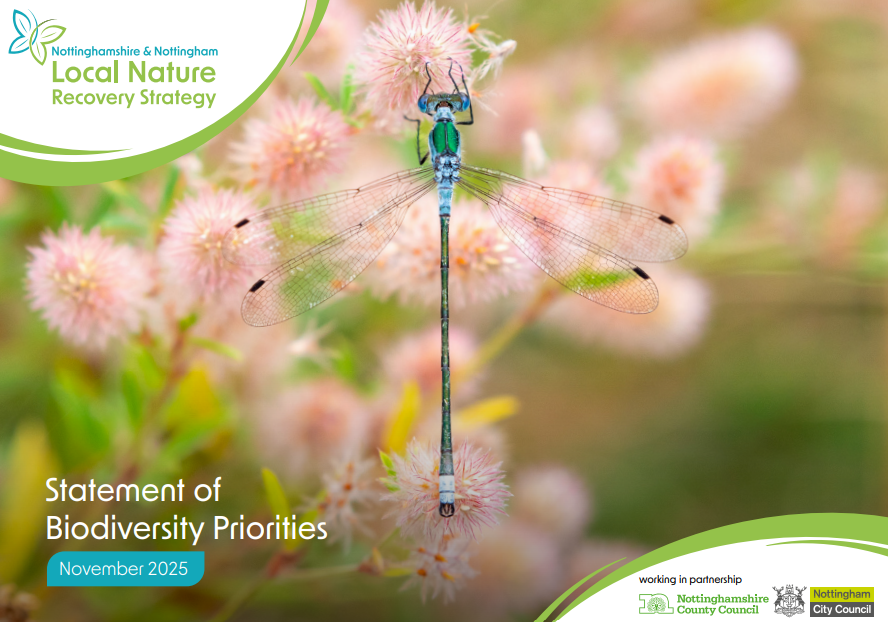
The Local Nature Recovery Strategy (LNRS) is a strategy to improve the state of nature by identifying priorities for nature recovery, identifying locations and habitats to improve which will have the greatest benefit for the environment, and influence local planning policy for nature recovery... read more
Nottinghamshire Wildlife Trust
 Nottinghamshire Wildlife Trust (NWT) believes that everyone should have the opportunity to live in a healthy, wildlife-rich natural world. Sadly our environment is under threat like never before, and Nottinghamshire Wildlife Trust is committed to working with others to limit and reverse the impacts of the nature and climate emergencies, and to inspire individuals to take action for nature...read more
Invasive Species Control Work in Birklands and Cuckney Haywood
Forestry England is working in partnership with HMPPS to deliver good quality Community Payback work placements in the nation’s forests. Building on the success of a pilot during the pandemic, in Greater Manchester and Merseyside, both partners agreed to roll out a new way of working together across the eleven probation regions in England over the next 3 years. In 2023 the Community Payback programme was established in Nottinghamshire.
The partnership will enable people on probation to learn new skills and receive training while completing their Community Payback requirement. One of the projects they will be working on is the invasive non-native species control work across Sherwood, focusing on Birklands and Cuckney Haywood. Work is already underway to control Rhododendron and Cherry Laurel.
Introduced to Britain in the 1700s as an ornamental plant, Rhododendron quickly spread (as a single plant can produce thousands of seeds each year). Rhododendron is also prone to spreading by vegetative means, sending out lots of lateral runners. Each plant can grow up to 8m tall, causing it to shade and outgrow much of our native flora. Rhododendron can also act as a conduit for Phytophthora ramorum and Phytophthora kernoviae, two harmful tree diseases which detrimentally affect oak, beech and larch.
Cherry Laurel was introduced to Britain in the 1600s and was planted widely as hedging. It is an ineffective food source for many animals as its fruit contains small traces of cyanide, making it unpalatable. It also shades out many competing plants, inhibiting both native flora and fauna where it is present.
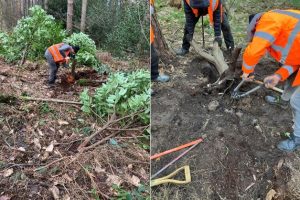 Tackling Cherry Laurel.
Images: Amy Chandler
Later this year, Forestry England and Community Payback will also be tackling:
Buddleia was introduced to Britain from China in the 1800s and was sold as an ornamental plant. Similar to Rhododendron, this species spread rapidly, as each plant can produce up to 3 million seeds per year. Though attractive to butterflies, and sometimes referred to as “butterfly bush”, Buddleia outcompetes native flora, reducing our biodiversity.
In 2023, IPBES reported that invasive species have contributed to 60% of plant and animal extinctions globally and are the main cause of extinction for 16% of species. It is therefore essential that we work to control these species and prevent their spread in the wild.
The Notts BAG partnership are working hard to control invasive non-native species – take a look at our INNS webpage to find out more about our work.