




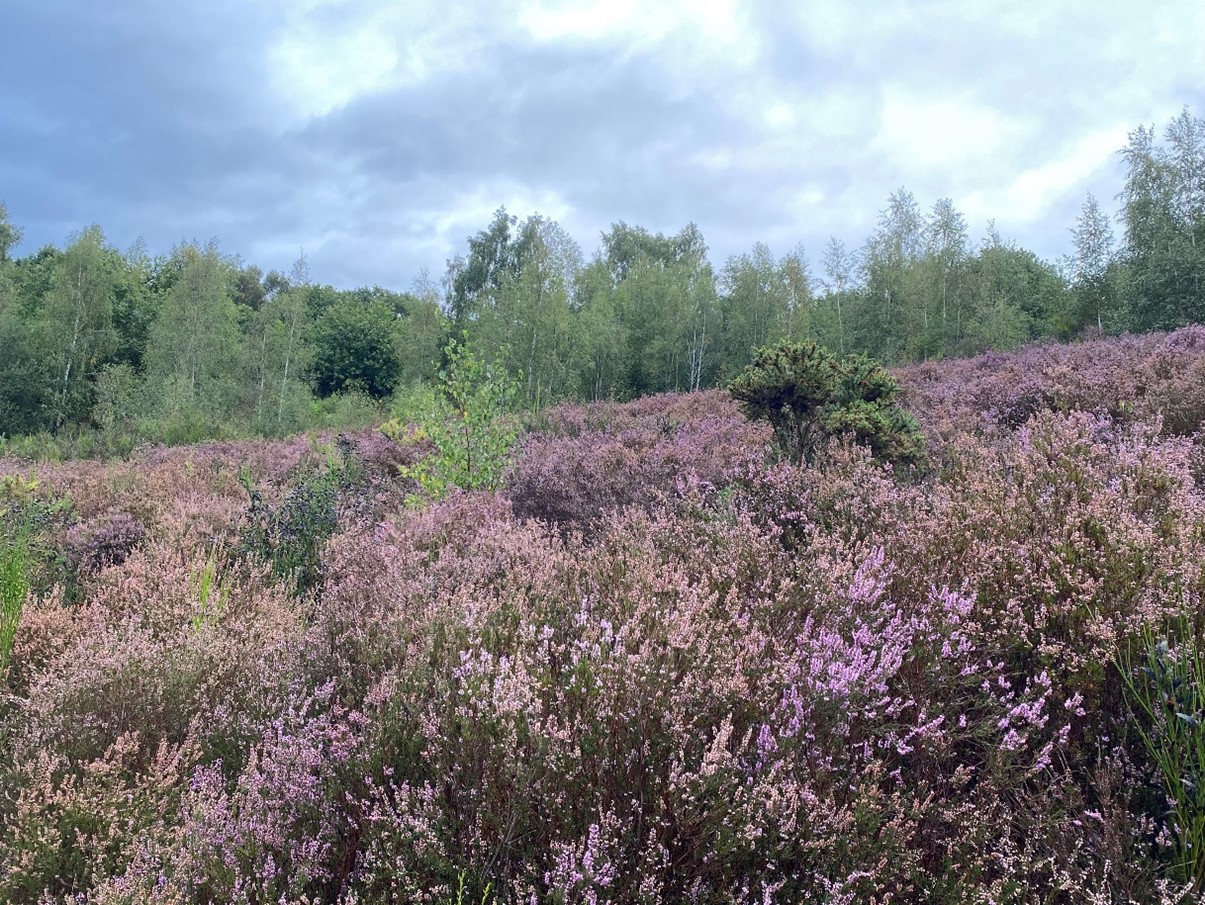


Grizzled Skipper Project

The grizzled skipper is a locally rare butterfly. The project is supported by local volunteers who undertake practical habitat management as well as surveying and monitoring the butterfly during the flight season (April-June)....read more
Nottinghamshire & Nottingham’s LNRS
The Local Nature Recovery Strategy (LNRS) is a strategy to improve the state of nature by identifying priorities for nature recovery, identifying locations and habitats to improve which will have the greatest benefit for the environment, and influence local planning policy for nature recovery... read more
Nottinghamshire Wildlife Trust
 Nottinghamshire Wildlife Trust (NWT) believes that everyone should have the opportunity to live in a healthy, wildlife-rich natural world. Sadly our environment is under threat like never before, and Nottinghamshire Wildlife Trust is committed to working with others to limit and reverse the impacts of the nature and climate emergencies, and to inspire individuals to take action for nature...read more
Life Cycle of the Grizzled Skipper Butterfly
The enigmatic Grizzled Skipper is a small, attractive black and white chequered butterfly, more commonly associated with calcerous grasslands in the south of England, but a rarity here in the East Midlands where it reaches the northern limit of its UK range. It is found at a few old quarry sites and on disused railway lines to the south of Newark and East Leake extending down to areas around Melton Mowbray. Many of these sites are found on private land and have been managed by the Notts BAG in collaboration with Butterfly Conservation to maintain their habitat.
The butterfly is on the wing from the end of April and lays its eggs (ova) on the underside of the leaves of its preferred caterpillar food plants Wild Strawberry, Creeping Cinquefoil and Agrimony, particularly where they grow on short turf and bare ground in warm, sheltered spots. After about 2 weeks, the tiny larva (1 mm) emerges and crawls on to the top of the leaf and spins a loose protective net under which it feeds on the leaf surface. Over the coming months it sheds its skin in five stages as it grows. It continues to construct protective shelters or tents using silk ropes to draw together different leaves from its food plants. Towards the end of August it reaches full-size at around 20 mm where it takes on a pale green colouration with a black head. In this final stage it constructs a loose cocoon from a variety of vegetation and leaf litter on the ground. Within this secret hideaway it sheds its skin for the last time and then converts to the greenish/brown pupa. Remarkably, it spends 8 months hidden away, enduring everything that the Winter weather can throw at it, until it re-emerges at the end of the following Spring to the delight of anyone who chances upon one basking in the Spring sunshine, or roosting on a dead flower head late on a warm afternoon!
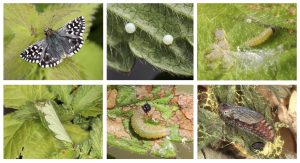 Images: Mark Searle
Many thanks to Mark Searle for this fantastic piece on the lifecycle of the Grizzled Skipper Butterfly. Please see here for more information on the Nottinghamshire Grizzled Skipper Project and here to see the Grizzled Skipper Species Action Plan.