
We’ve just had some incredible news for Nottinghamshire’s invertebrate scene – 55 oil beetles have been found at the cricket pitch near Newstead Abbey Park! This is the highest number recorded at this site, since they were first rediscovered within Sherwood Forest National Nature Reserve in 2011 after disappearing for over 50 years.
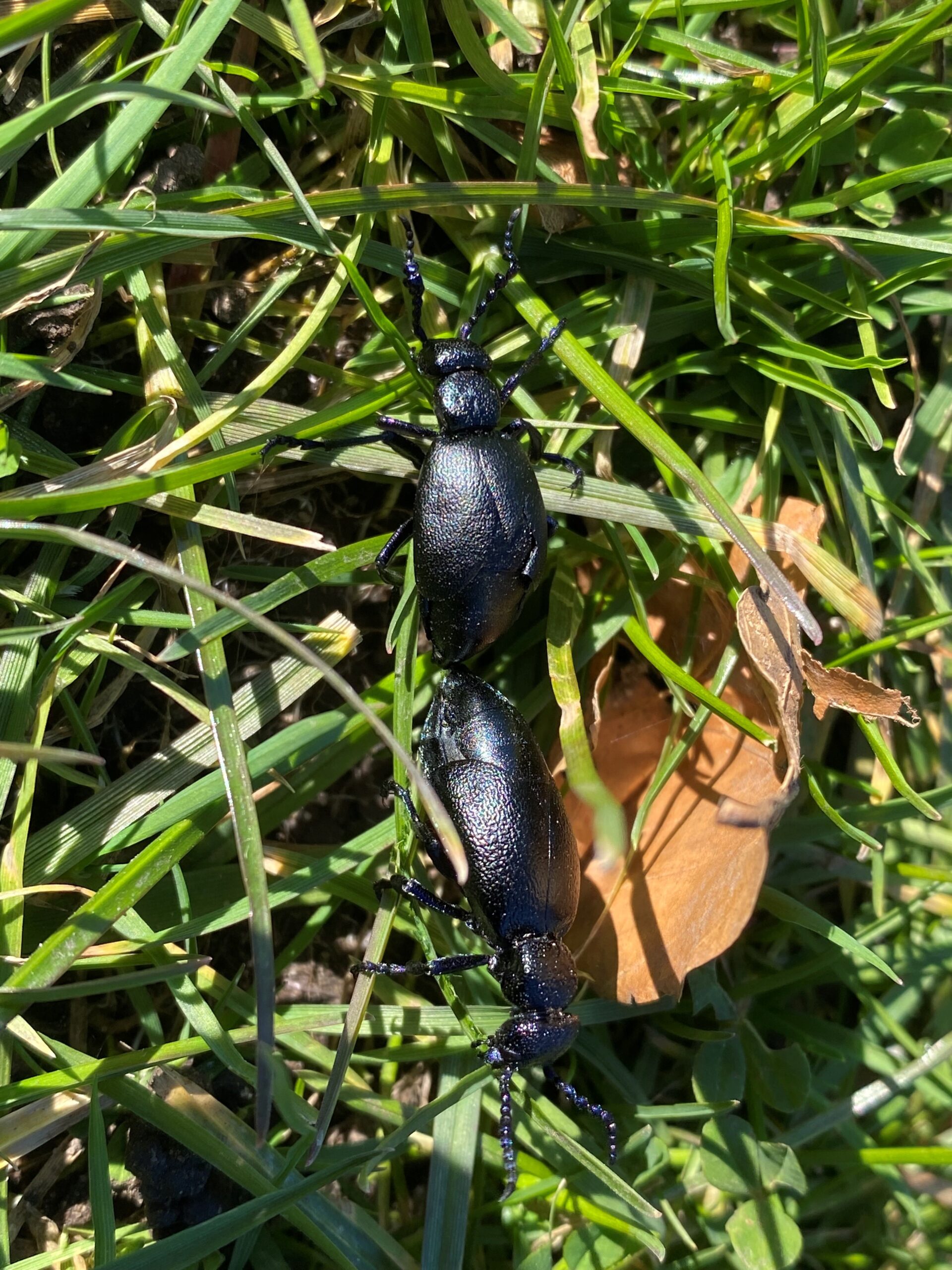
2 Oil Beetles at Newstead Abbey Cricket Pitch
Oil beetles have one of the most extraordinary life cycles of any British insect. Their tiny, louse-like larvae (called triungulins) rely on solitary mining bees to survive. The larvae climb up flowers and hitch a ride on unsuspecting bees, who carry them back to their underground nests. Once inside, the triungulin feeds on the bee’s eggs and stored pollen before pupating and emerging as an adult oil beetle the following year. Because of this unusual relationship, oil beetles are a fantastic indicator of a healthy bee population and wildflower-rich habitat. Their presence at Newstead is a great sign for local biodiversity!
However, oil beetles are in serious decline. Three of the UK’s native oil beetles are extinct, and the remaining five—including the Black Oil Beetle (Meloe proscarabaeus) found at Newstead—are struggling. Their loss is directly linked to habitat destruction and the decline of wild bees, which have been hit hard by intensive agriculture, land use change, urban development, and climate change.