Marvellous Minibeasts at DaNES Insect Show 2026

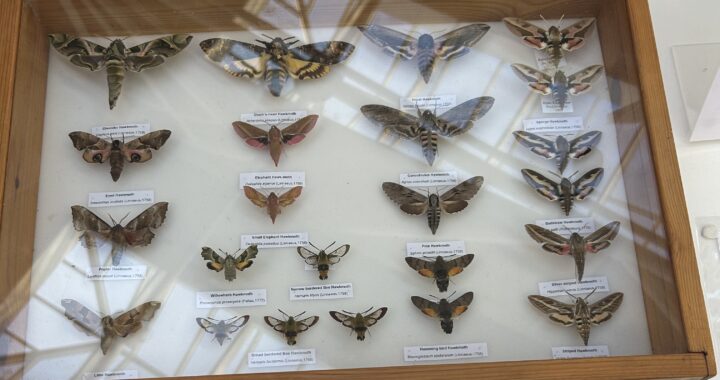
Saturday the 14th of November was a very special day for the invertebrate lovers of Derbyshire and Nottinghamshire. Derbyshire and Nottinghamshire Entomological Society (DaNES) had their annual insect show at Derby University, with plenty to do and see for the whole family.

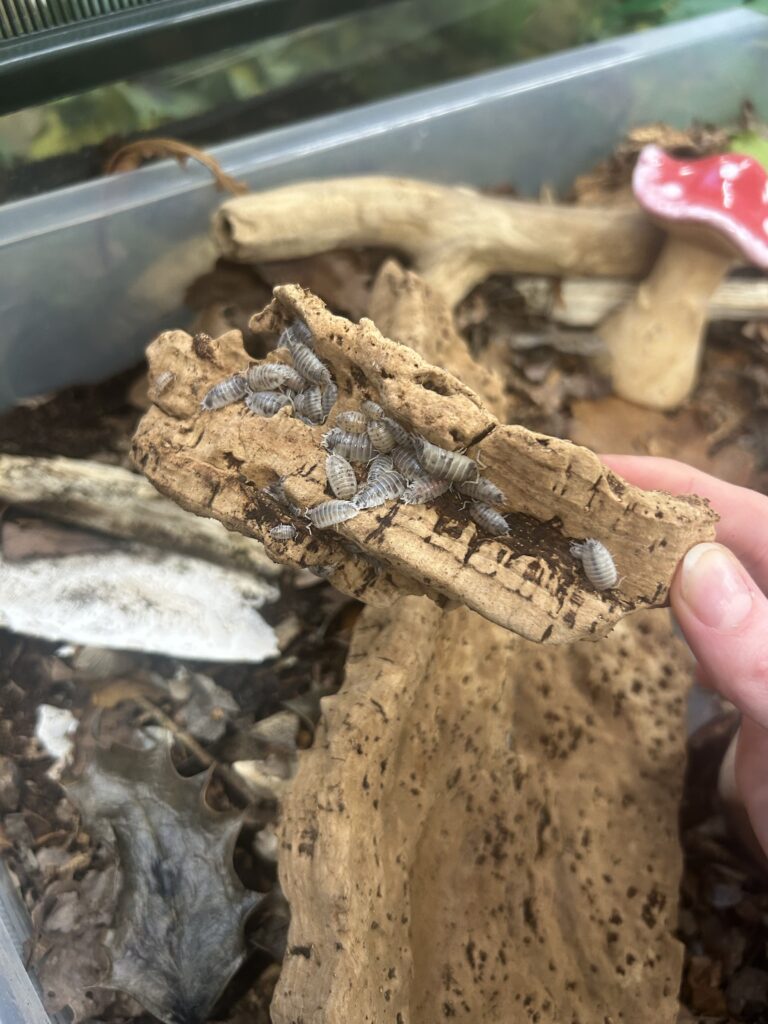
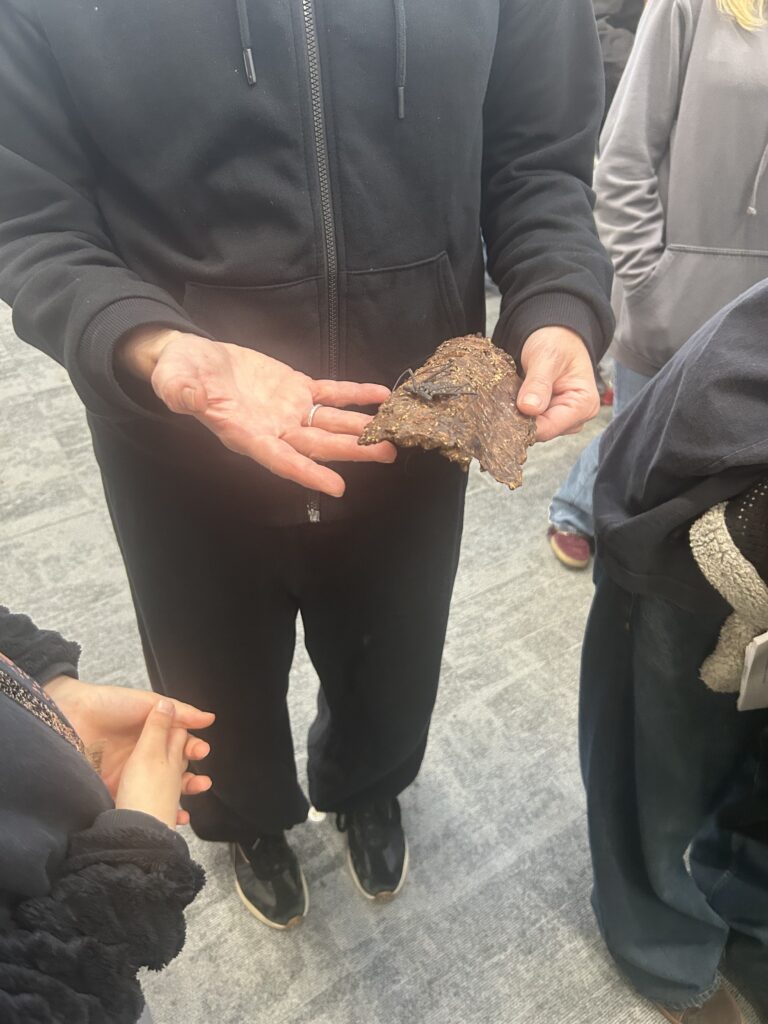
On the bottom floor there was an array of stalls from various conservation organisations, some of which included the National Trust representing Clumber Park; Wollaton Hall; Butterfly Conservation; and both the Notts and Derbys Amphibian Reptile Groups (ARG). Some of the interactive family activities were great fun for the adults, too. One activity was to dig through leaf litter and look for critters, such as isopods. There was a display of oak galls at the Wollaton Hall stall, and the University of Derby had a stall represented by Forensic Science students showcasing crickets, blowflies and cockroaches – all of which are used in forensic entomology to identify details of a crime. Earlier in the day, children were given the opportunity to handle the cockroaches.
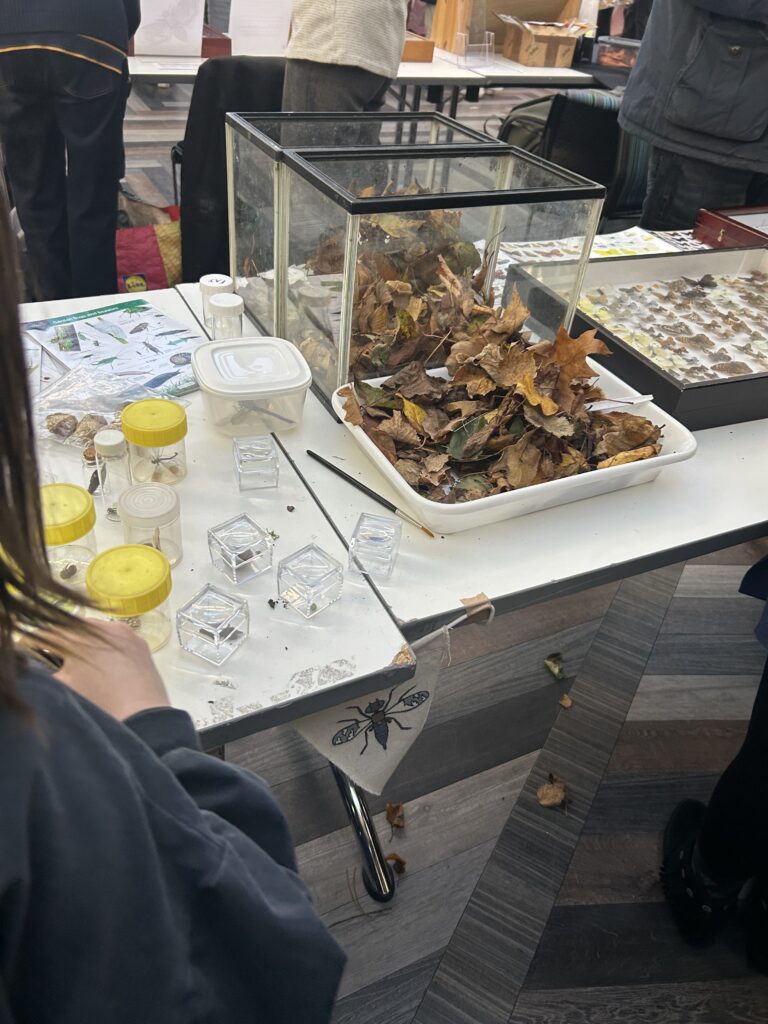
Children, young people and adults alike all enjoyed looking for decomposers in the leaf litter.

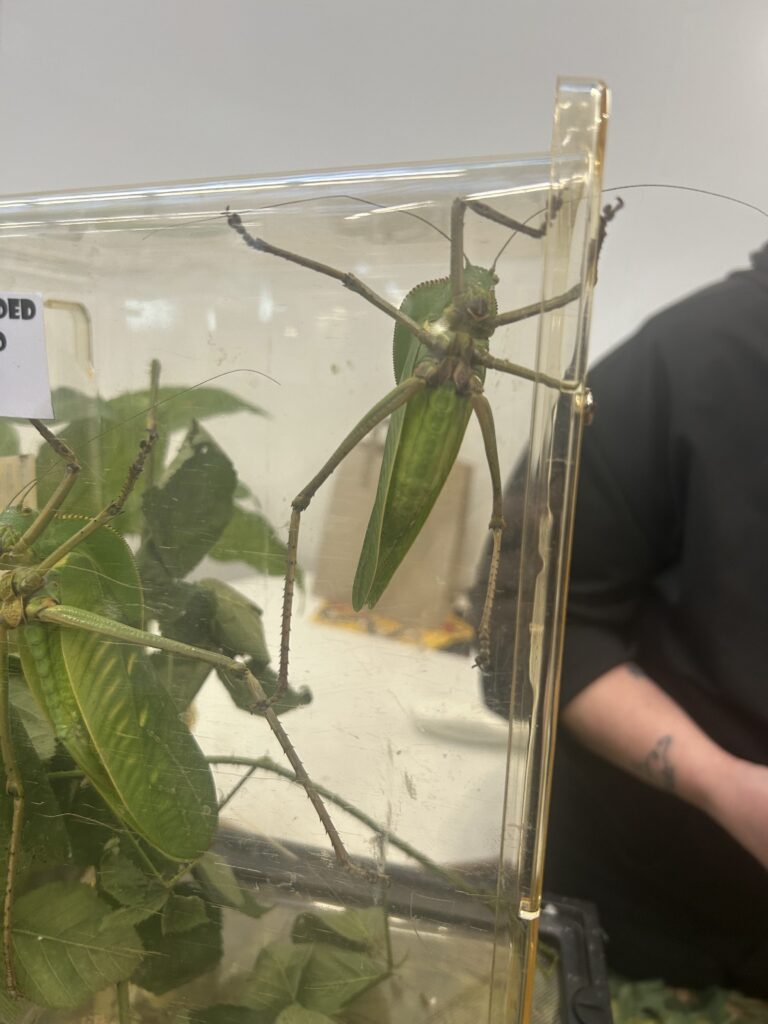
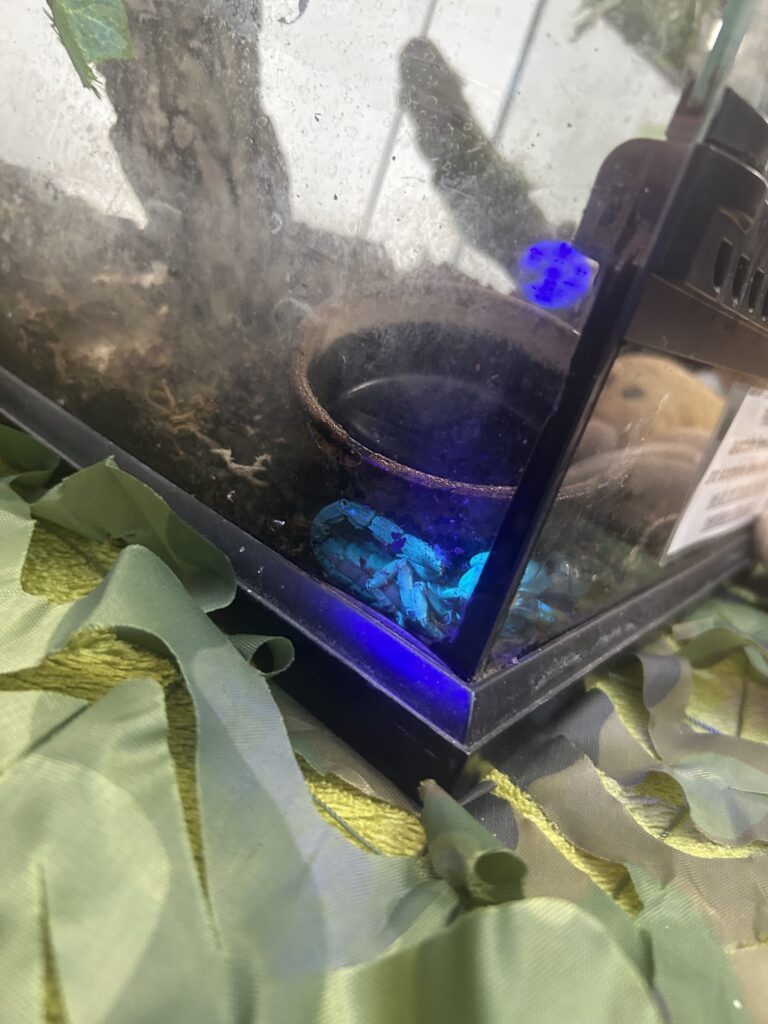
There were plenty of trinkets available – invertebrate-themed jewellery, mounted and displayed butterflies and beetles, jars of bones from owl pellets, and beautiful nature-themed artworks all available for sale. An exciting exhibit of live invertebrates was also on display, showcasing incredible species such as several species of mantid; beetles; scorpions; katydids; stick insects; a bird-eating tarantula; and a whipspider.

Additionally, the day was chock-full of fascinating talks, including presentations on connecting with nature at night-time and its wellbeing benefits, how flies can be used to estimate the time and environment of death at a crime scene, and a deep-dive into Clumber Park’s population of the Diamond-backed Spider (Thanatus formicinus) hosted by Amy Trewick from National Trust. She emphasised the need for volunteers to survey for this LNRS priority species, which has an estimated population size of 200 to 300 at Clumber Park. If you are interested in giving up your time to look for this previously presumed extinct spider to support the development of its recovery plan, send a volunteer enquiry to Amy.Trewick@nationaltrust.org.uk to ask about the Diamond-backed Spider surveying opportunities.
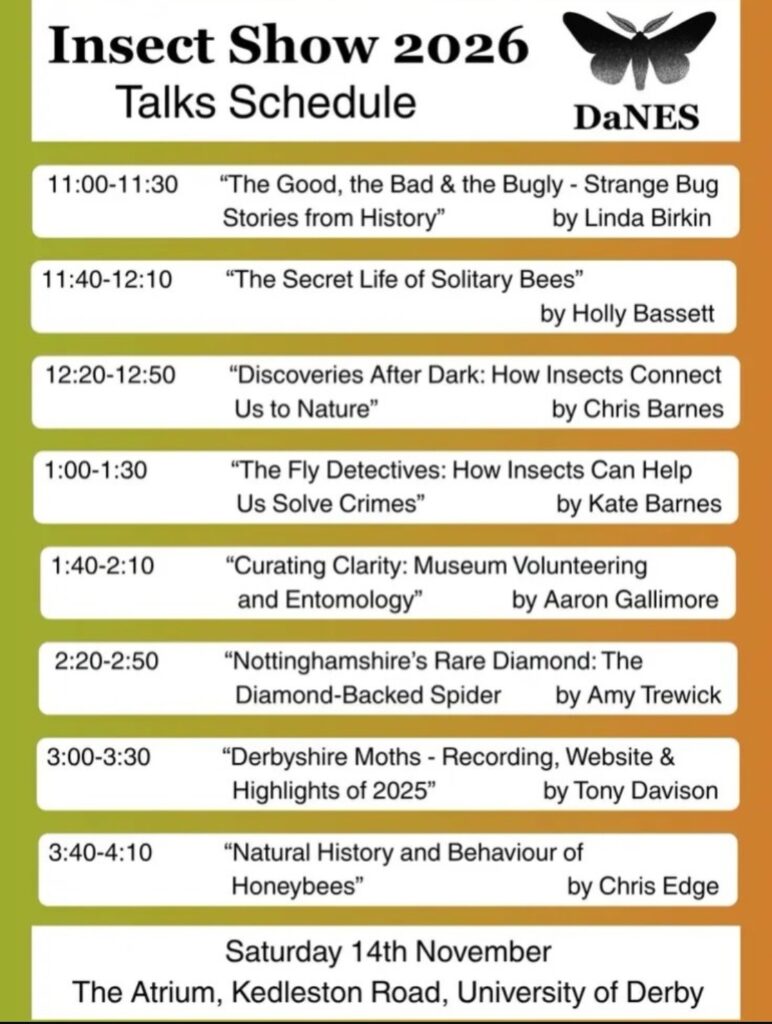
The full talk schedule for the day, sourced from @danes_insects on Instagram.

The day ended with an exhilarating tour to the Forensic Science lab, where technicians had set up mock crime scenes and members of the public put themselves in the shoes of a forensic scientist, analysing the evidence in front of them and figuring out what samples they should send off. This linked to the forensic entomology talk, which explained that fly larvae (maggots) can be sent off for DNA analysis as they have a specialised structure behind their head to store excess food – helpful to forensic entomologists in a range of contexts.

With a day jam-packed with minibeast fun, we can’t wait to see what next year’s show has in store. If you’d like to get involved with the other events DaNES offers and increase your entomological knowledge, consider becoming a member on their website.
Bats, Grass Snakes and Donkeys (oh my!)

Over the summer, Newark & Sherwood District Council (NSDC) have been working hard to engage the community with their bat walks and seedbombs. Additionally, they have some exciting grass snake updates and even recruited the help of some donkeys for a balsam-bashing work party.

Bat Walks

NSDC have been hosting bat walks across their council parks, including Sconce & Devon Park and Vicar Water Country Park, leading over half-a-dozen fully booked sessions throughout summer and autumn.

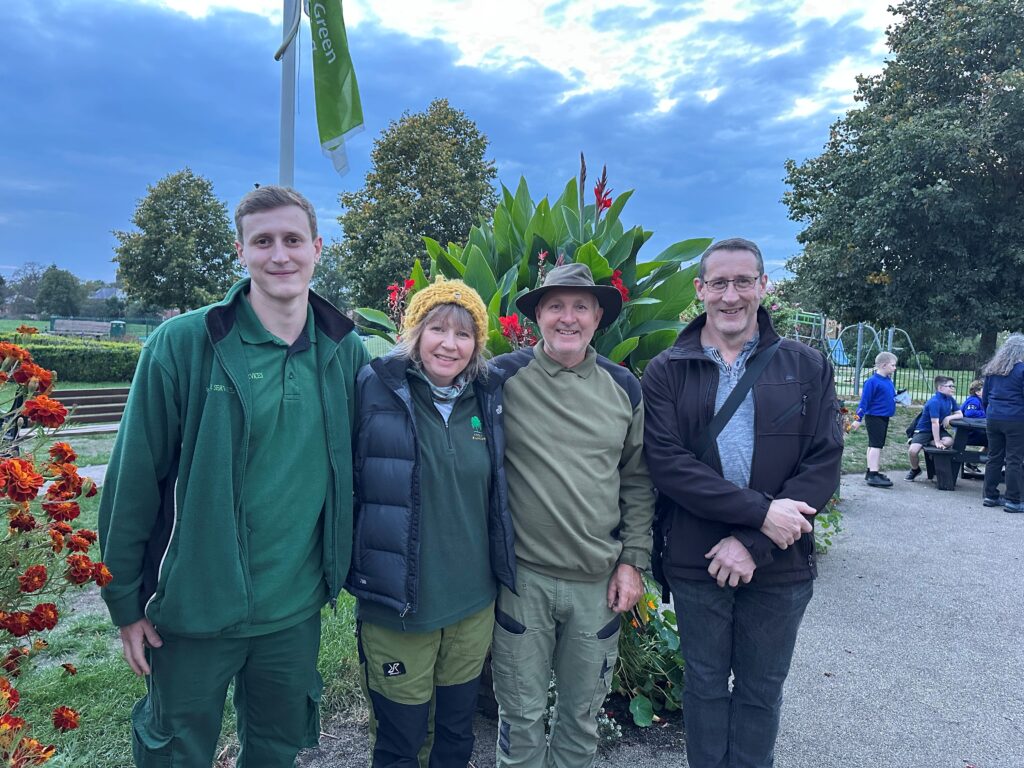
Simon, Issac, Lynn and Allister have been leading several bat walks over the past quarter.

Five species of bat were recorded across their sessions in Vicar Water Country Park using their bat detectors, including:

  • Noctule – Our largest resident bat with a wingspan between 32-40cm. They can fly at 50km/h, often high above the treetops, and their echolocating calls range from 20 to 45kHz.
  • Common Pipistrelle – This bat, weighing around the same as a 20p coin, eats thousands of insects in a night, flying around with a speed as they hunt by aerial hawking. They can be heard making a wet slap sound between 45 and 70kHz.
  • Soprano Pipistrelle – Soprano Pipistrelles are distinguished from Common Pipistrelles by sound only, though are more selective in their habitat use than the latter. Their calls are heard between 55 and 80kHz.
  • Daubenton’s – This water specialist bat put on an exciting display at Vicar Water Country Park, scooping up insects from the small pond with its big feet and tail membrane. Their machine gun-like calls range from 35 to 85kHz.
  • Brown Long-eared – As described by its common and scientific name (meaning large, twisting ear), this gleaning bat has large ears with such precise hearing that it can detect a ladybird walking on a leaf. They are also known as the ‘whispering bat’ due to their quiet echolocating calls heard between 25 and 50 kHz.

If you missed out and are keen to see a marvellous Daubenton’s bat, they will be hosting more bat walks from spring next year. Learn more about bats at https://www.bats.org.uk/ .

Grass Snakes

Grass snakes are harmless, non-venomous snakes native to the UK. They have been having a good year across Sconce & Devon Park, with many sightings near water rather than their usual distribution around orchards. Grass snakes prefer open woodland and edge habitats, also preferring edges of freshwater bodies. They are strong swimmers, being semi-aquatic. A 1.2m long individual was spotted this summer at Sconce & Devon Park!

They prefer to feed on amphibians but will occasionally feed on ants and larvae. They often search for their prey around the edges of a freshwater body using their Jacobson’s organ (flicking particles into the organ with their tongue) and their sight. As winter approaches, they will overwinter underground.

Grass snakes have some interesting defence strategies, including secreting a garlic-like fluid from their anal glands, feigning death (which may be accompanied by secreting blood from the nose and mouth), and performing an aggressive display by hissing and striking with a closed mouth. However, they rarely bite in self-defence so don’t be afraid and be sure to give them plenty of personal space if you come across one.

DIY Wildflower Seedbombs

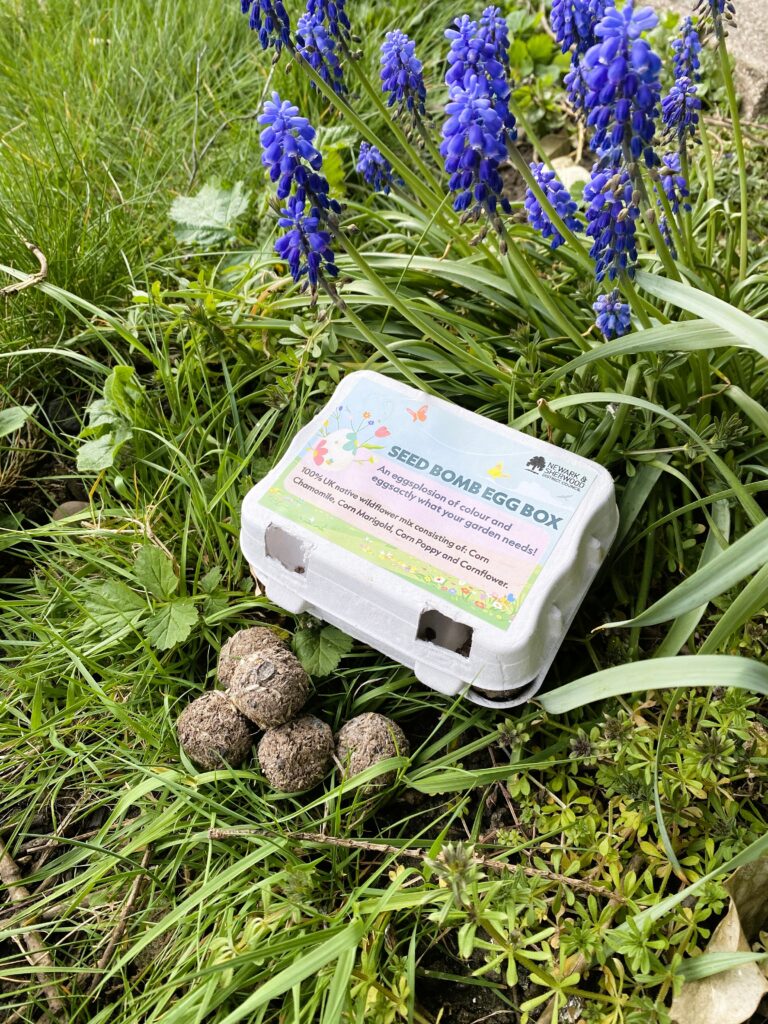
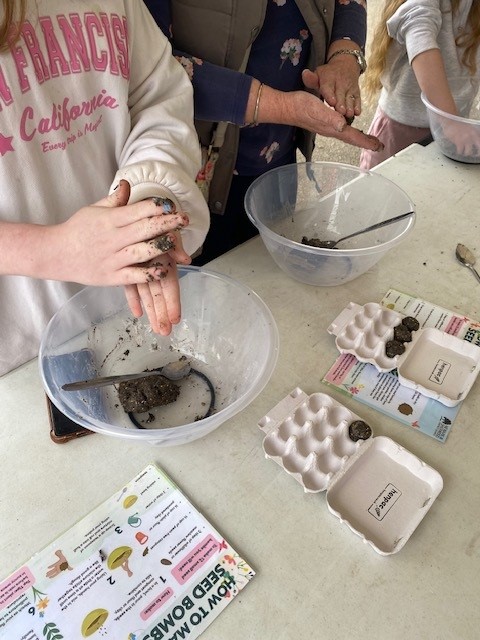
Following on from their spring bee bomb-making sessions, NSDC hosted a series of drop-in wildflower seedball-making sessions across four weeks during this year’s school summer holidays. Attended by over 150 people, a mix of children and adults partook in making seedballs to take home and plant this autumn or next spring.

Residents getting their hands dirty making seedballs for a wildlife-friendly garden.

These sessions helped raise awareness of the ecological role of pollinators while using a fun activity to inspire residents to make their own garden more wildlife-friendly.

Their seedballs used a mix of native UK wildflower seeds, including Corn Chamomile, Corn Marigold, Corn Poppy, Common Vetch, Birdsfoot Trefoil, Common Knapweed, Oxeye Daisy, Salad Burnet, Red Campion and many more.

Donkey Balsam Bashers

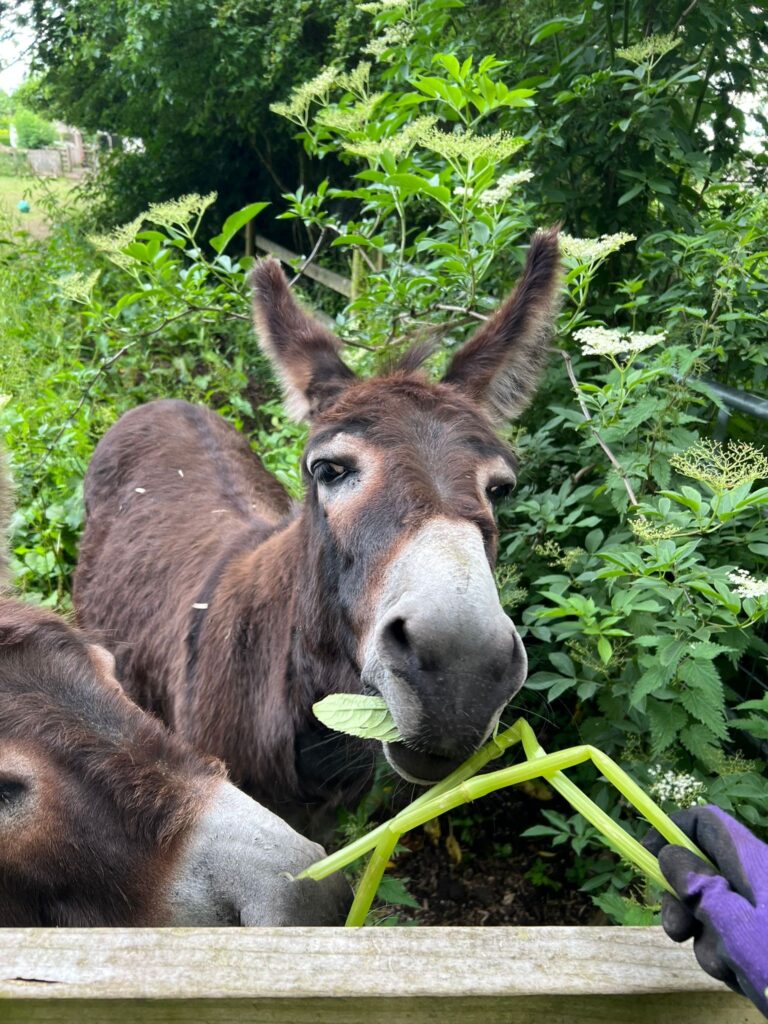
After a very busy and coordinated summer of balsam-bashing along Potwell Dyke and the River Greet, volunteers ran into some very curious donkeys! Lynn Preece had recently learned about controlled grazing and, knowing Himalayan Balsam was not toxic to cattle, equines or bovines, thought she’d let the donkeys have a taste.

A hungry donkey helping volunteers clean up.

They thought it was very tasty, so a special thanks to the donkeys for their hard work in cleaning up our environment.

A special thanks to…

Hayley Hurst, Danielle Davies and Lynn Preece for their contributions.

Queens Drive Urban Nature Space – Restoring Urban Meadows for People and Wildlife

Queens Drive Urban Nature Space

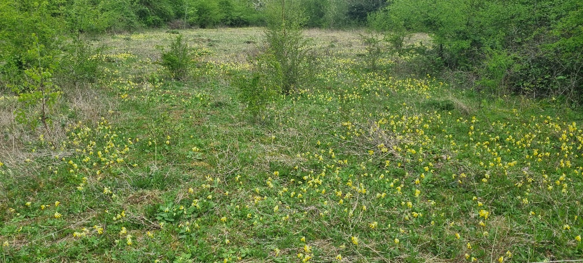
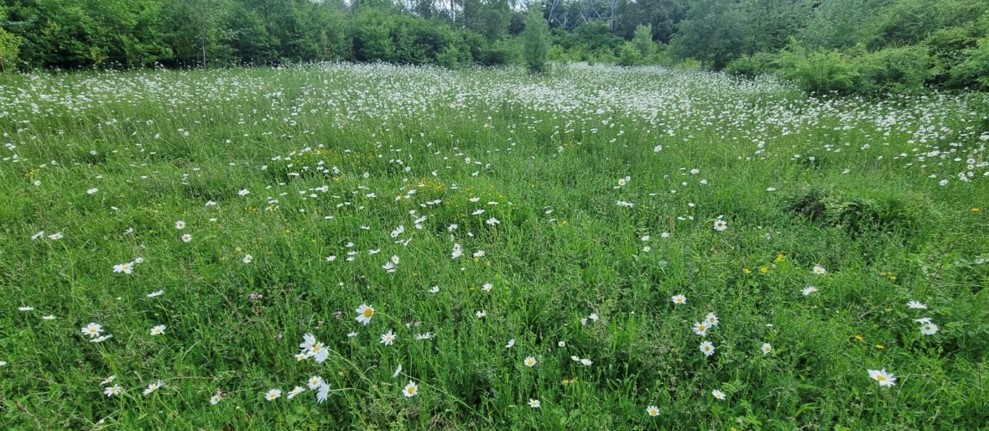
Did you know that 97% of the UK’s flower-rich grassland has been lost? This is why volunteers and Nottingham City Council Rangers are bringing nature back, by restoring this urban meadow.

Queens Drive Urban Nature Space

Meadows support pollinators, birds, insects and healthier soils, therefore working to restore this flower-rich meadow, including clearing encroaching scrub, should allow the wildlife to thrive!

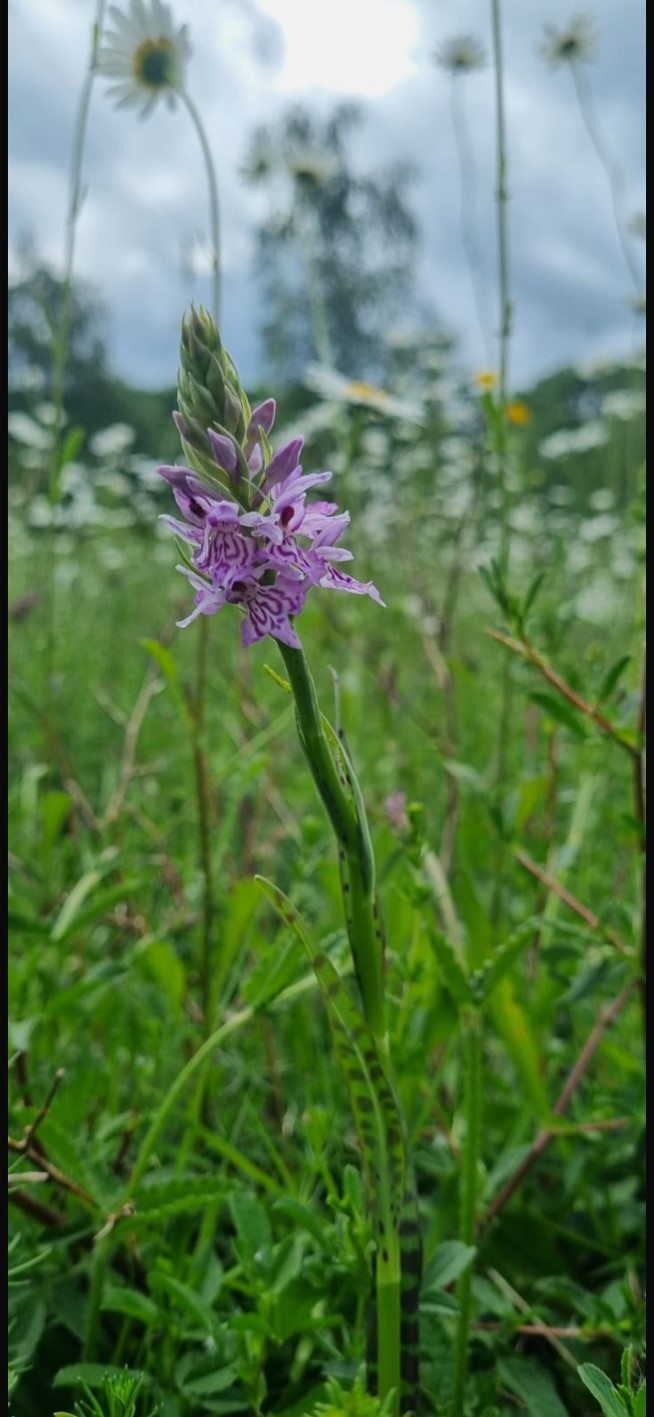
Common Spotted Orchid

[Many Thanks to Jemma Maguire from Nottingham City Council, for providing the news and photos for this blog]

Tree planting and Himalayan Balsam

Trees for Climate

In partnership with Greenwood Community Forest, the environmental services team at Newark and Sherwood District Council continues to help with tree planting, hedgerow creation and woodland development across the district.

Tree Planting in Newark & Sherwood District Council

For the winter 2025/26 planting season over 14,000 trees and 33,000 hedgerow shrubs were planted within the district. That’s 26 ha of new tree canopy and 6,709m of new hedgerow! The district council is also supporting the regional Black Poplar project with trees being planted at Vicar Water Country Park.

Himalayan Balsam in Southwell

A very successful partnership workshop and awareness event was held in Southwell earlier this year in March attended by over twenty local farmers and landowners. Together with Southwell Flood Forum, Green Southwell and Southwell Town Council volunteer balsam bashing events are taking place along the Potwell Dyke and River Greet in Southwell during May.

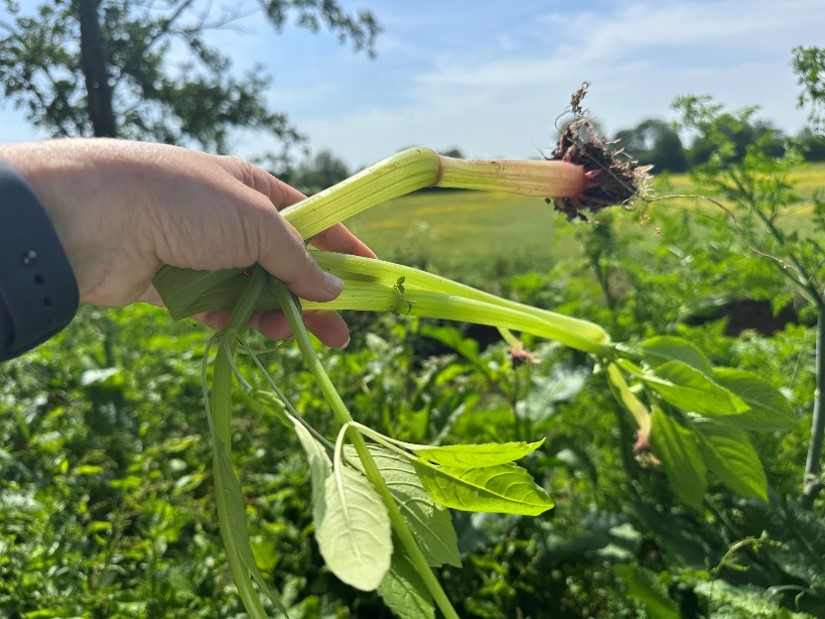
Invasive Himalayan Balsam being removed by hand across Southwell

The Internal Drainage Board has committed to help with flailing large stretches of the River Greet banks this year where the balsam is returning with a vengeance again.

[Many Thanks to Lynn Preece from Newark & Sherwood District Council, for providing the news and photos for this blog]

Sherwood Forest Trust is 30!

This year sees Sherwood Forest Trust enter its 30th year, and to celebrate they’re not having a birthday party though! They’ve launched a campaign to encourage 30 miles for 30 years and asking people to get out and walk, run or cycle some of the Robin Hoods way and maybe see a bit of the Sherwood they’ve not seen before: https://sherwoodforest.org.uk/30-miles-for-30-years/

Graeme, the Trusts’ conservation manager, decided this wasn’t enough and used May to walk the entire 105 miles fitting it in around family, work and general life. Click here to read more about his journey and support his efforts!

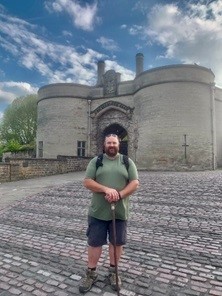
Graeme as he started his walk of 105 miles!

[Many Thanks to Graeme Turner from The Sherwood Forest Trust, for providing the news and photos for this blog]

Ranger Conservation Work: Protecting Woodlands and Riverbanks

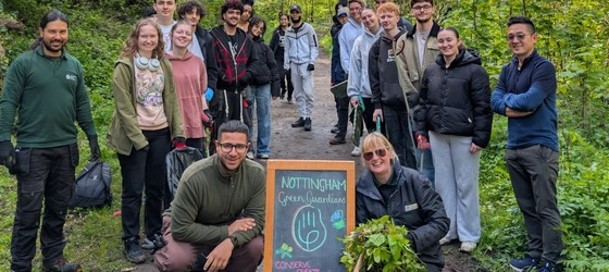
Himalayan balsam is being carefully controlled at Clifton Woods to protect native plants and riverside habitats. Already this year, Nottingham City Council have hosted three corporate action days, with volunteers from NTU and Ideagen, joining forces to remove Himalayan Balsam by hand – many thanks to everyone involved! The Nottingham Green Guardians also run regular sessions on the first and third Wednesday of each month, offering more opportunities to get involved.

The Nottingham Green Guardians at their Himalayan Balsam Control Session!

This effort is truly part of a partnership: and is part of a much wider project aiming to clear Himalayan balsam from 7 river catchments in central Nottinghamshire, including the River Greet, River Leen, River Maun, Ouse Dyke, Cocker Beck, Dover Beck and Rainworth Water. Collaborations like these are vital to protecting our local habitats and keeping Nottingham’s greenspaces thriving!

[Many Thanks to Jemma Maguire from Nottingham City Council, for providing the news and photo for this blog]

Bats at Center Parcs, Sherwood Forest

Center Parcs in Sherwood Forest has consistently had very high numbers of bats, and have 8 of the 12 Nottinghamshire species currently using or having previously used the site. Specifically, they regularly have maternity roosts of soprano pipistrelles in the buildings during the summer (sometimes 300+ bats in one roost), as well as regular sightings of common pipistrelle, brown long-eared and Daubenton’s.

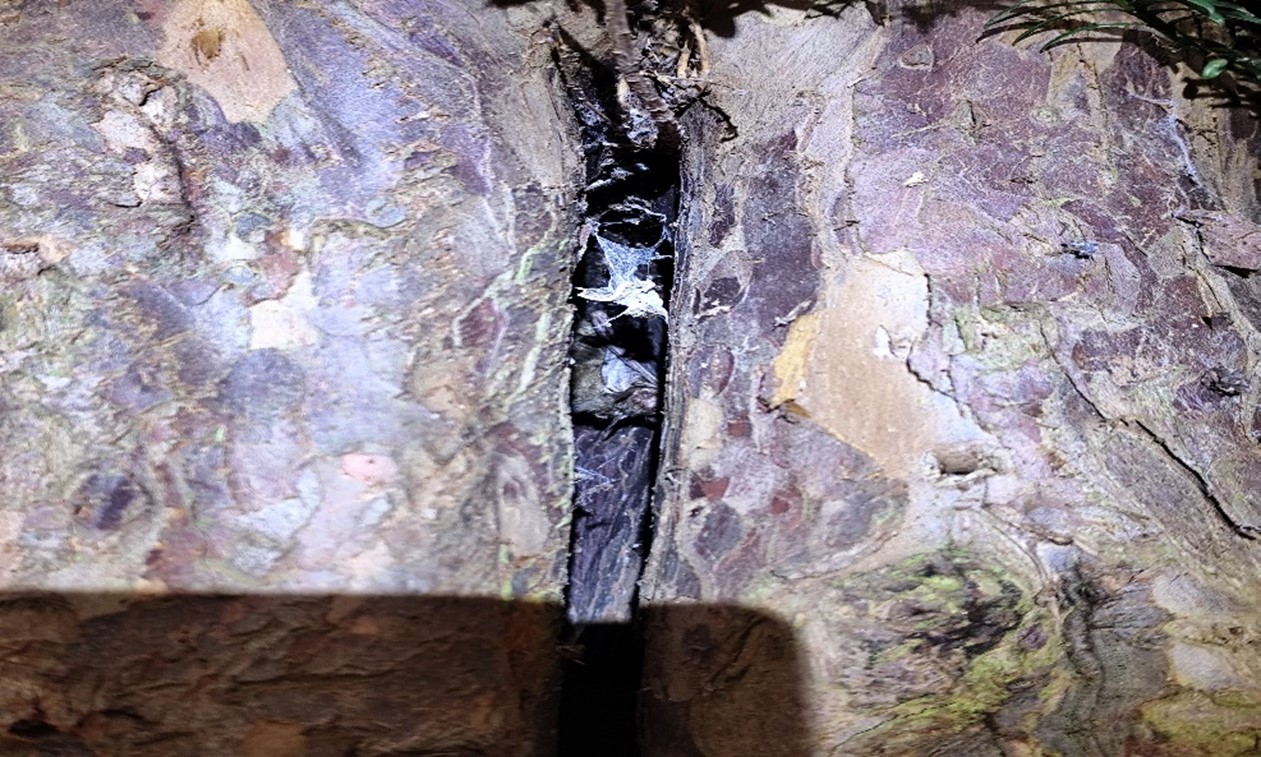
Brown Long Eared Bat hibernating in a Yew Tree

During their regular bat box checks with licensed volunteers, they also have had great numbers of Leisler’s and a couple of findings of Natterer’s. As Center Parcs is a holiday Village, and routine refurbishments repairs are required on buildings regularly, as well as forestry operations, the Senior Conservation Ranger, Kate Doull, remains a key person involved in this process to ensure our bat roosts and potential bat habitats are protected.

[Many Thanks to Kate Doull from Center Parcs, Sherwood Forest, for providing the news and photo for this blog]

News from the Welbeck Estate

The Welbeck Estate are currently working with the Environment Agency on a study which models the feasibility of re-naturalising the River Poulter at Cuckney, where it is currently disconnected from its floodplain.  This study will assess factors such as flood risk, to ascertain the possibility of a river restoration scheme here to better connect the Poulter to the floodplain, helping to improve natural processes, and it would be hoped to also improve fish passage.

The Welbeck Estate

Alongside this work, many areas along the River Poulter were once home to functioning water meadows, including the Cuckney water meadows just downstream of the location of this study. The Estate are currently mapping the biodiversity value of these habitats to learn more about the species being supported on these sites.

[Many Thanks to Amy Taylor from the Welbeck Estate for providing the news and image for this blog]

Growing Together: Rushcliffe’s Tree Planting Success

In 2025, Rushcliffe Borough Council worked with local partners and residents to make a big impact through a free tree planting scheme. Here’s how they have been growing together:

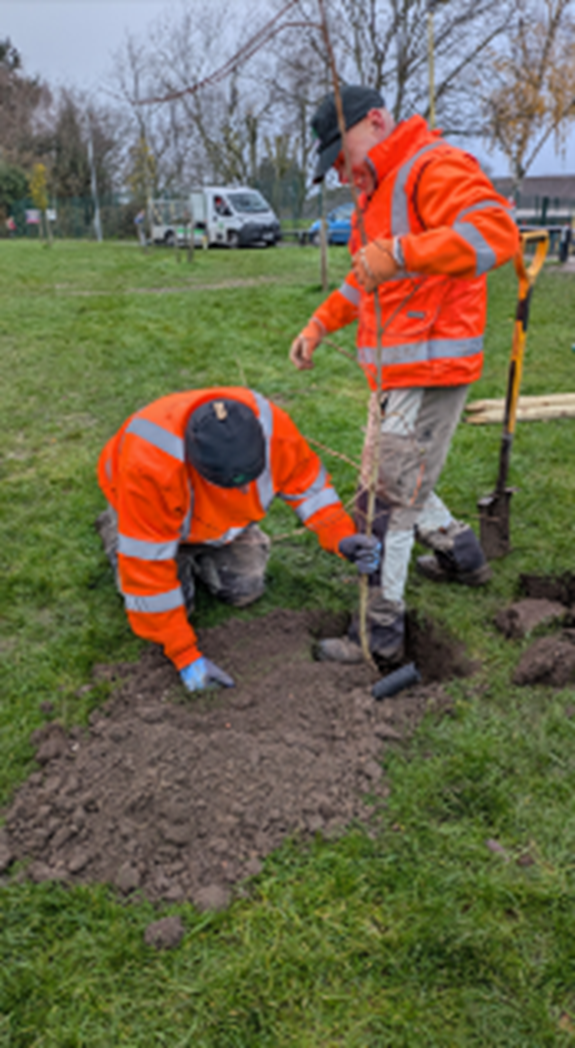
Steve & Chris from Streetwise planting a Field Maple at Greythorn Drive Park West Bridgford.

Community Free Tree Planting Scheme 2025

At the beginning of December 2025, Streetwise delivered and planted 75 trees across six local parish councils, two community groups, and at a Rushcliffe Borough Council owned site.  Streetwise will undertake a two-year watering service (2026-27) to help these trees thrive in future years.

Members of the Radcliffe Nature Conservation Group, one of the community groups that received free trees.

Resident Free Tree Scheme 2025

In October last year, Rushcliffe Borough Council invited residents to take part in their free tree giveaway. During National Tree Week (22-30 November 2025), 1,000 householders received their trees, supplied by Alba Trees that were delivered straight to their doors by Royal Mail.

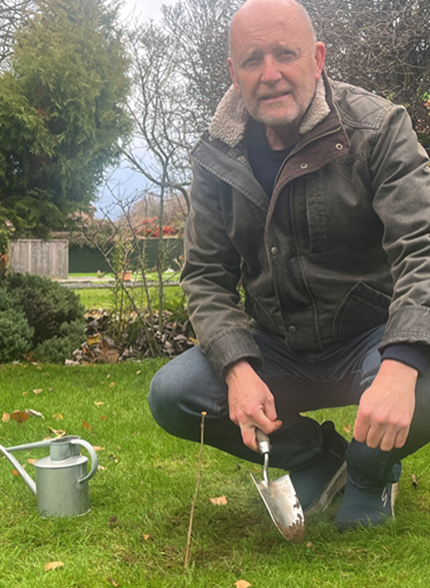
David a local resident & Tree Warden planting a wild cherry in his garden.

Tree Wardens – Local Champions

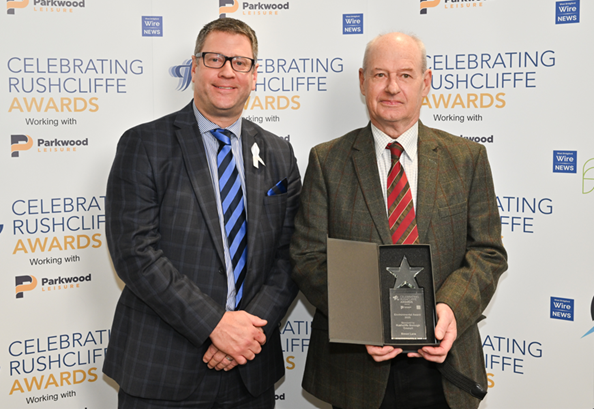
Rushcliffe Borough Council’s Tree Wardens are volunteers who champion trees in their communities. They survey for pests and diseases, plant and care for trees, and lead local initiatives. In February 2026, 16 Parish/Town Councils had appointed Tree Wardens.  Rushcliffe Borough Council were proud to celebrate their work at the Celebrating Rushcliffe Awards in December last year, where Simon Lane, Tree Warden for Hickling & Hickling Pastures, won the Environmental Group Award.

Celebrating Rushcliffe Awards 2025- RBC CEO Adam Hill presenting Simon with the Environment Award.

Looking Ahead

These schemes are just the beginning. Rushcliffe Borough Council has acquired a 21.54-hectare site at Upper Broughton, now named Rushcliffe Wood, which will feature 13 hectares of new woodland with over 12,700 native trees and 3,000 shrubs. This landmark project will complement our community planting efforts and help offset carbon for years to come.

Want to get involved? Keep an eye out for future tree and wildflower schemes, and learn more about the nature initiatives at Rushcliffe Borough Council

[Many Thanks to Sandrina Finocchio-Daniels and Paul Phillips from Rushcliffe Borough Council for providing the news and images for this blog]

Gedling House Woods and Meadows

The Friends of Gedling House Woods have been undertaking habitat management work at Gedling House Woods and Gedling House Meadow Local Nature Reserves to enhance the site’s biodiversity.

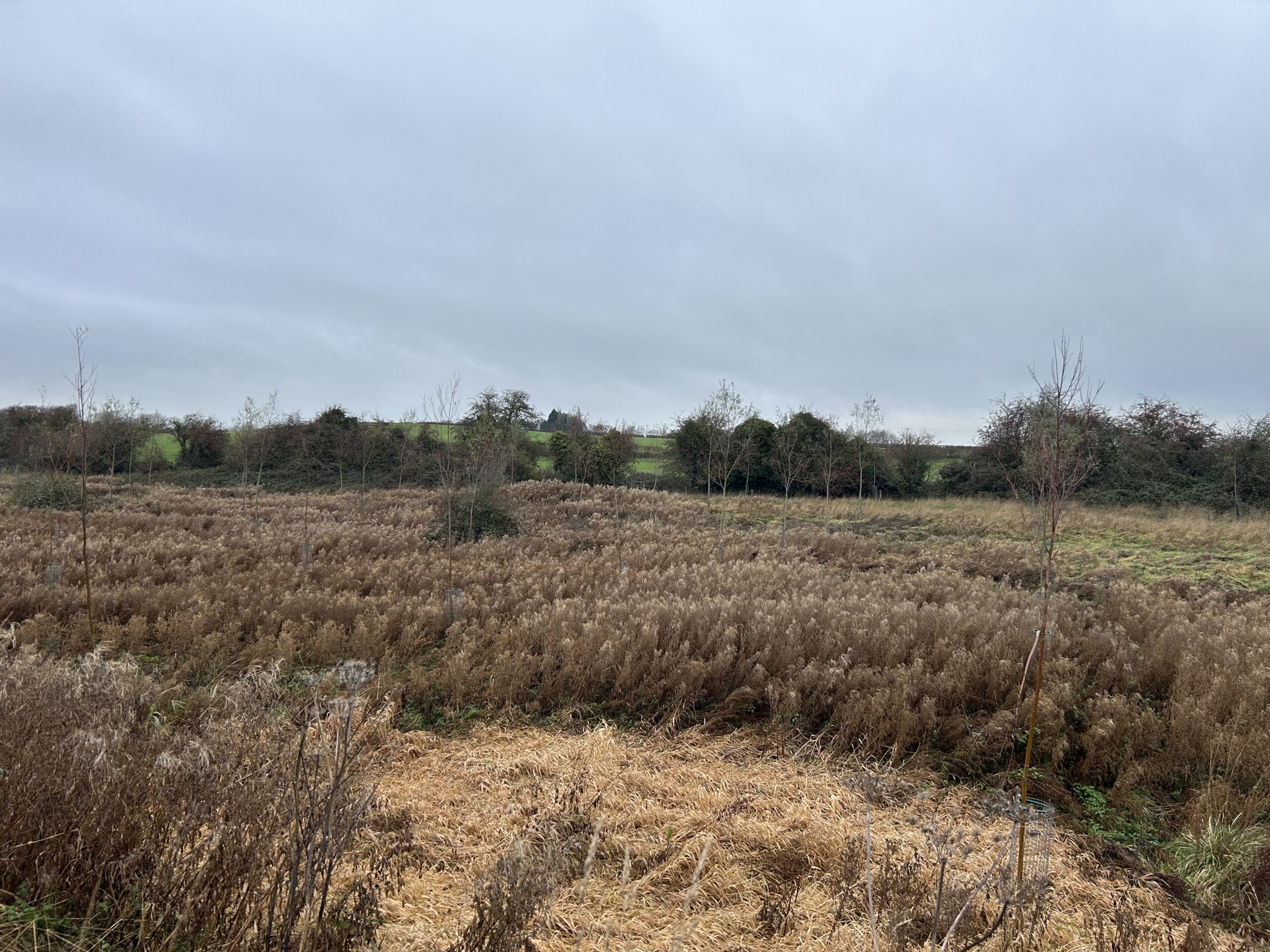
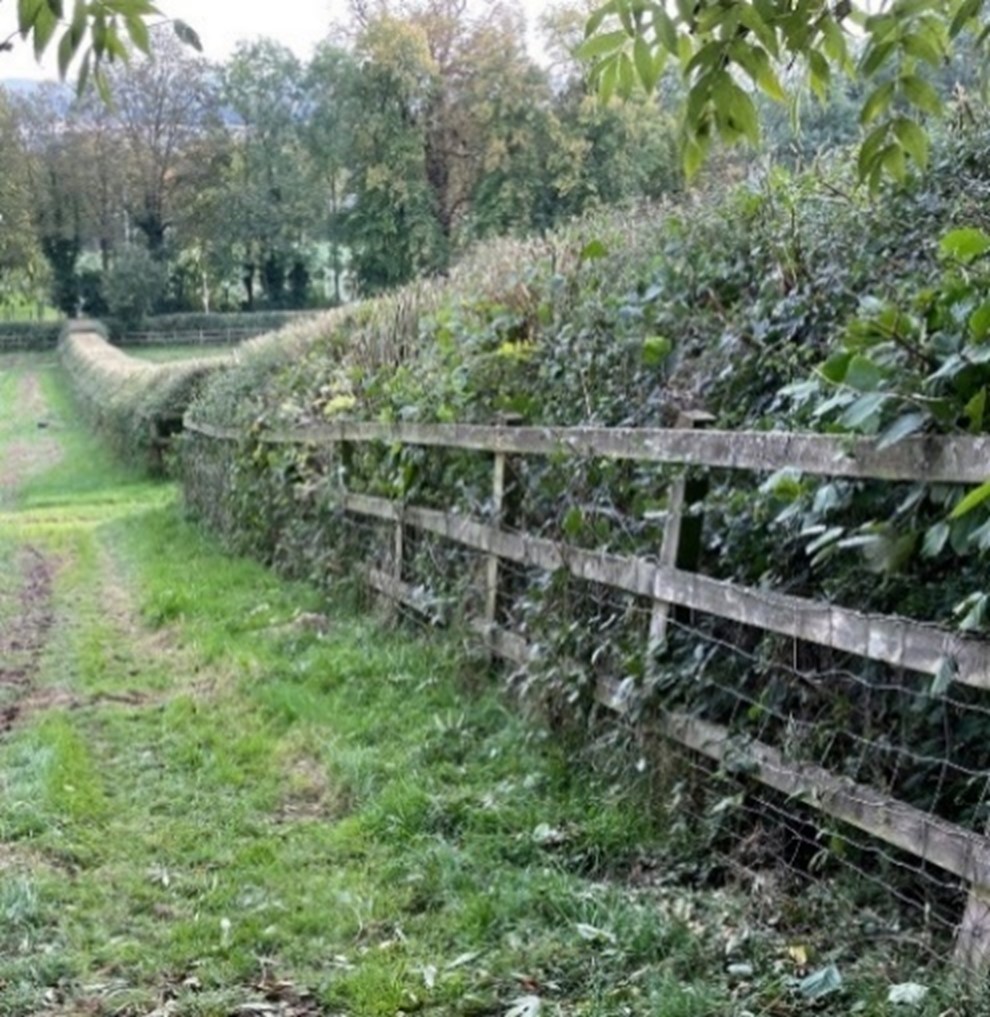
The work has involved improving the woodland habitat by thinning out the woodland by removing/coppicing some of the trees and shrubs to allow an increase in light reaching the ground encouraging a greater diversity of woodland ground flora. In addition, the group has also adopted a lighter approach to cutting the meadow hedges, which are now maintained at approximately 2 metres by 2.5 metres, providing an improved resources for wildlife creating a great feature to allow species to move safely around the site.

Meadow Hedges have now been cut more sympathetically in order to work for local wildlife

Along the roadside edge, volunteers have been selectively thinning younger trees to promote a mix of smaller, more manageable species in marginal areas, while gradually removing those that would grow much taller. In addition, self‑seeded, poor‑quality sycamores have been removed from a 100‑year‑old hawthorn copse to prevent them from spreading into the neighbouring wildflower meadow.

To further support meadow diversity, an extra flock of sheep has been introduced to the site to graze the secondary growth, helping to reduce the greensward and create more favourable conditions for wildflowers.

[Many Thanks to Sarah Spotswood from Gedling Borough Council, for providing the news and photo for this blog]