
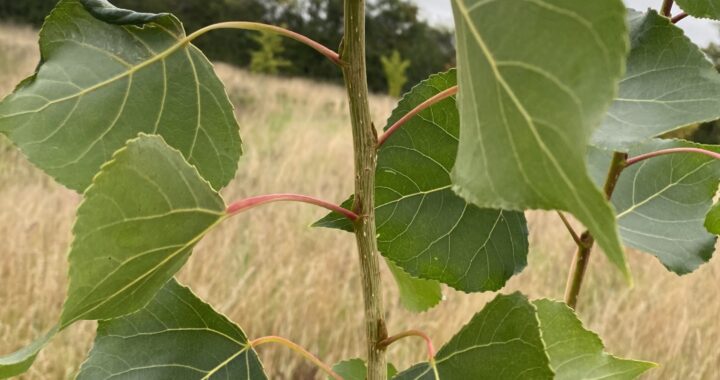
The next year is looking exciting for the Black Poplar Project (page in progress), thanks to funding awarded by the Natural England Bequest Fund to support the development of this project, including the provision of essential supplies for Black Poplar nurseries and funding for DNA testing.
For those who are new to this species, the Black Poplar is an LBAP species, having declined significantly in the past 200 years and being threatened by loss of genetic diversity and hybridisation. Part of their Species Action Plan (SAP) involves improving their recording, increasing their population and increasing the proportion of female Black Poplars across Nottinghamshire.
Last year, we were able to DNA test several Black Poplars across Nottinghamshire to confirm if they were native or hybrids. We have been awarded additional funding from the Natural England Bequest Fund to DNA test 60 additional sites across Nottinghamshire (with the assistance of Environment Agency and Forest Research) to increase the accuracy of our native Black Poplar database and, hopefully, identify some new clones!
Our friends at Sherwood Forest Trust (SFT) and Nottingham Trent University (NTU) have both been growing cuttings from confirmed native Black Poplar clones. We recently visited our SFT partners at their Vicar Water site where you can find the initiative Feel Good Gardens, a therapeutic community garden to improve wellbeing of people struggling with physical and mental health. At their tree nursery, they have been growing cuttings from native Black Poplars for over a year. We are pleasantly surprised at how successfully the Black Poplar cuttings have grown!
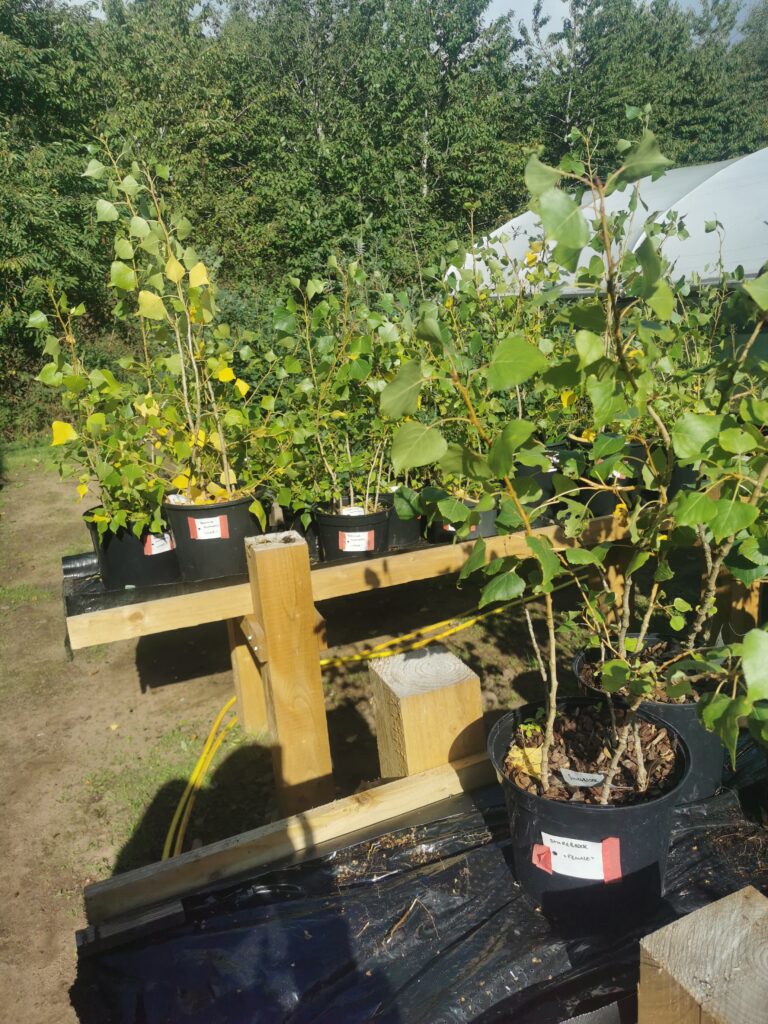
Lots of successful clones.
This has kicked off the next stage of the project with a refreshing optimism for the future of our native Black Poplars – fingers crossed. We counted a total of 101 mixed male and female Black Poplars at their tree nursery, ready to be planted across our partners’ sites.
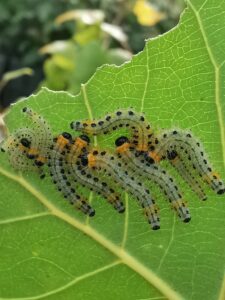
Hairy poplar sawfly larvae which we had to remove to protect the tree.
Additionally, Newark & Sherwood District Council planted 8 native Black Poplars close to the watercourse further along at Vicar Water. Planted in early 2026, they already appear to be thriving, illustrating why the Black Poplar is famous for its rapid growth.
We then visited our partners at Nottingham Trent University’s Brackenhurst campus, where several cuttings have been propagated from an additional 3 clones. 8 cuttings have been planted into the ground, some of which are already looking quite tall! As they grow, these young trees will be pollarded as a source for future cuttings to be planted into various sites across Notts.
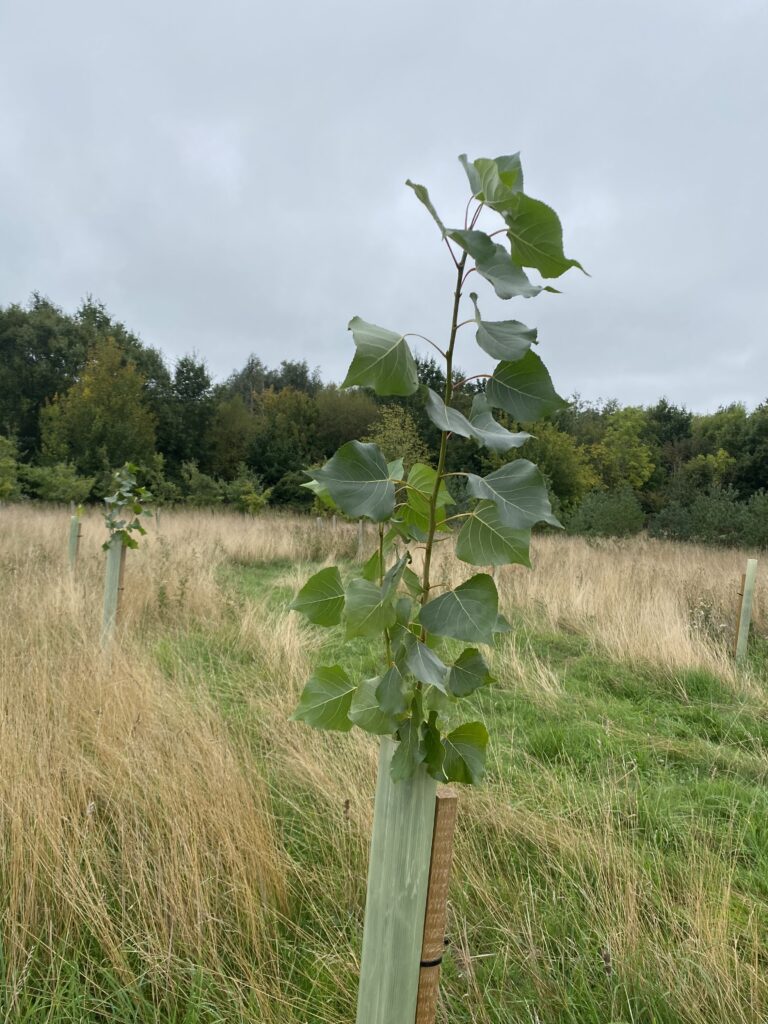
This particular tree looked very strong and happy.
They also have 33 cuttings growing in their greenhouse, another source of clones for our partners.
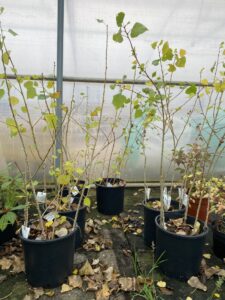
The NE grant will also be supporting our partners SFT and NTU with the development of their Black Poplar nurseries by funding essential supplies – lots of compost, for example.
We will be providing clones to our partners who have suitable wetland sites, so long as they can guarantee proper aftercare including mulching, irrigating and guarding where appropriate. Our partners will be planting males and females together to improve their genetic diversity and generate new clones; we have only 8 confirmed clones in Nottinghamshire so this will be great for improving the outlook of this species.
We are hoping the future will be bright for Black Poplars in Notts.
Follow any new developments on our Facebook, as well as our brand new Instagram account.