Bats, Grass Snakes and Donkeys (oh my!)

Over the summer, Newark & Sherwood District Council (NSDC) have been working hard to engage the community with their bat walks and seedbombs. Additionally, they have some exciting grass snake updates and even recruited the help of some donkeys for a balsam-bashing work party.

Bat Walks

NSDC have been hosting bat walks across their council parks, including Sconce & Devon Park and Vicar Water Country Park, leading over half-a-dozen fully booked sessions throughout summer and autumn.
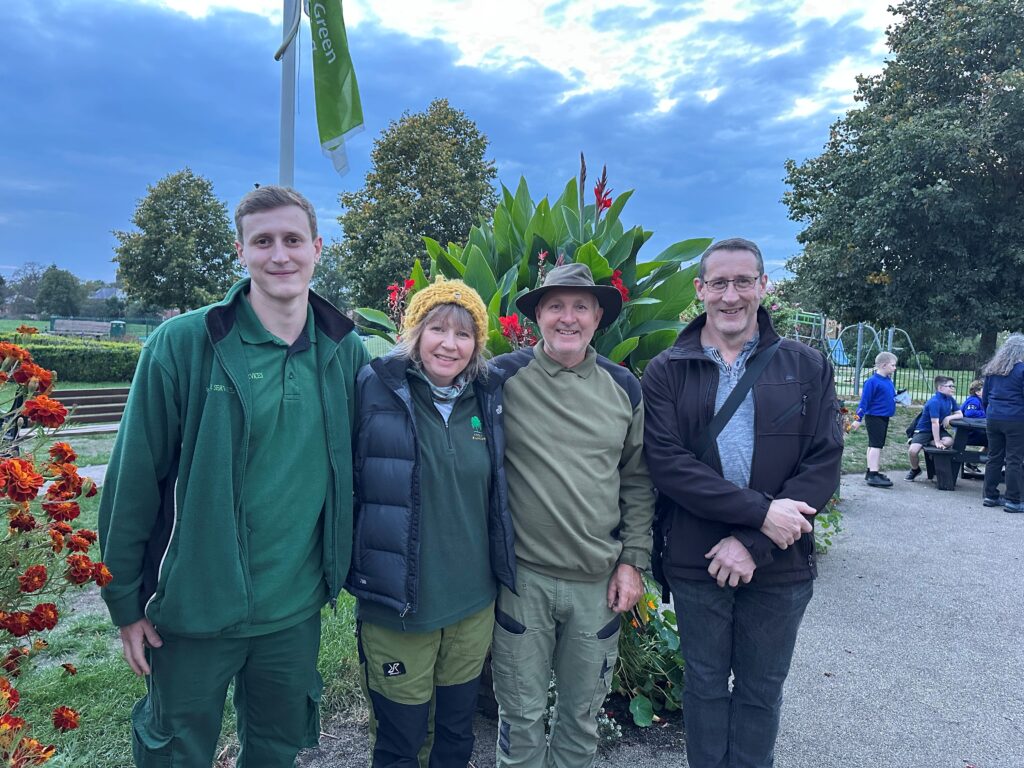
Simon, Issac, Lynn and Allister have been leading several bat walks over the past quarter.

Five species of bat were recorded across their sessions in Vicar Water Country Park using their bat detectors, including:

  • Noctule – Our largest resident bat with a wingspan between 32-40cm. They can fly at 50km/h, often high above the treetops, and their echolocating calls range from 20 to 45kHz.
  • Common Pipistrelle – This bat, weighing around the same as a 20p coin, eats thousands of insects in a night, flying around with a speed as they hunt by aerial hawking. They can be heard making a wet slap sound between 45 and 70kHz.
  • Soprano Pipistrelle – Soprano Pipistrelles are distinguished from Common Pipistrelles by sound only, though are more selective in their habitat use than the latter. Their calls are heard between 55 and 80kHz.
  • Daubenton’s – This water specialist bat put on an exciting display at Vicar Water Country Park, scooping up insects from the small pond with its big feet and tail membrane. Their machine gun-like calls range from 35 to 85kHz.
  • Brown Long-eared – As described by its common and scientific name (meaning large, twisting ear), this gleaning bat has large ears with such precise hearing that it can detect a ladybird walking on a leaf. They are also known as the ‘whispering bat’ due to their quiet echolocating calls heard between 25 and 50 kHz.

If you missed out and are keen to see a marvellous Daubenton’s bat, they will be hosting more bat walks from spring next year. Learn more about bats at https://www.bats.org.uk/ .

Grass Snakes

Grass snakes are harmless, non-venomous snakes native to the UK. They have been having a good year across Sconce & Devon Park, with many sightings near water rather than their usual distribution around orchards. Grass snakes prefer open woodland and edge habitats, also preferring edges of freshwater bodies. They are strong swimmers, being semi-aquatic. A 1.2m long individual was spotted this summer at Sconce & Devon Park!

They prefer to feed on amphibians but will occasionally feed on ants and larvae. They often search for their prey around the edges of a freshwater body using their Jacobson’s organ (flicking particles into the organ with their tongue) and their sight. As winter approaches, they will overwinter underground.

Grass snakes have some interesting defence strategies, including secreting a garlic-like fluid from their anal glands, feigning death (which may be accompanied by secreting blood from the nose and mouth), and performing an aggressive display by hissing and striking with a closed mouth. However, they rarely bite in self-defence so don’t be afraid and be sure to give them plenty of personal space if you come across one.

DIY Wildflower Seedbombs

Following on from their spring bee bomb-making sessions, NSDC hosted a series of drop-in wildflower seedball-making sessions across four weeks during this year’s school summer holidays. Attended by over 150 people, a mix of children and adults partook in making seedballs to take home and plant this autumn or next spring.
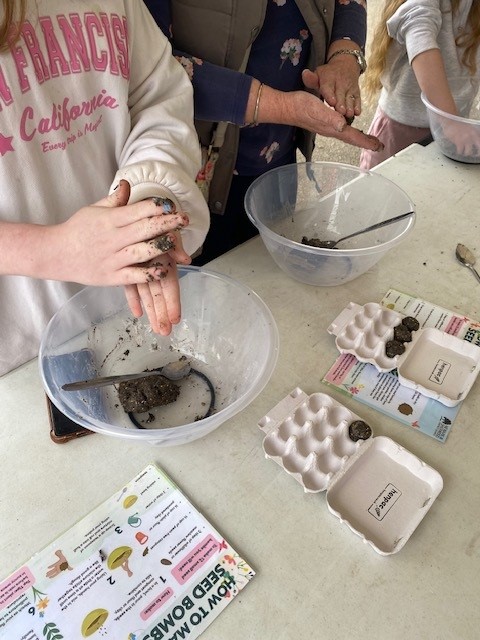
Residents getting their hands dirty making seedballs for a wildlife-friendly garden.

These sessions helped raise awareness of the ecological role of pollinators while using a fun activity to inspire residents to make their own garden more wildlife-friendly.
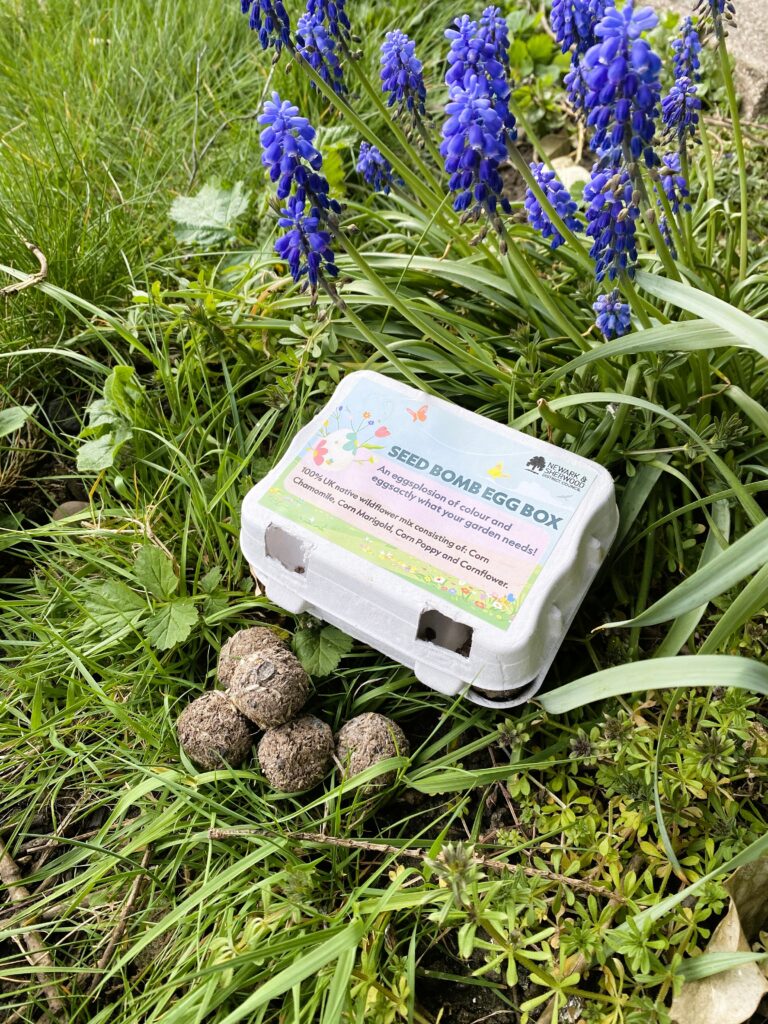
Their seedballs used a mix of native UK wildflower seeds, including Corn Chamomile, Corn Marigold, Corn Poppy, Common Vetch, Birdsfoot Trefoil, Common Knapweed, Oxeye Daisy, Salad Burnet, Red Campion and many more.

Donkey Balsam Bashers

After a very busy and coordinated summer of balsam-bashing along Potwell Dyke and the River Greet, volunteers ran into some very curious donkeys! Lynn Preece had recently learned about controlled grazing and, knowing Himalayan Balsam was not toxic to cattle, equines or bovines, thought she’d let the donkeys have a taste.
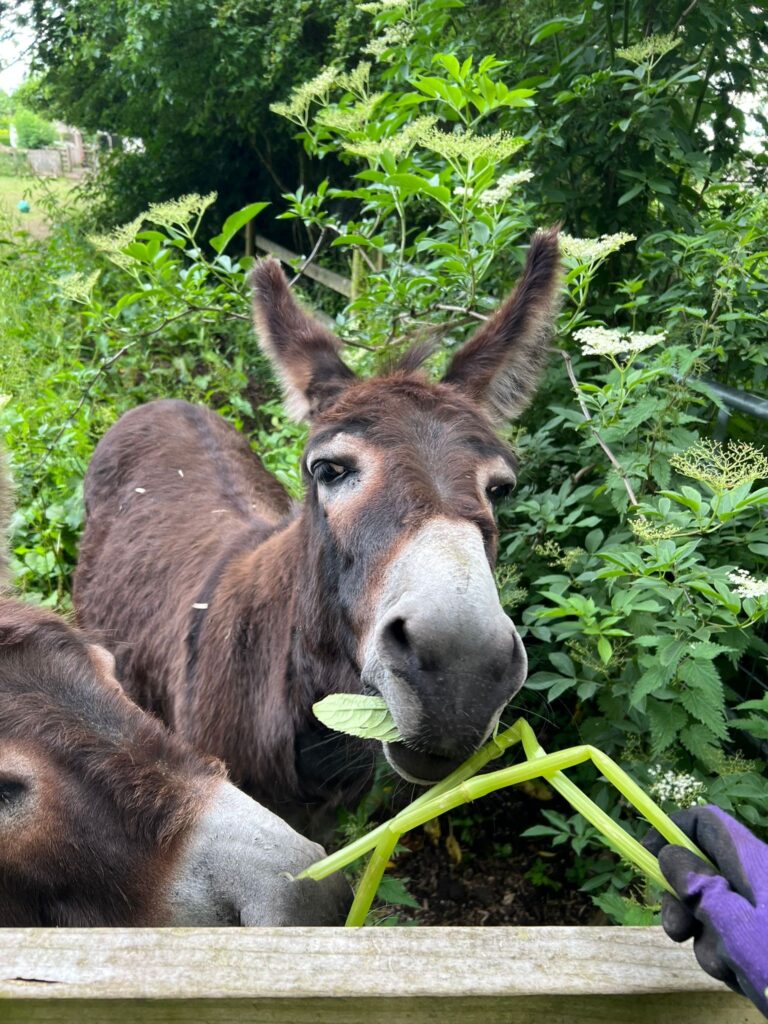
A hungry donkey helping volunteers clean up.

They thought it was very tasty, so a special thanks to the donkeys for their hard work in cleaning up our environment.

A special thanks to…

Hayley Hurst, Danielle Davies and Lynn Preece for their contributions.
Crash Course: White-Clawed Crayfish Translocations

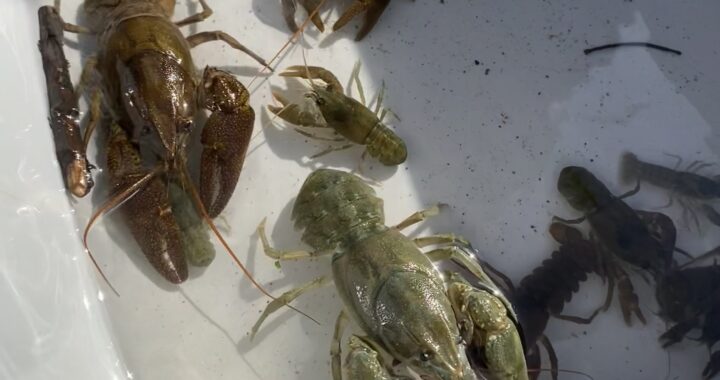
You may have heard of conservation breeding programmes and reintroductions, but have you heard of translocations? In conservation, translocations involve deliberately moving a threatened population of a species from one site to another more suitable site, following extensive planning to ensure they will be protected and able to thrive in their new site.

A translocation might be performed due to threat of habitat loss, climate change or an invasive species, for example. It is not an action taken lightly due to the risks involved and inherent invasiveness of removing a species out of its natural range and relocating it elsewhere, but the attitude to translocations have changed over time from a last resort to a proactive measure.

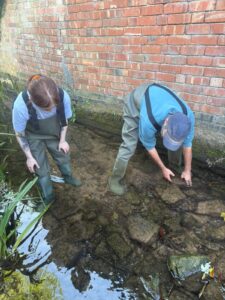
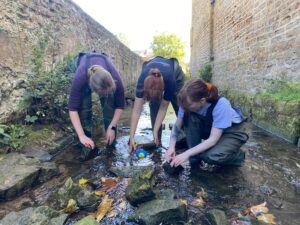
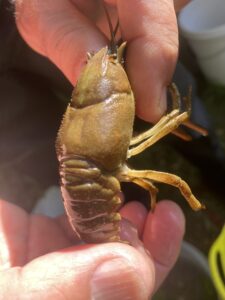
We have recently been in the process of translocating a metapopulation of White-clawed Crayfish with the help of our partners at BugLife and Environment Agency, as well as the assistance of staff from Derbyshire Wildlife Trust.

Along a particular river Leen tributary, a healthy White-clawed Crayfish metapopulation is threatened by the encroachment of the invasive American Signal Crayfish from downstream. Signal Crayfish cause severe problems for our native White-clawed through outcompeting them AND spreading the catastrophic crayfish plague. Signal Crayfish, having co-evolved with the disease, are carriers of crayfish plague, which is a fungal disease that can rapidly wipe out entire populations of White-clawed Crayfish. Crayfish plague can also be spread through infected equipment, so it is essential to thoroughly disinfect any fishing equipment or leave it out in the sun for 21 days if planning to use it at other sites. Follow the principles of Check Clean Dry to help protect ecosystems.

Logistics

Before a translocation can occur, potential ark sites (freshwater bodies with low threats of Signal Crayfish invasion, suitable habitat and good water quality) are assessed for suitability. For more information about site assessment, see this resource by our partners at BugLife.

As there is ongoing threat of Signal Crayfish invasion throughout the rivers Erewash, Leen and Maun catchments, site selection is an ongoing process, and translocations of various metapopulations to suitable ark sites will continue.

Trapping

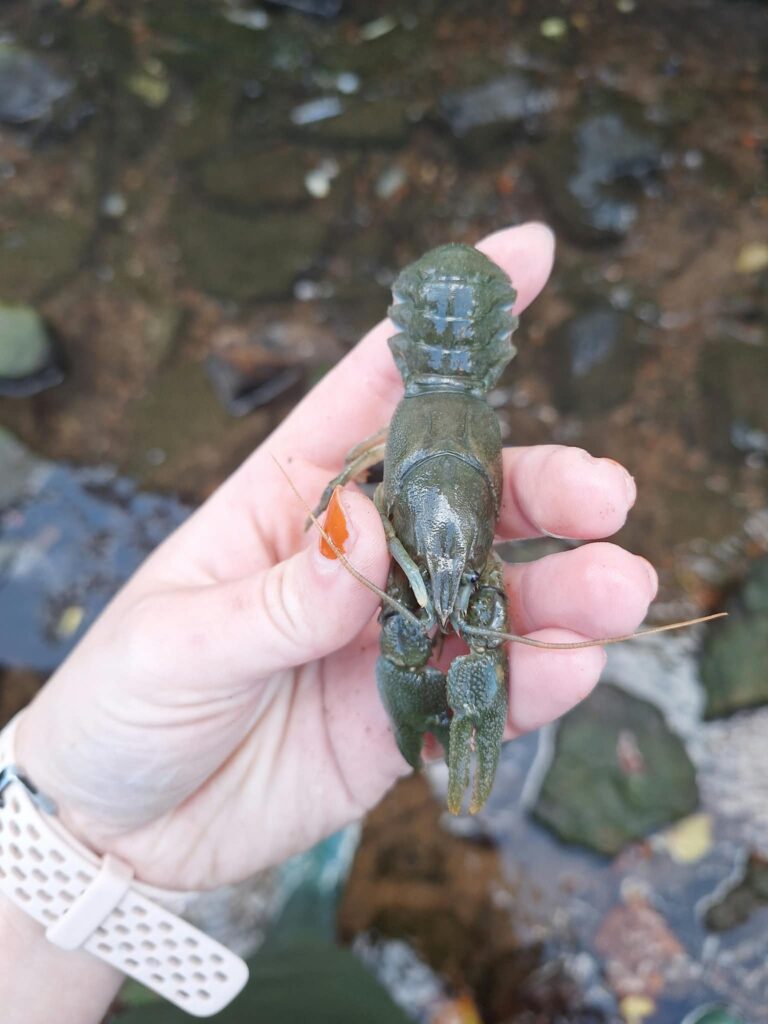
Following selection of a suitable site, we moved onto trapping under the guidance of licensed professionals. White-clawed crayfish should never be trapped or disturbed without a license. We aimed to catch 150 over 2 days, followed by another 100 the following week.

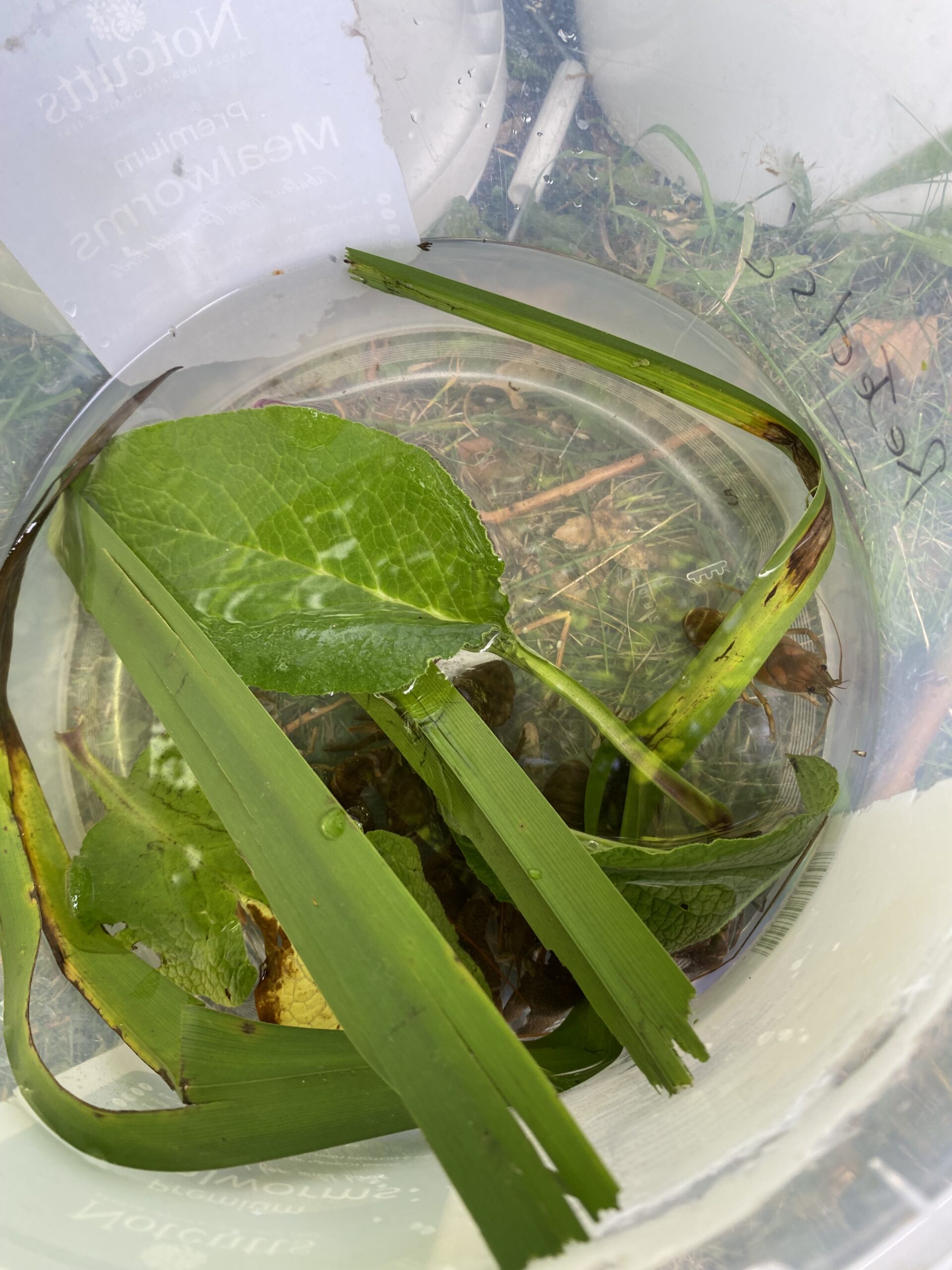
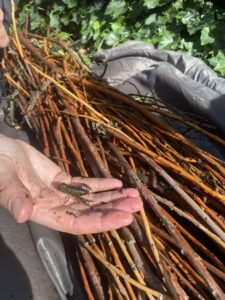
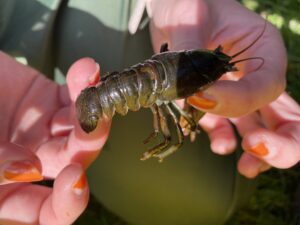
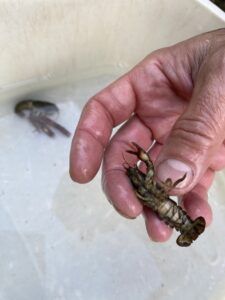
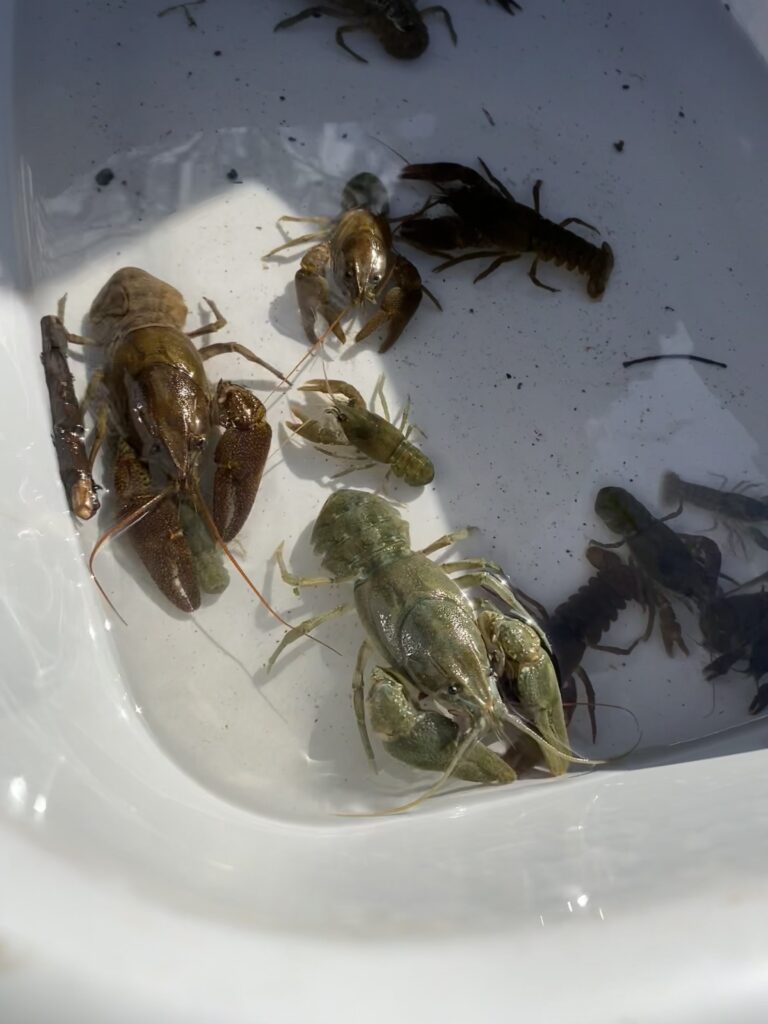
WCC waiting to be assessed, hiding under vegetation.

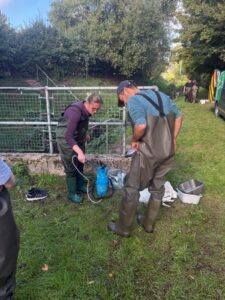
Biosecurity is essential in conservation, whether working with protected species, invasive non-native species or even performing routine habitat management; poor biosecurity is a key source of population decline amongst many species. Learn more about biosecurity here. All waders and trapping equipment were thoroughly sanitised with Virkon, a powerful disinfectant used by professionals who work with livestock and wildlife.

Sarah using Virkon to spray Chris’ waders, minimising the risk of accidentally spreading crayfish plague to a different site.

We used a variety of trapping methods including –

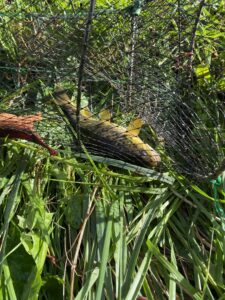
  • Fladen traps: these are baited with halibut pellets or mackerel. Any wildlife (i.e. fish or crayfish) that enters cannot escape; these must legally be checked within 24 hours of being set for animal welfare purposes.
  • Brash bundles: piles of sticks which are tied together, creating attractive refugia for smaller crayfish. Wildlife can come and go as they please.
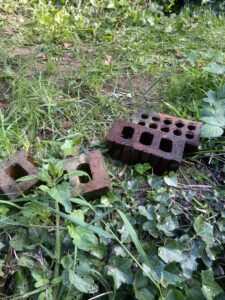
  • Perforated bricks: bricks with holes in them, which smaller crayfish may hide in.
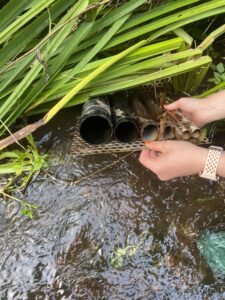
  • Artificial refuge traps (ARTs)/pan pipe traps: pipes with a backing. These can be left in-situ for longer periods of time as wildlife can come and go as they please. These catch a wider range of sizes.
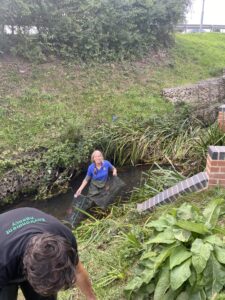
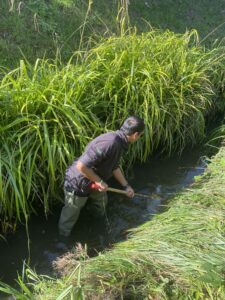
  • Netting & rock turning: actively catching crayfish by overturning rocks and using a net or hands to catch them, which can catch a range of sizes.

Assessing condition

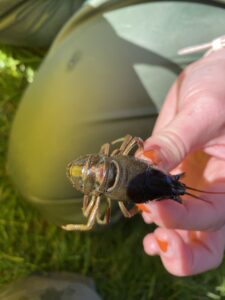
Every crayfish we caught was then measured and checked for disease, injury, moult and breeding condition. As per licensing conditions, diseased and injured crayfish were released back into the stream to ensure an optimally healthy breeding population. Additionally, crayfish below and above a certain size threshold were released back into the stream for biosecurity purposes. For example, juvenile Signal crayfish below a certain size could be easily misidentified as White-clawed crayfish.

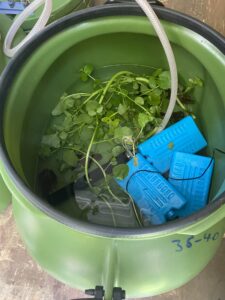
Healthy White-clawed crayfish were placed in water-filled buckets with vegetation for hiding, continuously oxygenated by a pump. They were then transported to a tank to be quarantined for 4 weeks. If they survive the quarantine process, they will then be relocated to a confidential ark site where their population can hopefully thrive, protected from crayfish plague.

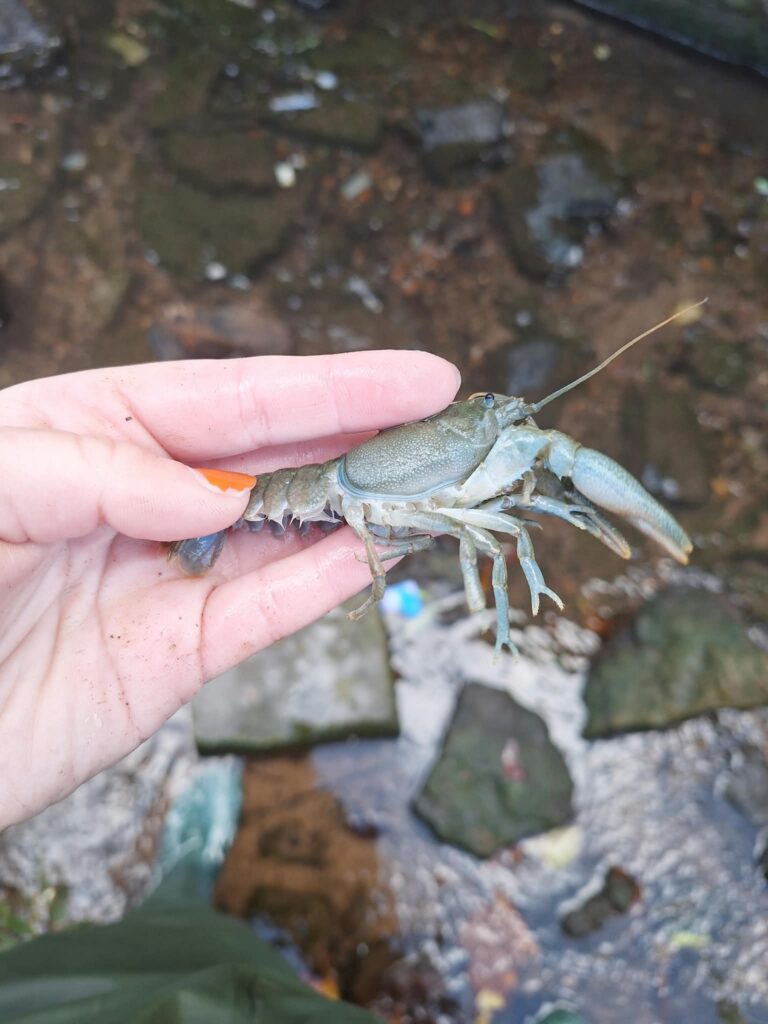
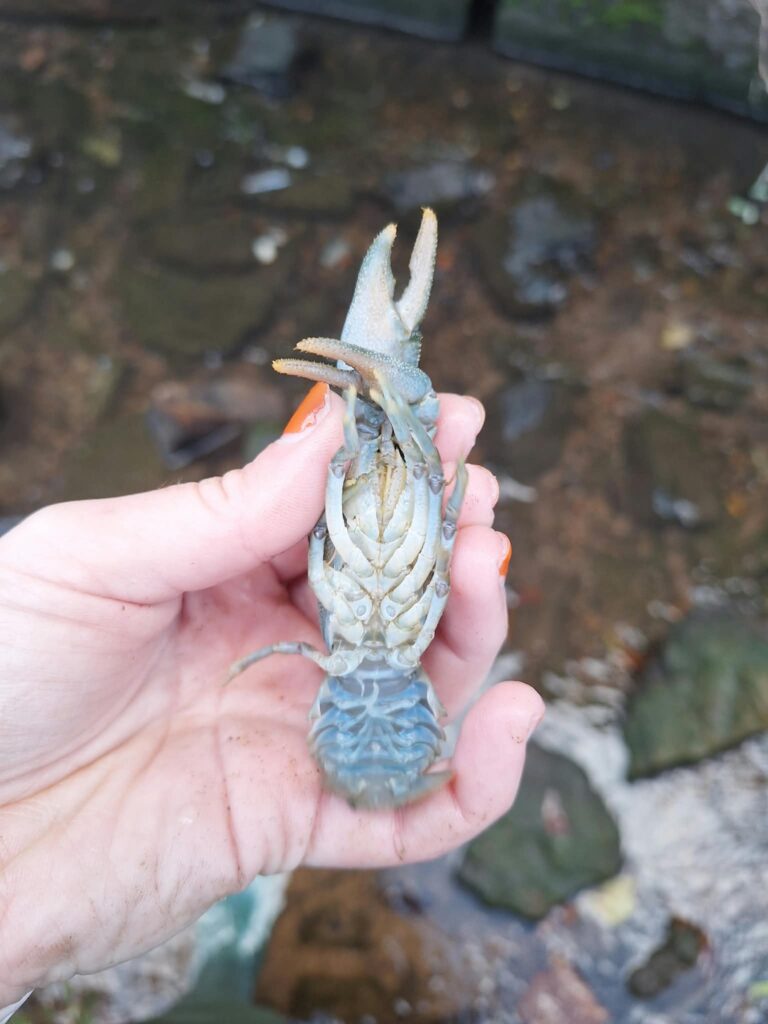
We also found a blue crayfish, which is a very rare colour variation. This would increase their risk of predation compared to a more inconspicuous brown crayfish, elucidating why the colour variation is so rare. Though probably unlucky for the crayfish, it definitely felt lucky to the team!

For more regular updates, you can join us on Instagram or Facebook.


The Weird & Wonderful World of Crayfish Reproduction

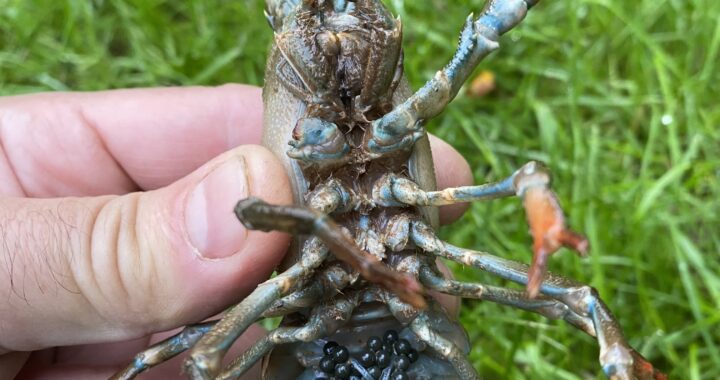
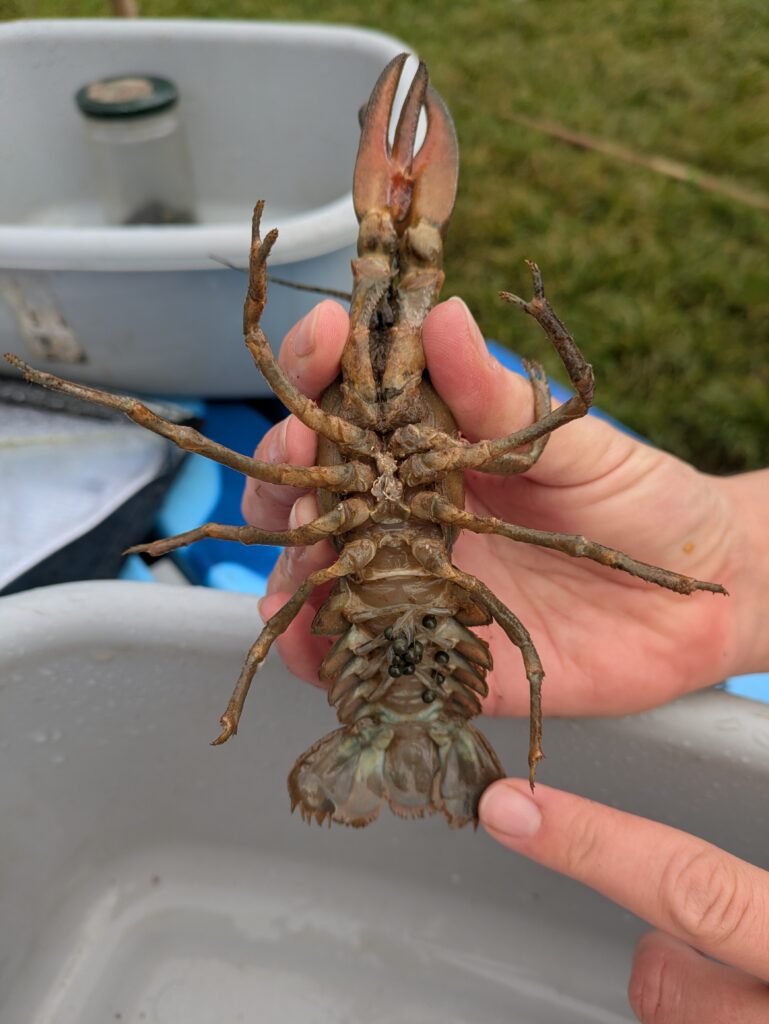
As of October 10th, we found our first berried female Signal Crayfish while undertaking work for our Signal Crayfish control project. The earliest we have ever found a berried Signal Crayfish is the 4th of October, across several years. But what does it mean for a female to be ‘berried’ anyway? Keep reading to learn about the bizarre world of freshwater crayfish reproduction.

This female must have lost quite a few eggs.

Entering breeding condition

In autumn, as the temperature of the water drops and the days get shorter, sexually mature female crayfish develop a sticky blue-white substance on the underside of their tail called glair, released by the glair glands. Glair glands are distributed across the underside of the abdomen and the cephalothorax. Glair has two purposes:

  1. It attaches the female’s eggs to her pleopods (or swimmerets – the extra appendages on the underside of the tail that facilitate swimming).
  2. It dissolves the male’s spermatophore walls, releasing spermatozoa which will then fertilise her eggs.

But what happens when we aren’t looking?

Courtship

During breeding season, females will release chemical cues through their urine indicating their sexual receptivity. Interestingly, all crayfish release urine during fights, meaning urine release is a signal of aggression. But when fighting turns to romance, males reduce how much urine they release. Female urine therefore simultaneously stimulates aggression and courtship in males. Why?

In crayfish, courtship begins with a fight. Females experience a spike in aggression prior to mating, which is when urine is released. The pair will then wrestle. Females will then become receptive once a male can successfully flip her onto her back – she only wants the strongest, largest male!

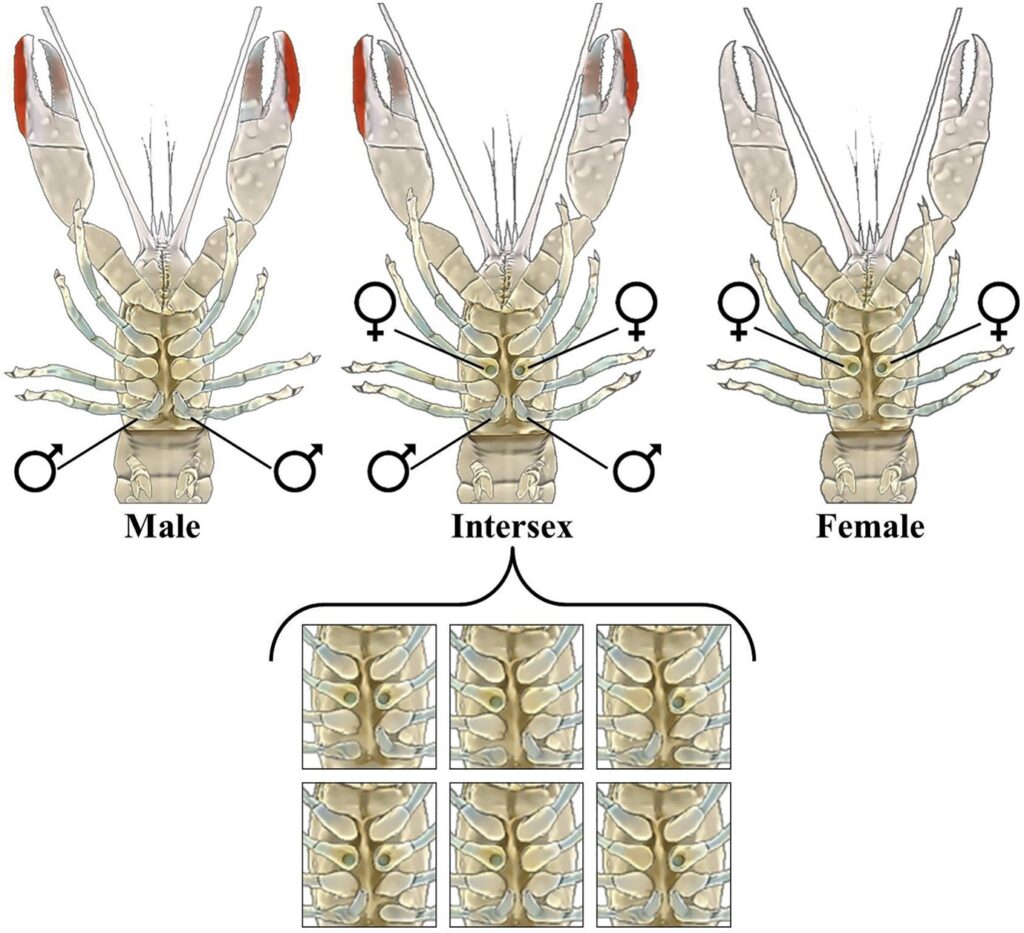
Once the female is immobilised (indicating receptivity) and flipped, the male’s spermatophores (packaged spermatozoa) are then deposited on the underside of the female cephalothorax through his gonopods (the male reproductive structure).

Image retrieved from Levy et al., 2020, displaying the male reproductive structure (gonopods) and the female reproductive structure (gonopores), as well as illustrating the possible sexual variations of an Australian redclaw crayfish.

However, if the male is not of suitable quality for her taste, she may remove the spermatophores, displaying mate selection. Females show a strong preference for males with both chelipeds (claws).

Offspring

Once the female has spermatophores deposited on her cephalothorax, she lays eggs through her gonopores (the female reproductive structure).  She then secretes glair from her cephalothorax glair glands which dissolves the spermatophore walls, fertilising the eggs with the spermatozoa. The eggs are then attached to her pleopods, or swimmerets, with the help of glair.

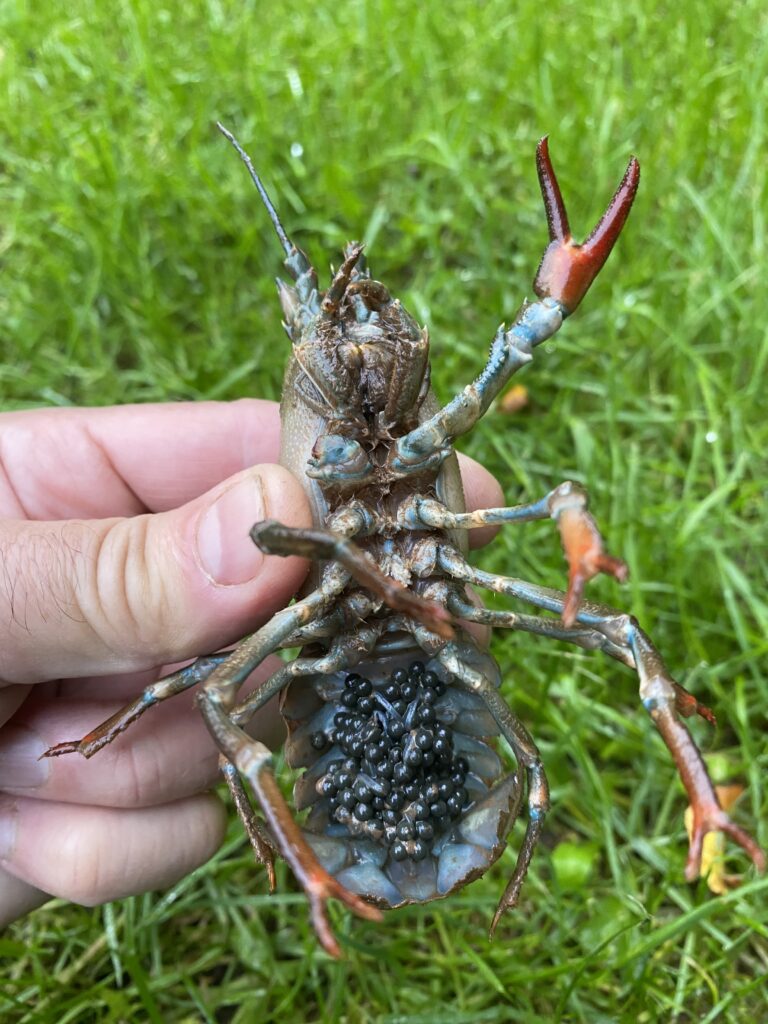
A female carrying eggs is called a berried female – see the image below to find out why that is! Larger females can carry more eggs than smaller females. As Signal Crayfish get larger on average than White-clawed Crayfish, this is another way they are able to outcompete our native crayfish. A berried White-clawed Crayfish carries between 20-200 eggs, with an average of 80. Signal Crayfish, however, can carry over 300 eggs.

A female crayfish ‘in berry’.


Females carry their eggs for 6 to 9 months (species-dependent) – up to a whole human pregnancy – until the eggs hatch. She will fan the eggs to keep them oxygenated and will clean them with her swimmerets, showing parental care.

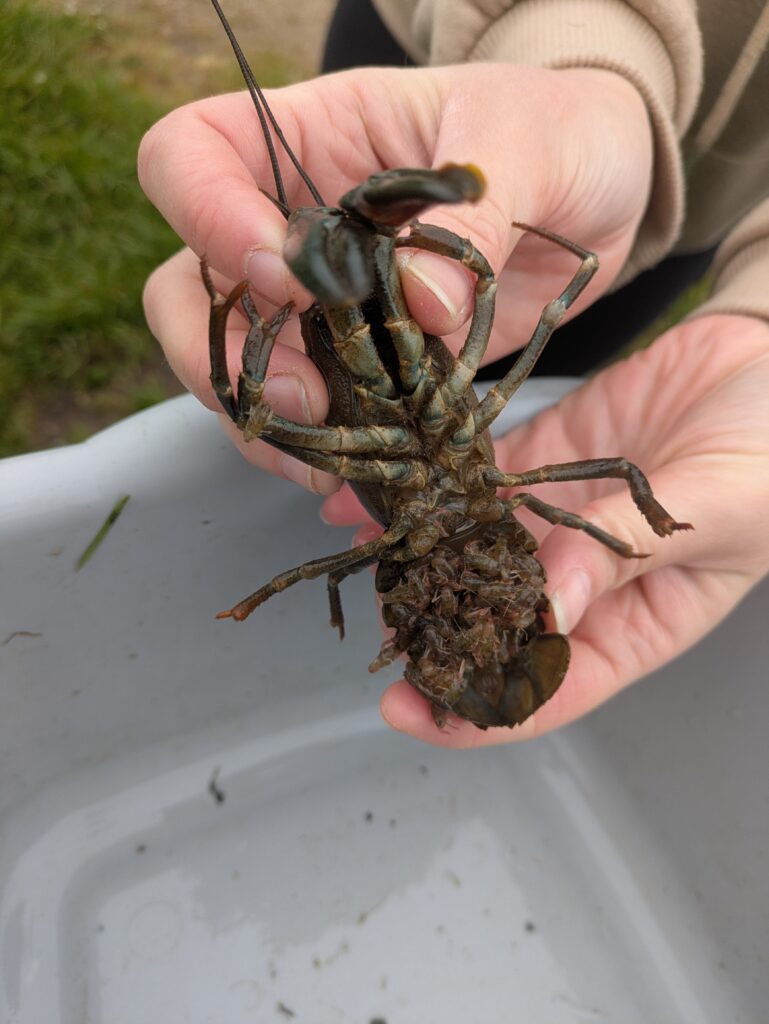
The hatchlings, or craylings, then stay attached to their mother’s pleopods for 2-3 weeks, where they first consume their yolk sac for nutrition, then begin to consume detritus and microorganisms from the safety of their mother’s body, then finally begin to detach for short periods of time to acquire food. From about mid July to mid September, their breeding season is over.

Hatchlings still attached to their mother; they will be literally hanging on by a telson thread.


References & further reading

Berry, Fiona & Breithaupt, Thomas (2010). To signal or not to signal? Chemical communication by urine-borne signals mirrors sexual conflict in crayfish. BMC Biology 8. https://link.springer.com/article/10.1186/1741-7007-8-25

Levy T. et al. (2020). Two Homogametic Genotypes – One Crayfish: On the Consequences of Intersexuality. iScience 23(11) https://www.cell.com/iscience/fulltext/S2589-0042(20)30844-0#fig2

Villanelli F. & Gherardi F. (1998). Breeding in the crayfish, Austropotamobius pallipes: mating patterns, mate choice and intermale competition. Freshwater Biology 40. https://www.researchgate.net/publication/229559494_Breeding_in_the_crayfishAustropotamobius_pallipesmating_patterns_mate_choice_and_intermale_competition

Mott, N. (2009) White-clawed Crayfish. Staffordshire Wildlife Trust, Stafford, UK. https://www.staffs-wildlife.org.uk/sites/default/files/2018-12/crayfish.pdf

Yazicioglu B., Reynolds J. & Kozák P. (2016). Different aspects of reproduction strategies in crayfish: A review. Knowledge & Management of Aquatic Ecosystems 417. https://www.kmae-journal.org/articles/kmae/full_html/2016/01/kmae160066/kmae160066.html

Recovering Our Native Black Poplars

The next year is looking exciting for the Black Poplar Project (page in progress), thanks to funding awarded by the Natural England Bequest Fund to support the development of this project, including the provision of essential supplies for Black Poplar nurseries and funding for DNA testing.

For those who are new to this species, the Black Poplar is an LBAP species, having declined significantly in the past 200 years and being threatened by loss of genetic diversity and hybridisation. Part of their Species Action Plan (SAP) involves improving their recording, increasing their population and increasing the proportion of female Black Poplars across Nottinghamshire.

Last year, we were able to DNA test several Black Poplars across Nottinghamshire to confirm if they were native or hybrids. We have been awarded additional funding from the Natural England Bequest Fund to DNA test 60 additional sites across Nottinghamshire (with the assistance of Environment Agency and Forest Research) to increase the accuracy of our native Black Poplar database and, hopefully, identify some new clones!

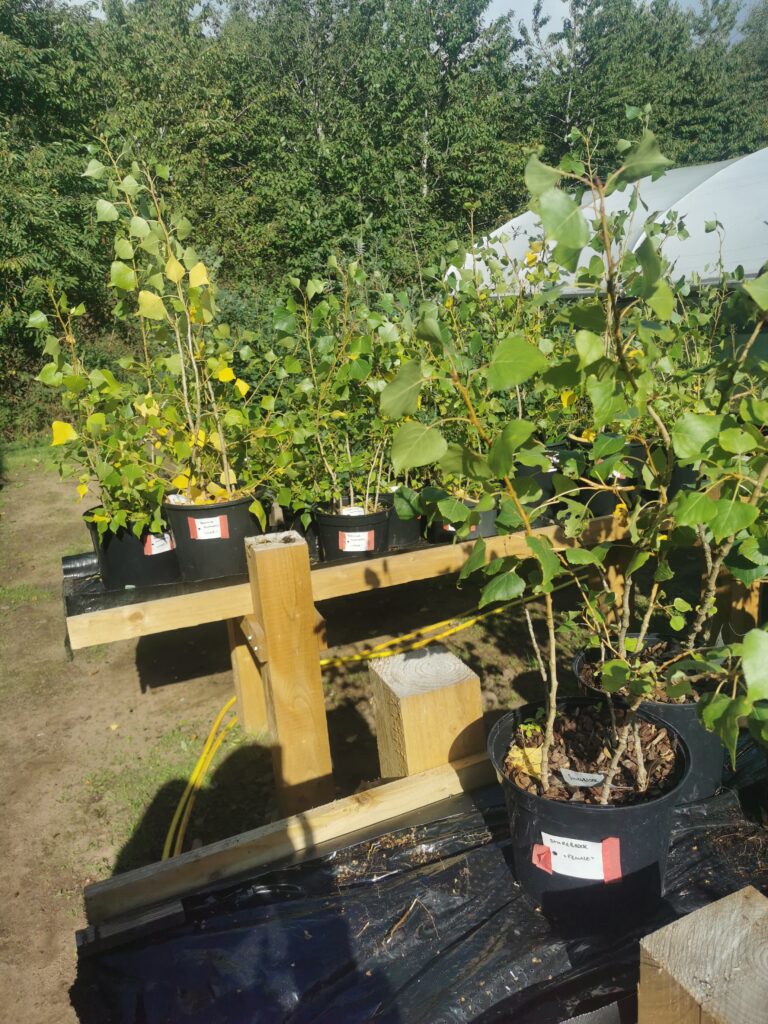
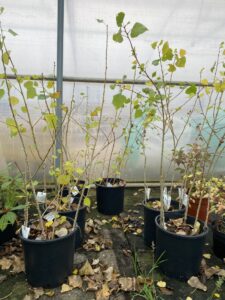
Our friends at Sherwood Forest Trust (SFT) and Nottingham Trent University (NTU) have both been growing cuttings from confirmed native Black Poplar clones. We recently visited our SFT partners at their Vicar Water site where you can find the initiative Feel Good Gardens, a therapeutic community garden to improve wellbeing of people struggling with physical and mental health. At their tree nursery, they have been growing cuttings from native Black Poplars for over a year. We are pleasantly surprised at how successfully the Black Poplar cuttings have grown!

Lots of successful clones.

This has kicked off the next stage of the project with a refreshing optimism for the future of our native Black Poplars – fingers crossed. We counted a total of 101 mixed male and female Black Poplars at their tree nursery, ready to be planted across our partners’ sites.

Hairy poplar sawfly larvae which we had to remove to protect the tree.

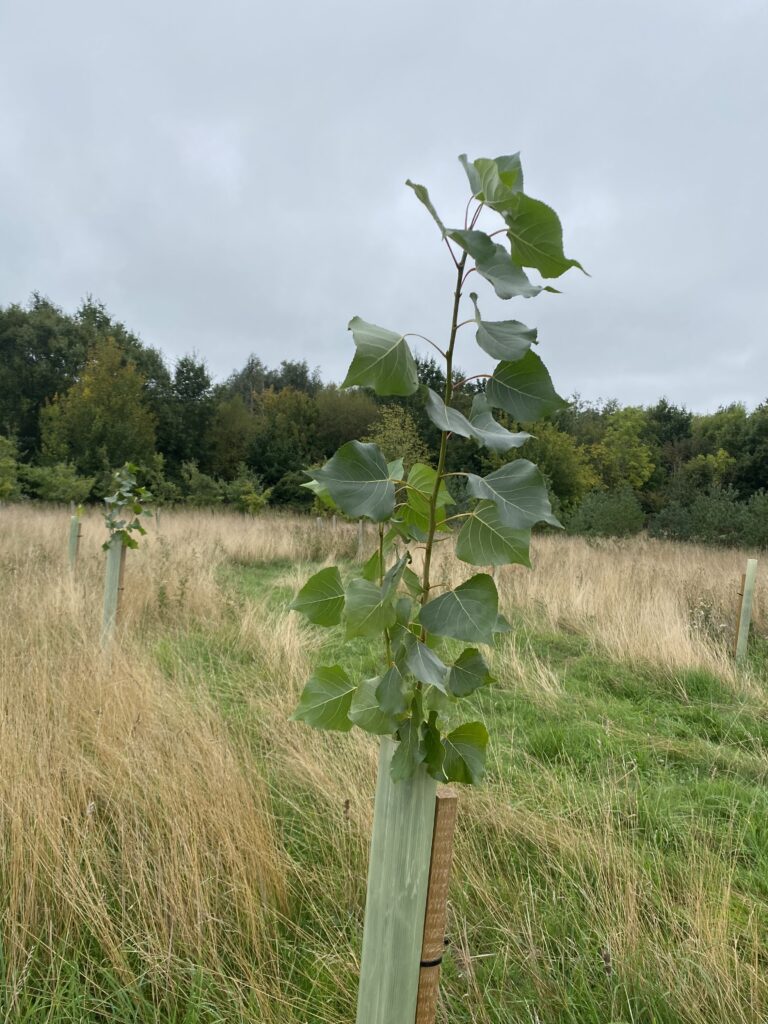
Additionally, Newark & Sherwood District Council planted 8 native Black Poplars close to the watercourse further along at Vicar Water. Planted in early 2026, they already appear to be thriving, illustrating why the Black Poplar is famous for its rapid growth.

We then visited our partners at Nottingham Trent University’s Brackenhurst campus, where several cuttings have been propagated from an additional 3 clones. 8 cuttings have been planted into the ground, some of which are already looking quite tall! As they grow, these young trees will be pollarded as a source for future cuttings to be planted into various sites across Notts.

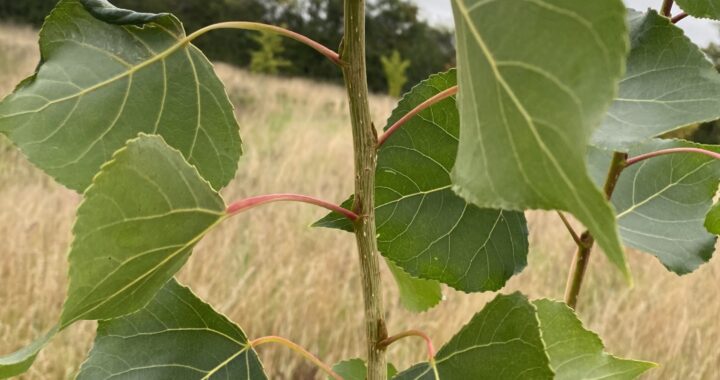
This particular tree looked very strong and happy.

They also have 33 cuttings growing in their greenhouse, another source of clones for our partners.

The NE grant will also be supporting our partners SFT and NTU with the development of their Black Poplar nurseries by funding essential supplies – lots of compost, for example.

We will be providing clones to our partners who have suitable wetland sites, so long as they can guarantee proper aftercare including mulching, irrigating and guarding where appropriate. Our partners will be planting males and females together to improve their genetic diversity and generate new clones; we have only 8 confirmed clones in Nottinghamshire so this will be great for improving the outlook of this species.

We are hoping the future will be bright for Black Poplars in Notts.

Follow any new developments on our Facebook, as well as our brand new Instagram account.

Manual Labour & Clouded Yellows (Grizzled Skipper Project Update)

This week, we have been doing some habitat management work for the Grizzled Skipper Project.

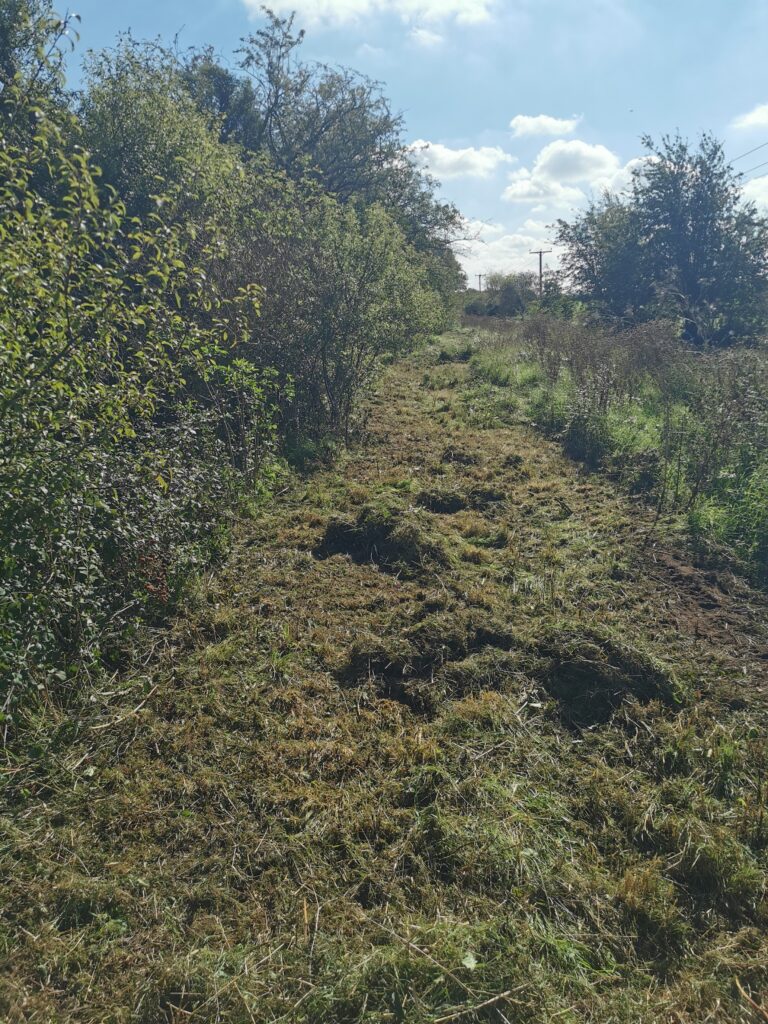
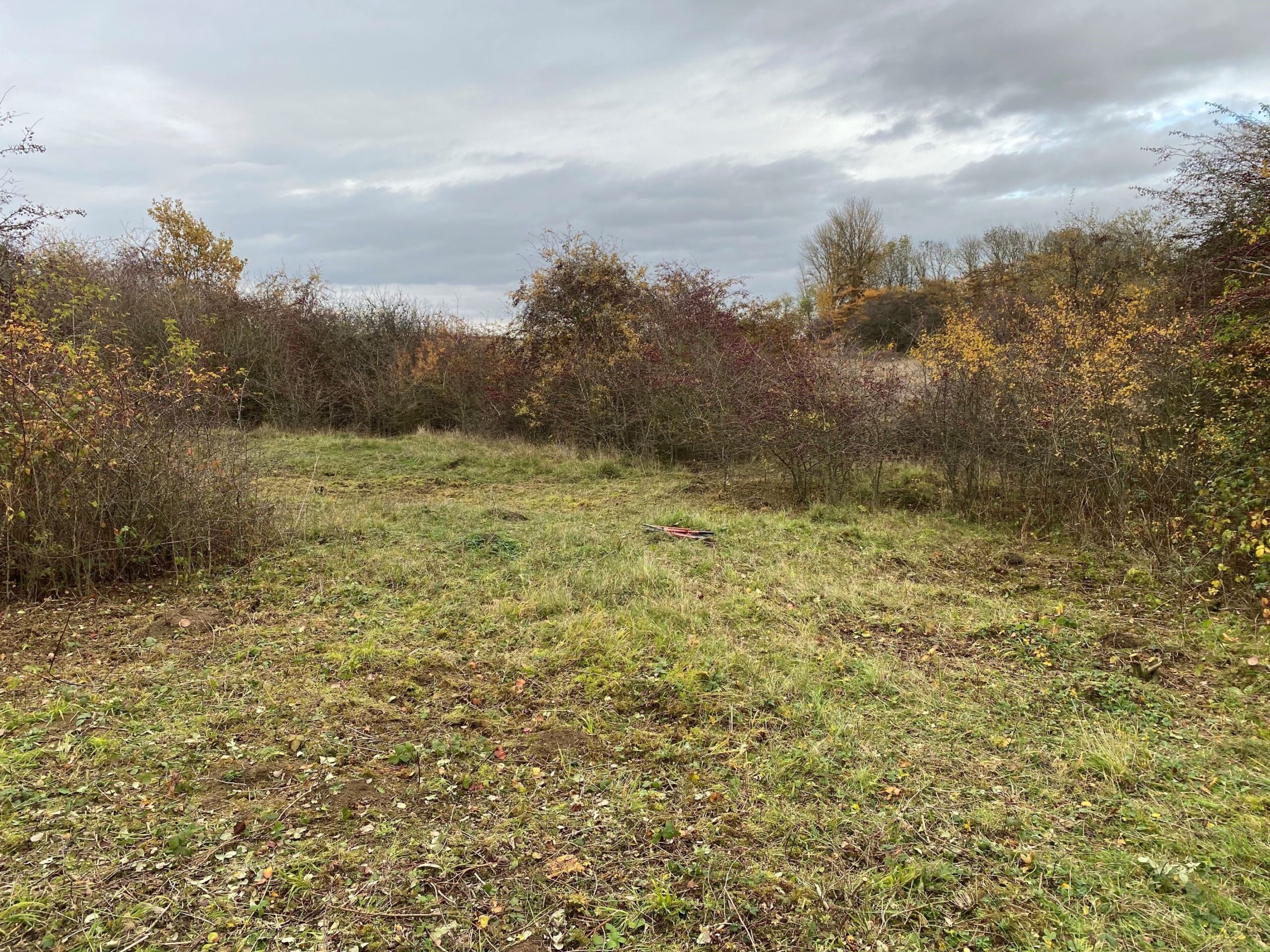
On the 21st, we visited a privately owned site near Flawborough, which we manage with the consent of the landowner. As part of a scheme run by Rushcliffe Borough Council, we were granted the use of a remote-controlled mower to cut the regenerating scrub and grass across the site. This allowed us to leave plenty of sunny open space for the butterfly. We left a good area of species-rich grassland habitat uncut for the benefit of the diverse invertebrate species utilising the site. We also left areas dominated with vast growth of Creeping Cinquefoil to assist the Grizzled Skipper butterfly. Creeping Cinquefoil is one of the larval food plants for the Grizzled Skipper, so we managed the scrub in areas dominated by Creeping Cinquefoil with more targeted work by hand – using loppers and secateurs – to avoid harming the butterflies’ pupae. We will be hosting a volunteer work party to finish off work to manage the site (keep your eyes peeled) but we have made a very good inroads.

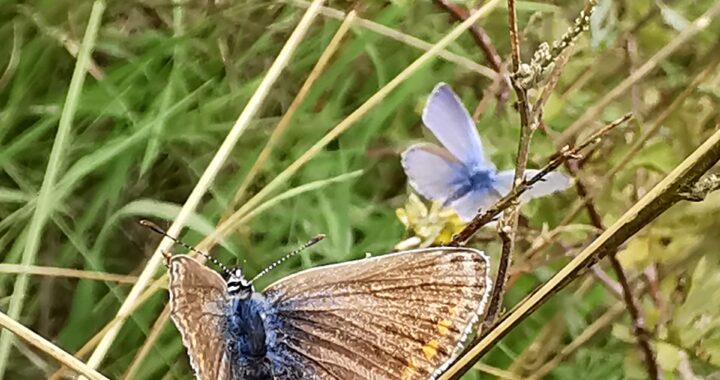
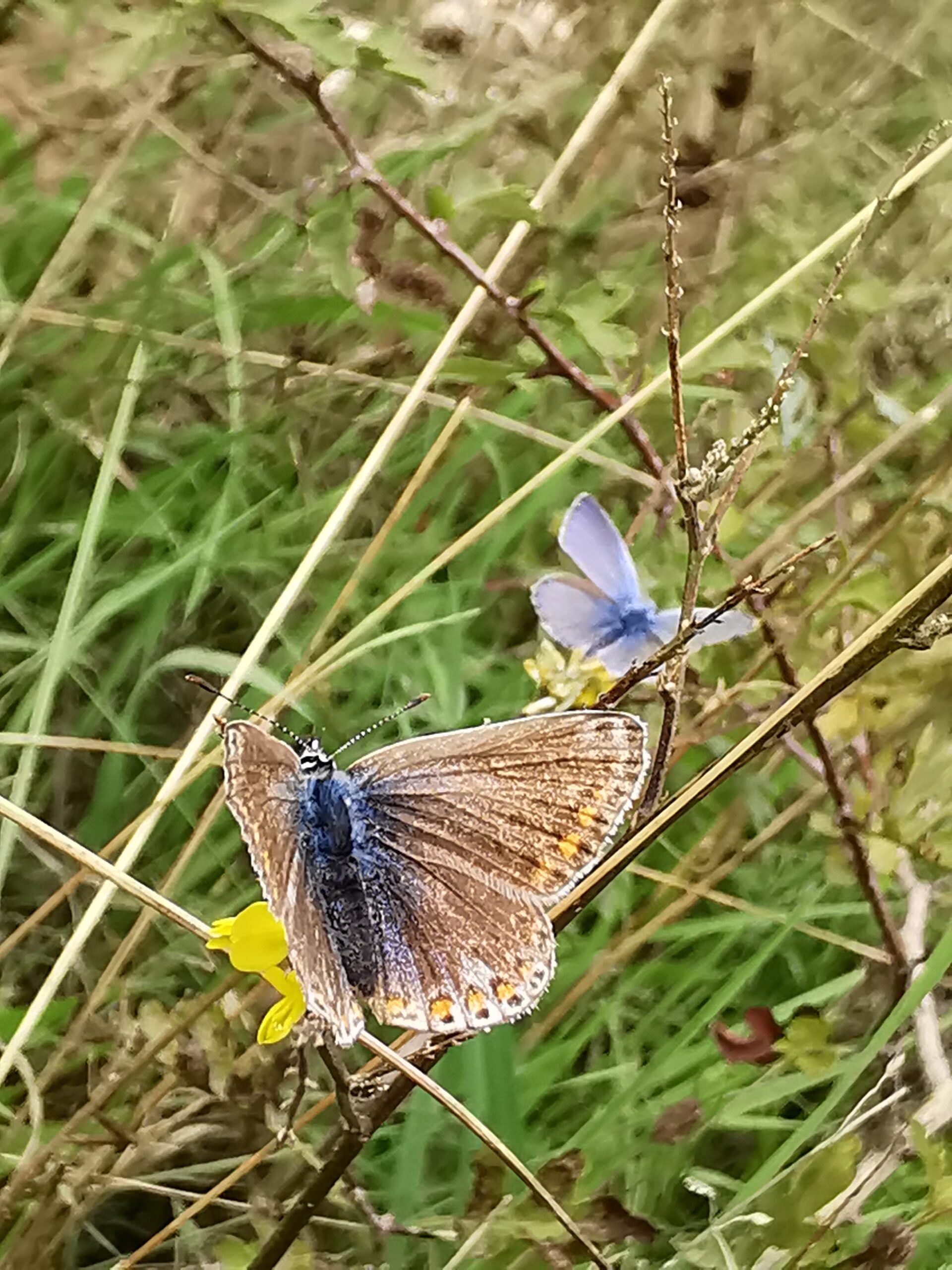
Additionally, due to the unusually warm and dry September weather we have been experiencing, there has been plenty of invertebrate activity. We spotted many Brown Argus, Common Blue, Small White and surprisingly, at least three Clouded Yellows.

2 Common Blue butterflies

We then went to Staunton Quarry to harvest some Agrimony seed for our partners at Sherwood Forest Trust to grow on at their nursery. Agrimony is another larval food plant of the Grizzled Skipper, so we are hoping to plant it at some of our Grizzled Skipper sites. Staunton Quarry appears to be recovering from a series of poor years for Grizzled Skippers, as this spring produced more records than in recent years. Other butterflies seem to be enjoying the site too; we saw many Small Whites and Brown Arguses. And what do you know – we saw another Clouded Yellow! According to Butterfly Conservation’s Nottinghamshire butterfly recorder, Clouded Yellow are having their biggest year in decades.

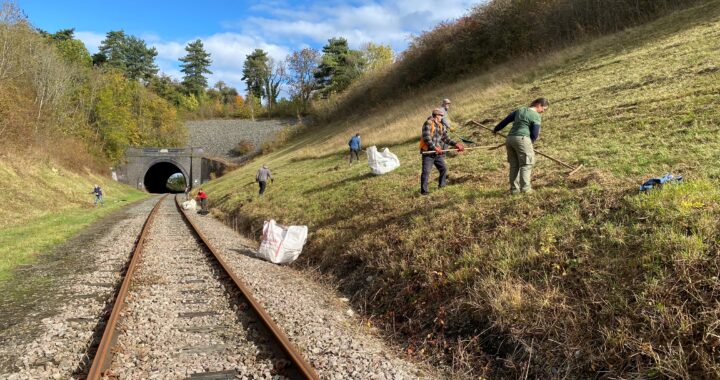
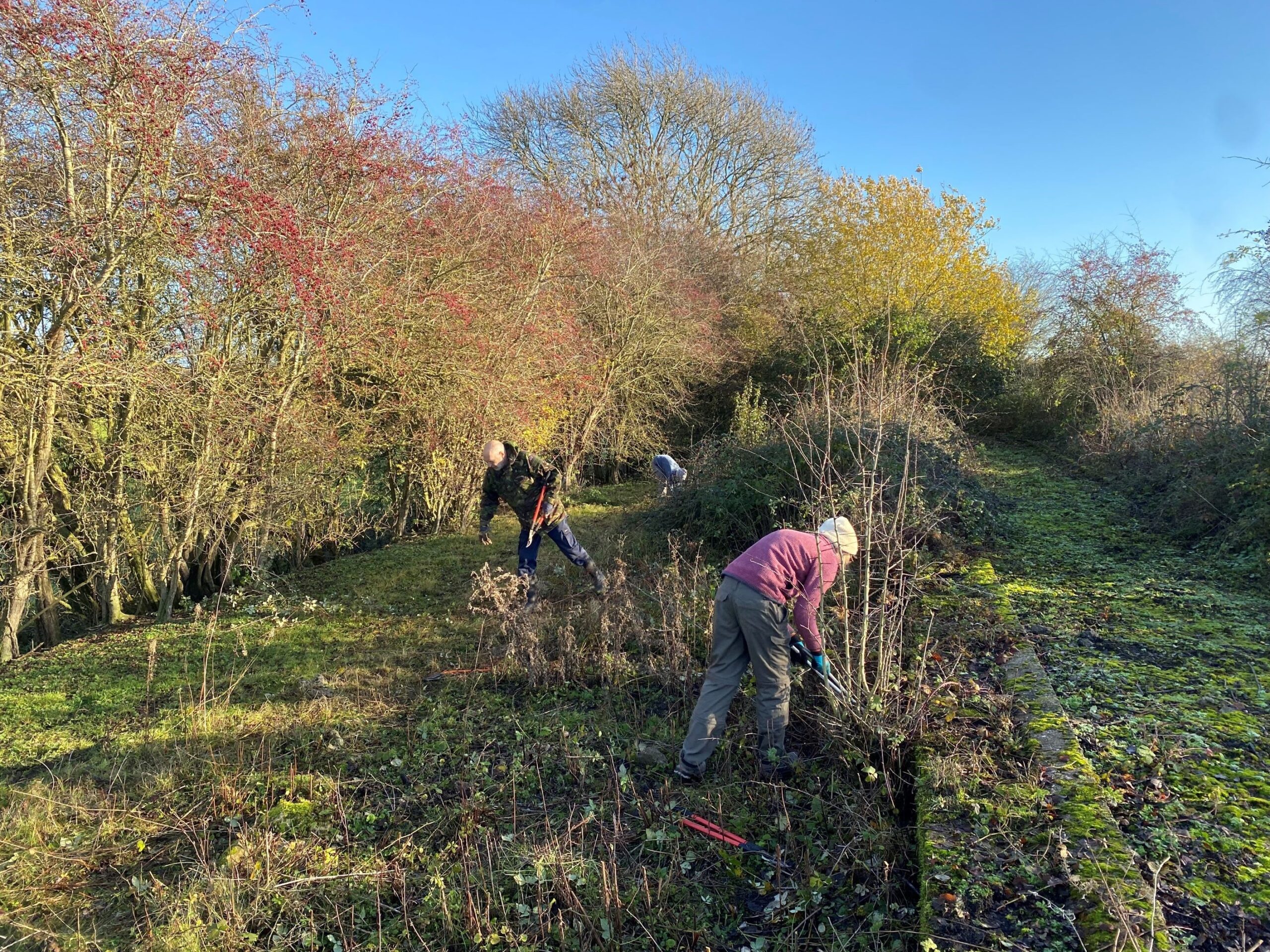
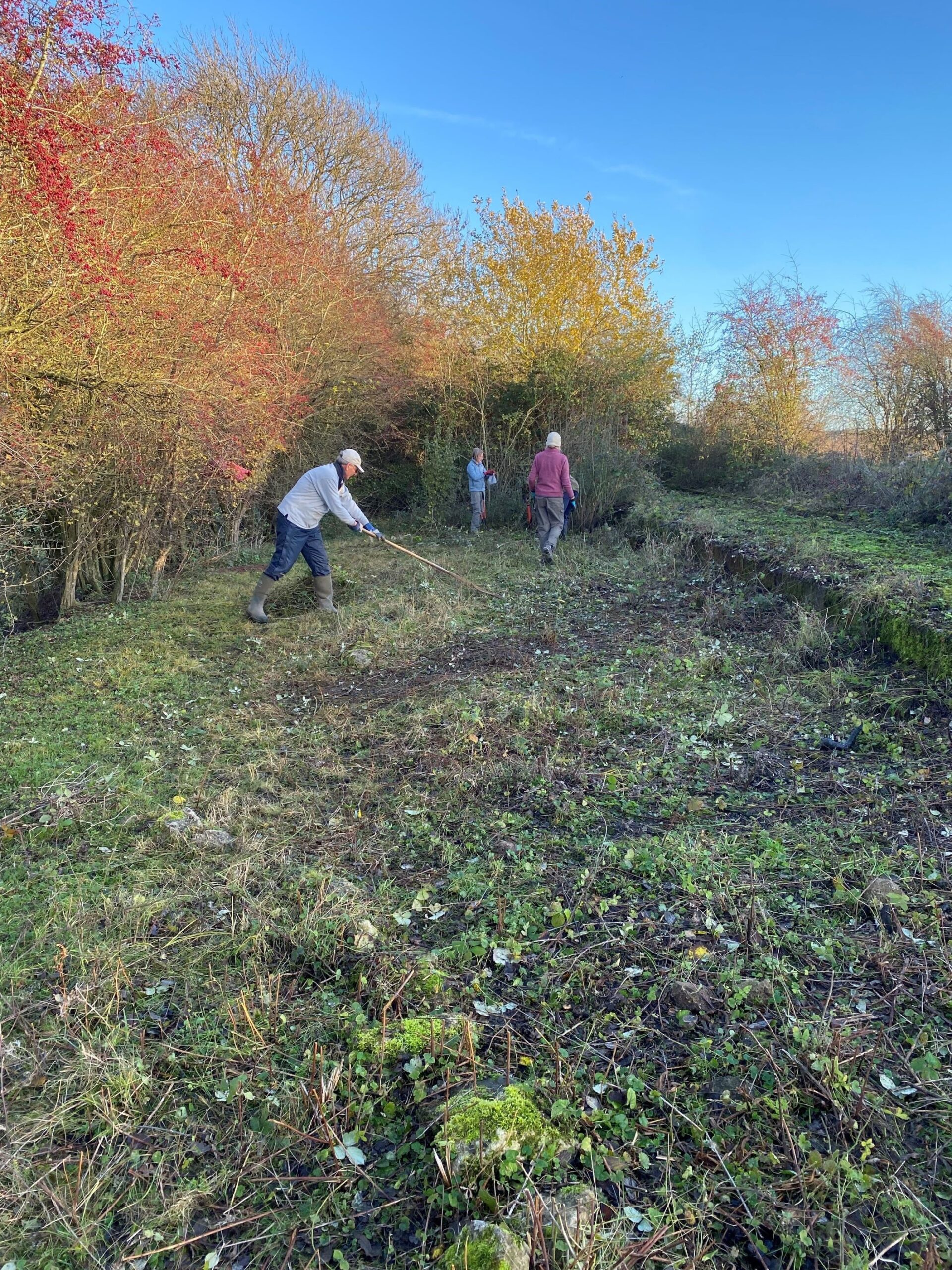
On the 22nd, we headed to our Granby Disused Railway site, where the remote mower was once again used to cut the long grass and invading bramble and thorn scrub. We spent a good few hours raking and removing the cut grass, moving it too the bottom of the embankment of this former railway. This created some bare soil patches, which will hopefully allow more wildflowers to dominate – especially Creeping Cinquefoil, which will benefit the Grizzled Skipper. The grass down the side of the banks will create new habitat for other invertebrates too; we saw quite a few moths (including a Heart & Dart) taking shelter in the bales. The site was rife with invertebrate life, and the birds were busy too.

Lots of hard work raking

Our first volunteer work party will be on Sunday the 27th of September, at the Granby Disused Railway Site. If you’d like to come along, head to the events page for more details – the more the merrier. And do make sure to record any birds or invertebrates you see!

Keep an eye on the events page to find out our next dates for our annual Grizzled Skipper volunteer work parties. And keep up-to-date with new developments on our Facebook, as well as our brand new Instagram page.

Bats at Center Parcs, Sherwood Forest

Center Parcs in Sherwood Forest has consistently had very high numbers of bats, and have 8 of the 12 Nottinghamshire species currently using or having previously used the site. Specifically, they regularly have maternity roosts of soprano pipistrelles in the buildings during the summer (sometimes 300+ bats in one roost), as well as regular sightings of common pipistrelle, brown long-eared and Daubenton’s.

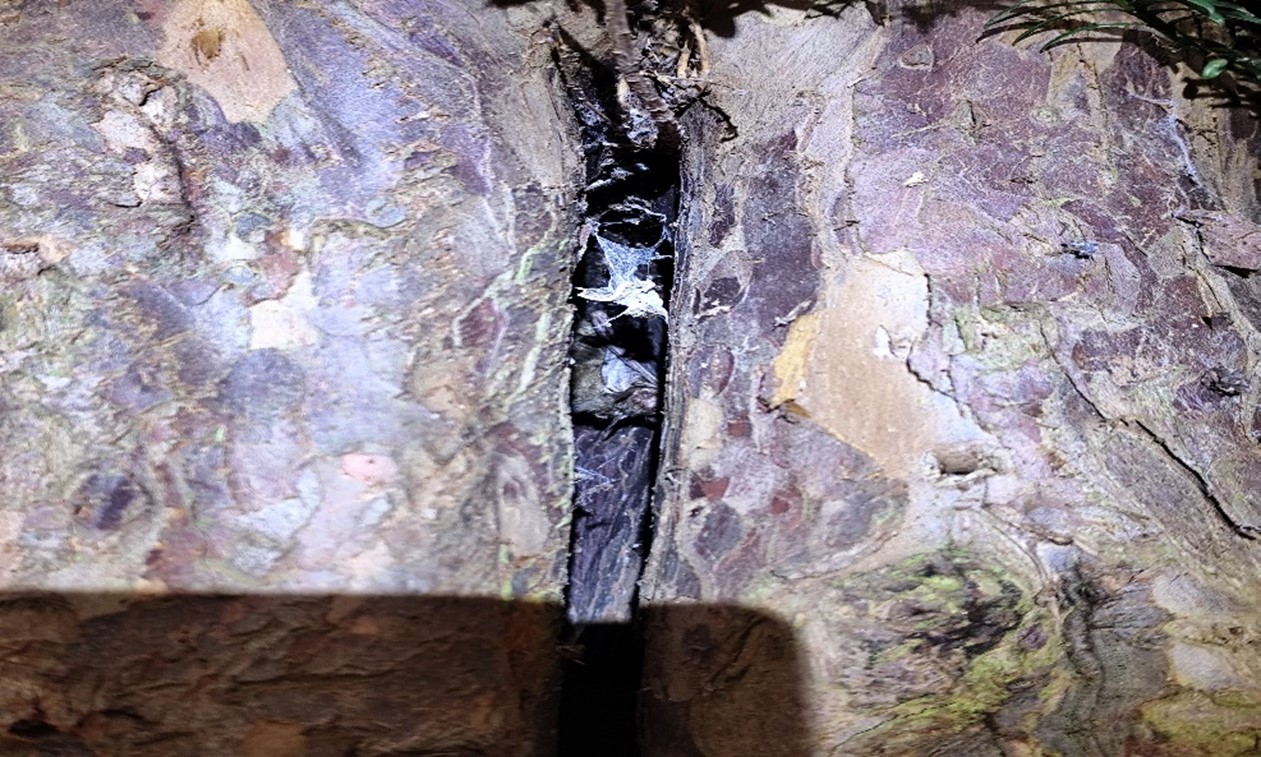
Brown Long Eared Bat hibernating in a Yew Tree

During their regular bat box checks with licensed volunteers, they also have had great numbers of Leisler’s and a couple of findings of Natterer’s. As Center Parcs is a holiday Village, and routine refurbishments repairs are required on buildings regularly, as well as forestry operations, the Senior Conservation Ranger, Kate Doull, remains a key person involved in this process to ensure our bat roosts and potential bat habitats are protected.

[Many Thanks to Kate Doull from Center Parcs, Sherwood Forest, for providing the news and photo for this blog]

Dormice in Nottinghamshire!

Record numbers of Dormice have been recorded in Nottinghamshire woodlands, making 2025 an exceptional year!  Early season breeding helped to boost autumn numbers as Dormouse born early in the year were then able to go onto breed in September / October. Numbers in other areas in the county recovered after a poor 2024 season.

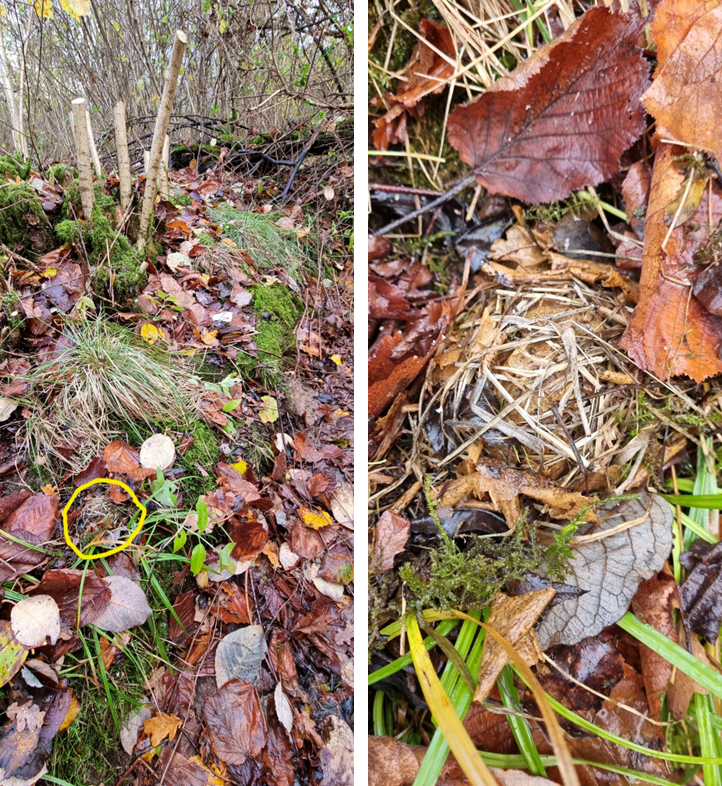
(L to R) Yellow marking shows nest in situ; Close up of hibernation nest

In 2020, a male Dormouse was recorded in a nestbox in a privately owned woodland, however, no Dormouse evidence has been recorded since.  The boxes were checked in October of this year by a licenced dormouse surveyor from NDG, recording a very chubby female Dormouse in torpor.  The woodland owner, was delighted to hear that Dormice are still present in the woodland and has begun a programme of woodland management, including hazel coppicing, canopy opening, and oak planting.

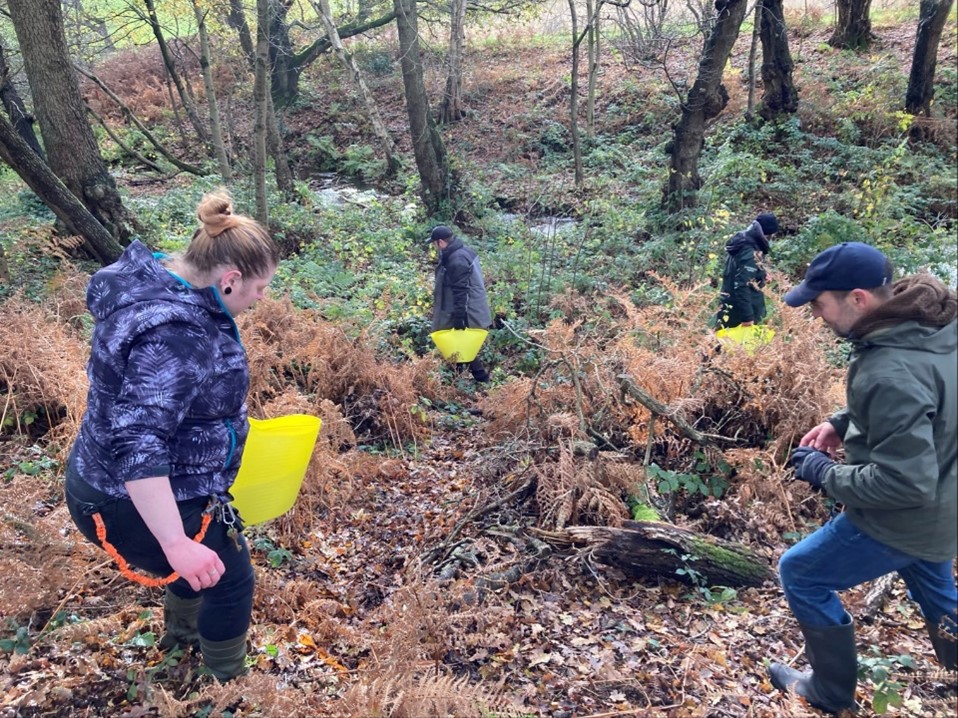
Currently, the Dormouse group is in the midst of their winter programme, with monthly sessions focussed on assisting the Nottinghamshire Wildlife Trust rangers to complete this year’s coppicing. During one of the sessions, a group member was lucky enough to discover a dormouse hibernation nest during a standard fingertip search around the coppice stool they were working on. The nest was confirmed as occupied after listening out for the tell-tale sounds of Dormouse snores!

[Many Thanks to Lorna Griffiths from the Nottinghamshire Dormouse Group, for providing the news and photos for this blog]

Grizzled Skipper Work Parties Completed (2025-26)

After starting in September 2025, this month we have officially finished our Grizzled Skipper work parties for the winter season!

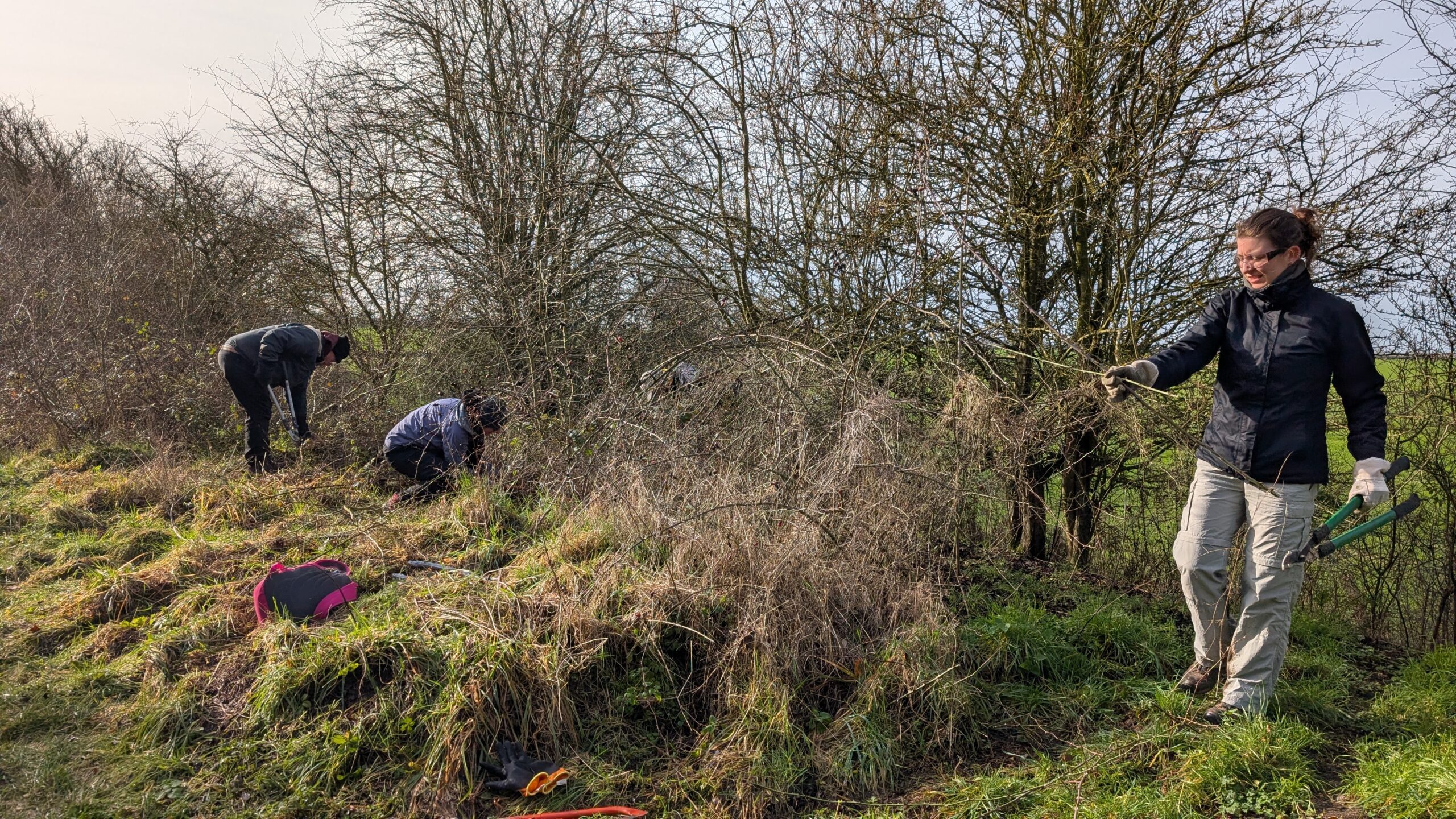
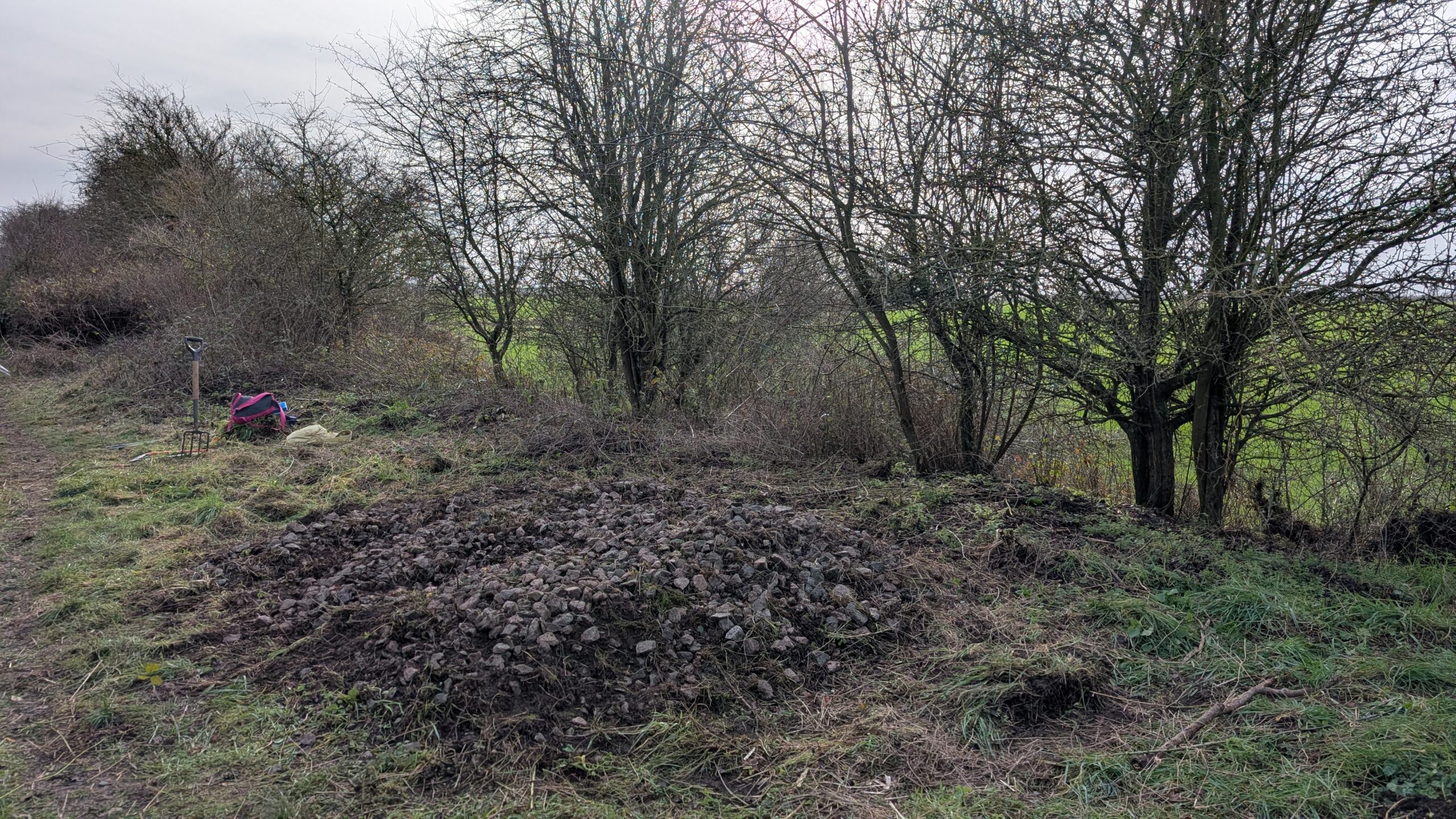
(Above) Before and After: Weeding and clearance of potential egg laying sites, Alverton Disused Railway

With funding from Butterfly Conservation East Midlands Branch, Nottinghamshire Biodiversity Action Group successfully organised a total of 10 volunteer work parties, targeting locations across South Nottinghamshire. The work parties led to habitat improvements (scrub clearance and enhancements of potential egg laying sites) that will support grizzled skipper and other invertebrates at these sites.

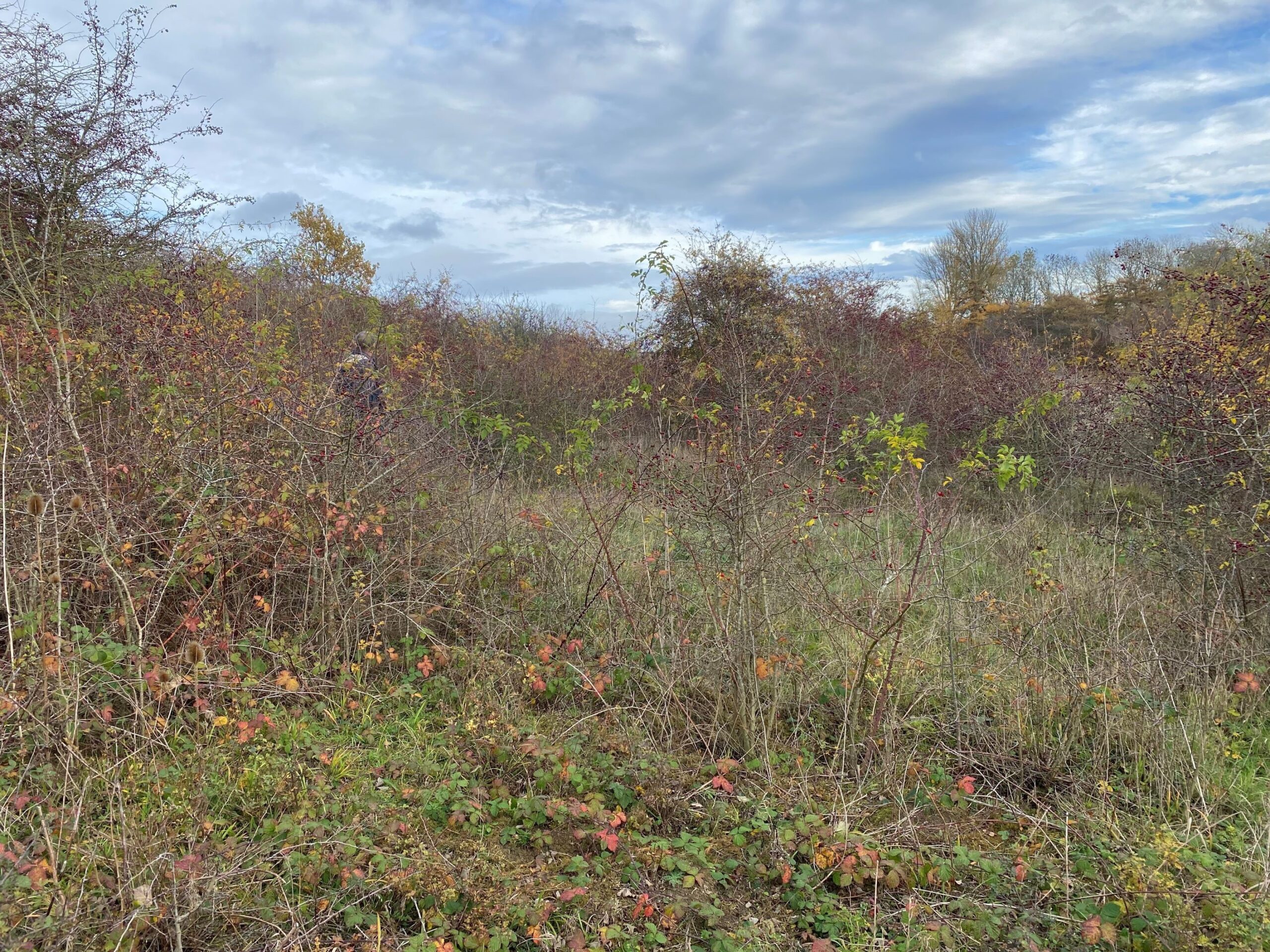
(Above) Before and After: Scrub clearance at Saxondale Railway

Through a variety of different weather conditions, our volunteers worked tirelessly raking grassland sites, clearing scrub and weeding ballast piles to make these sites more attractive to the Grizzled Skipper. The work parties also planted up their favoured larval food plants, agrimony, wild strawberry and creeping cinquefoil on sites where these plants were previously scarce or absent.

(Above) Before and After: Scrub clearance at Grange Farm, Normanton-on-the-Wolds

We are looking forward to and hoping for a good flight season this coming spring and early summer, when we will be surveying and monitoring sightings of the butterfly.  We welcome any records and photographs.

If you see the Grizzled Skipper in Nottinghamshire, we would love to know so we can add it to our records – please email us on biodiversity@nottscc.gov.uk.  All we need is a date of sighting, the time and a location of where you have seen the butterfly, and we welcome any photos taken of them too.

A big thank you goes out to all the volunteers who have participated in this project, come rain or shine!

White Clawed Crayfish Release

The Environment Agency completed four successful translocations of white-clawed crayfish during 2025. The native crayfish were rescued from the River Leen catchment in June, July, Sept and October. Following 1 month’s quarantine at Birmingham Sealife Centre, a total of 346 white-clawed crayfish were successfully released to the Ark site at another location in Nottinghamshire.

Environment Agency staff releasing White Clawed Crayfish in November 2025

The latest batch of crayfish were released during mid-November, following acclimatisation to the water temperature. Plans are to bolster the population with at least one more translocation in Summer 2026, and to improve the habitat upstream of the existing ark site through the installation of limestone refuges. It is hoped this will help to encourage greater colonisation, spread and establishment of the white-clawed crayfish for the long term.

White Clawed Crayfish ready to be released into the new ARK site

ARK site investigations:

The Environment Agency have been conducted preliminary Ark sites investigations at other locations too.  This is to assess the habitat suitability for translocating at-risk, white-clawed crayfish populations. The more places where native crayfish exist, the more resilience there is to wide-ranging threats and pressures across the landscape, to ensure their continued existence in the county.
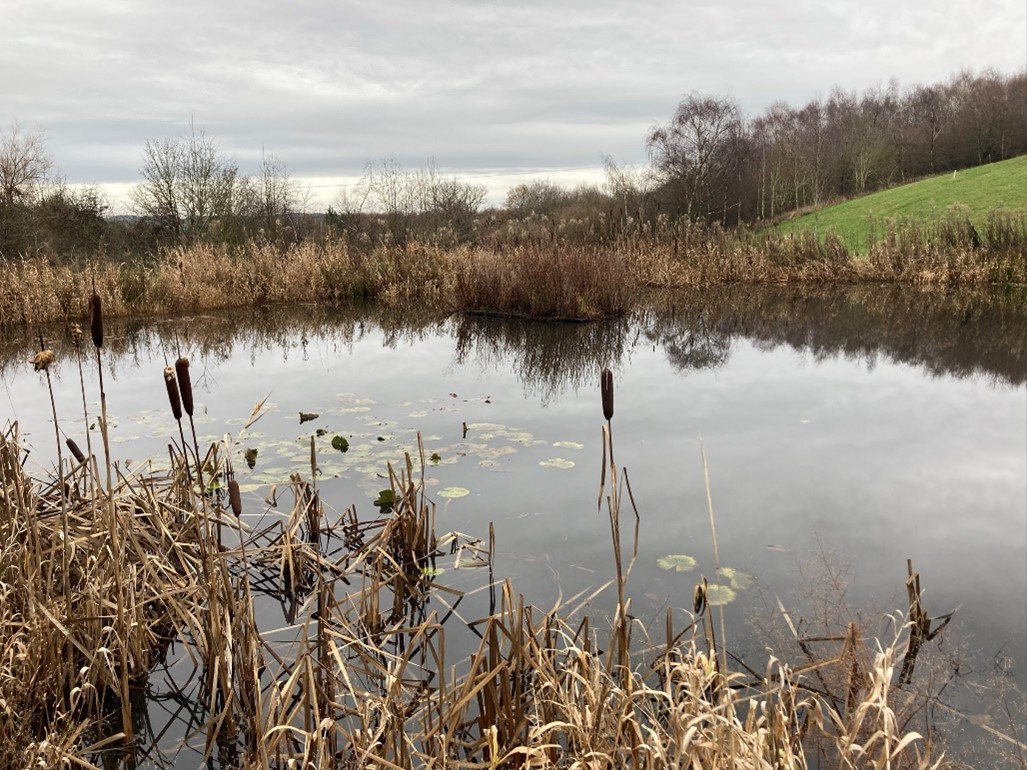
One of the ponds being investigated as a potential crayfish ARK site

Some of these potential ark sites are ponds, or headwater tributaries separated by long culverts.  Some eDNA surveys have been conducted and there are plans to do further water quality testing and macrophyte sampling in the coming year to further assess ark site selection suitability.
NB: the biggest threat to the native, white-clawed crayfish is the spread of crayfish plague. Crayfish plague is a disease that kills all European species of crayfish and once infected will kill the crayfish within a few days. The disease is carried by non-native American crayfish species that are more reliant to the disease. The disease can also be moved by following poor biosecurity, not cleaning and drying kit when moving it between water bodies.

To find out more about good biosecurity follow this link to the clean check dry campaign.

[Many Thanks to Ruth Bolton from The Environment Agency, for providing the news and photos for this blog]

Grizzled Skipper Habitat Work Resumes at Lime Sidings

The Nottinghamshire Biodiversity Action Group is back in action this autumn, with work parties returning to key sites across south Nottinghamshire to support one of the UK’s fastest declining butterfly species—the Grizzled Skipper (Pyrgus malvae).

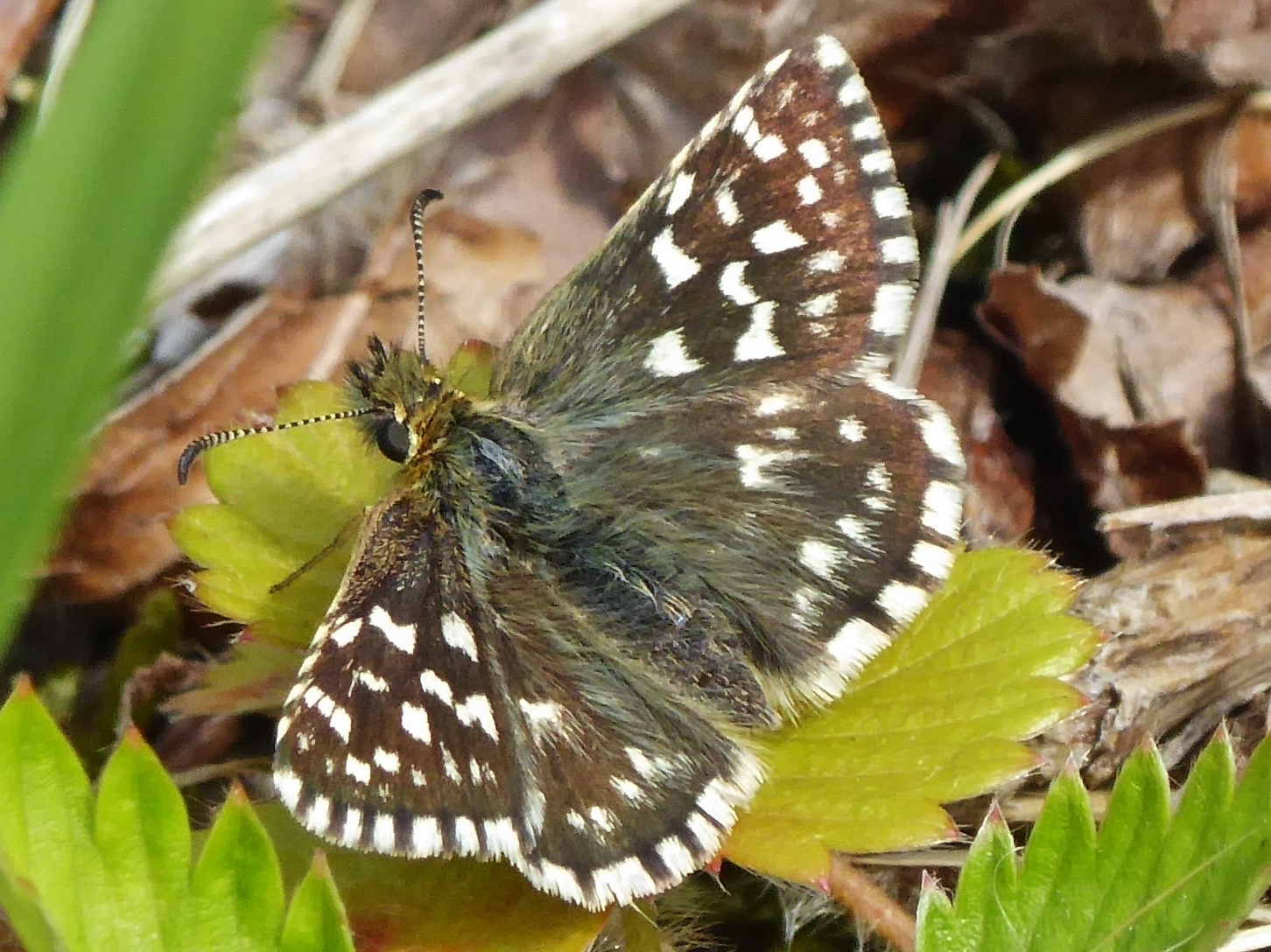
Small brown butterfly with white spotted pattern along the edges and within the wings.

Grizzled Skipper (Pyrgus malvae)

This month, volunteers gathered along a stretch of the Great Central ‘heritage’ Railway, a stretch of disused railway line in south Nottinghamshire, to carry out vital habitat maintenance.

The focus was on raking off mown grass to expose patches of Creeping Cinquefoil, a plant the Grizzled Skipper uses to lay its eggs. By removing the thick grass layer, volunteers are helping to mimic the bare ground conditions the butterfly prefers for breeding.

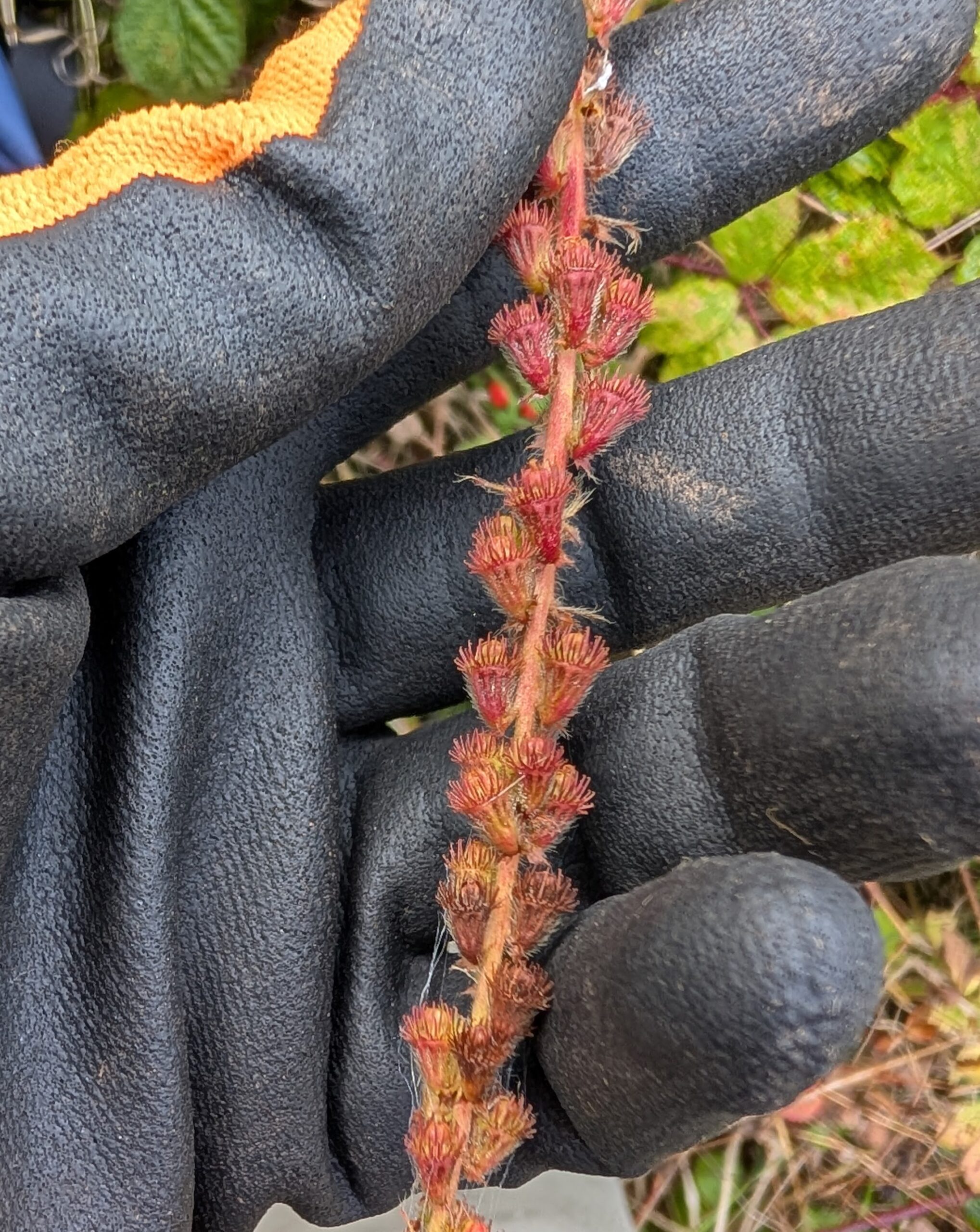
Long red stem being held in a black gloved hand. Triangular shaped seeds are attached to the stem at their point, and each seed has many burrs on them which help them stick to animals' coats (And ecologists coats too!)

Agrimony Seed

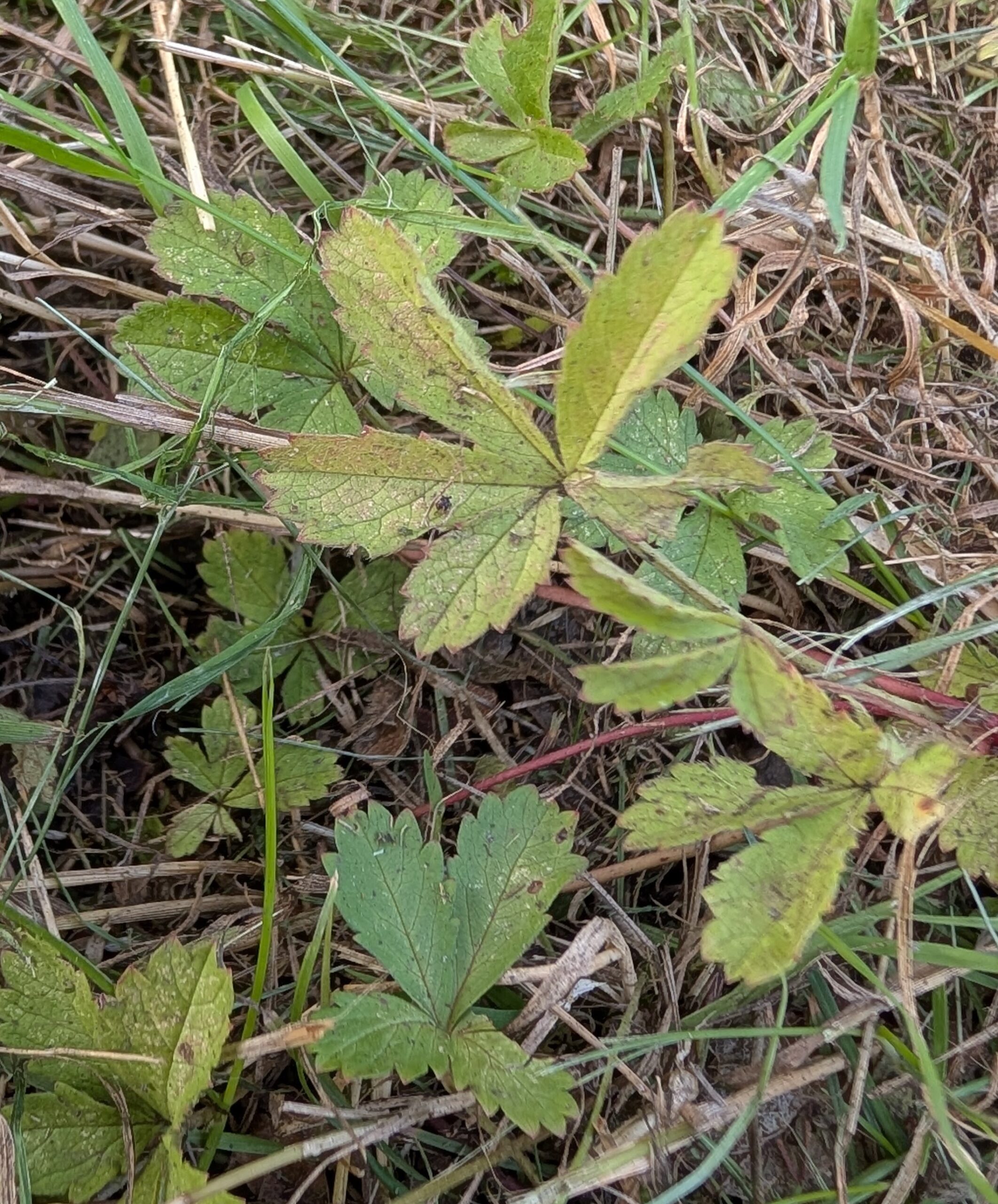
Plant in leaf, each leaf has 5 lobes spread out evenly. The stem is long and spindly, allowing it to creep (hence the name) along the ground.

Creeping Cinquefoil

In addition to clearing scrub and maintaining open areas, the team also harvested a generous supply of Agrimony seed, one of the butterfly’s key food plants. These seeds will be planted out to enhance the site and improve its suitability for egg-laying and larval development.

The Grizzled Skipper is a high conservation priority, and Nottinghamshire supports the northernmost population in England. However, with climate change and habitat fragmentation posing serious threats, targeted conservation efforts like these are essential to ensure the species can thrive and expand its range.

Work parties will continue over the winter months, with volunteers working to create and maintain suitable habitat at several sites across the county. If you’re interested in joining a future session, please contact us at biodiversity@nottscc.gov.uk. For details of the sessions, please see the events page: https://nottsbag.org.uk/events/