
Nottingham Trent University (NTU) continues to lead the way in campus-based conservation, with recent efforts focused on invasive species control – specifically, the persistent Water Fern (Azolla filiculoides).
The plant is a fast-growing, non-native and quickly blankets ponds and lakes, blocking light and reducing oxygen levels, which harms aquatic life. In 2024, NTU successfully trialled a biological control method at Brackenhurst Campus, introducing the North American weevil (Stenopelmus rufinasus), known to those involved in invasive species control as the ‘azolla weevil’. At 2mm long, they are tiny insects which feed exclusively on Water Fern. The results were impressive, with the weevils rapidly reducing the dense plant cover and restoring balance to the pond ecosystem.
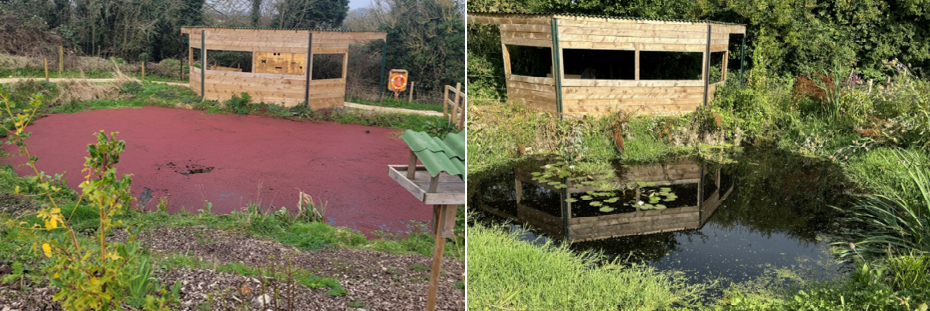
An impressive difference: Left: Before the weevils were introduced. Right: The result of hungry azolla weevils!
This summer, the initiative was extended to a second pond where the fern had reappeared. The work was carried out by an NTU (ARES) student Esther Tennant and the Flowerpod Team. They applied the weevils and monitored the site. Since then, the Water Fern has died back significantly. While it’s unclear whether this was solely due to the weevils or also influenced by lower water levels, the outcome is a healthier aquatic habitat.
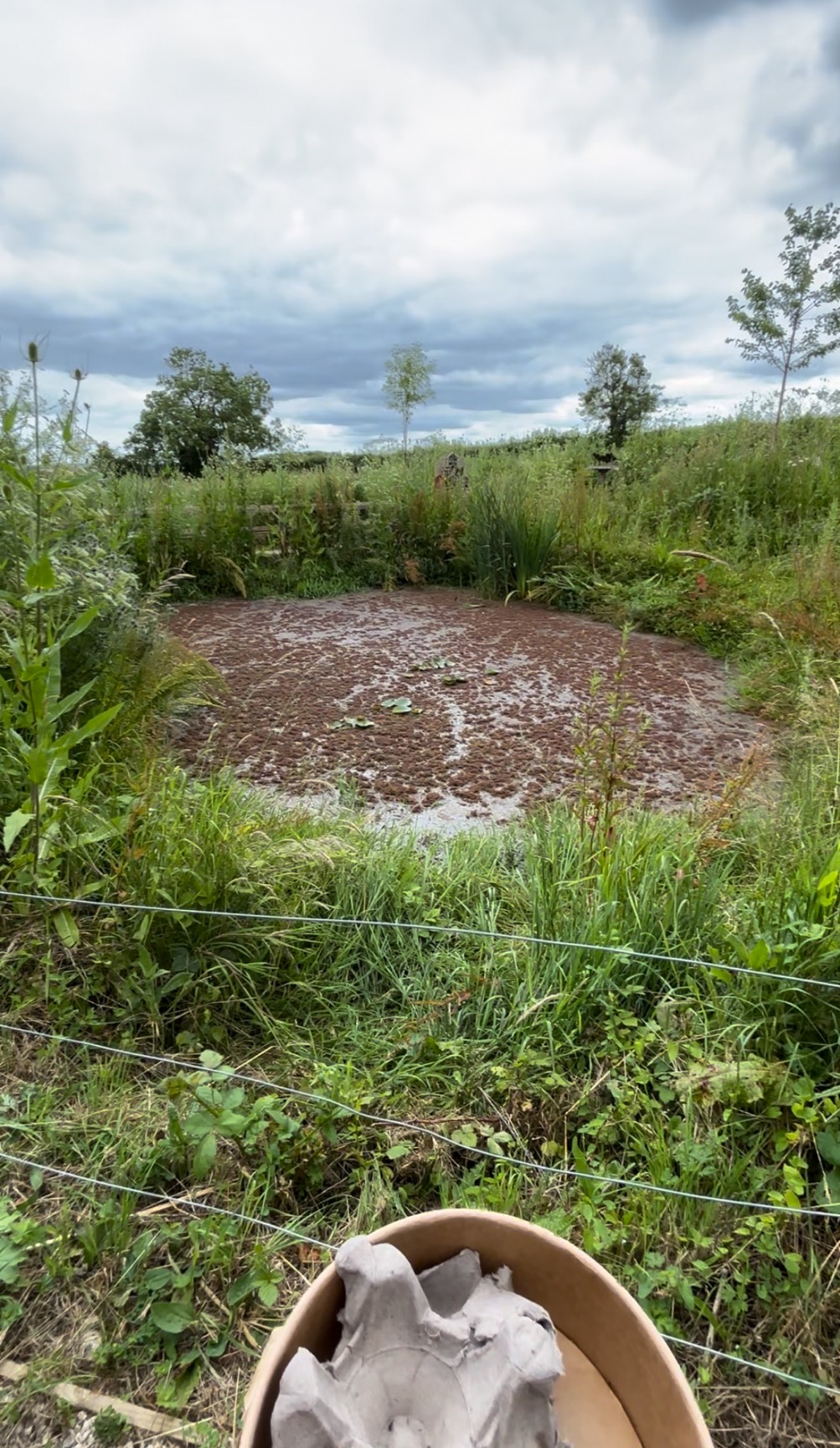
A pond covered with the invasive Water Fern, with a container in the foreground containing azolla weevils
All campus water bodies continue to be actively monitored for invasive species as part of NTU’s Great Crested Newt Conservation Programme, ensuring long-term protection for this priority species. Click HERE to find out more!