Crash Course: White-Clawed Crayfish Translocations

You may have heard of conservation breeding programmes and reintroductions, but have you heard of translocations? In conservation, translocations involve deliberately moving a threatened population of a species from one site to another more suitable site, following extensive planning to ensure they will be protected and able to thrive in their new site.

A translocation might be performed due to threat of habitat loss, climate change or an invasive species, for example. It is not an action taken lightly due to the risks involved and inherent invasiveness of removing a species out of its natural range and relocating it elsewhere, but the attitude to translocations have changed over time from a last resort to a proactive measure.

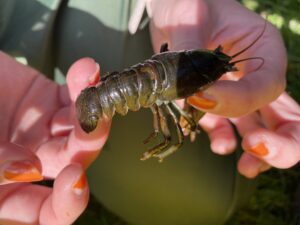
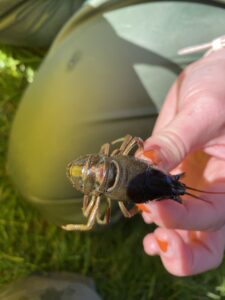
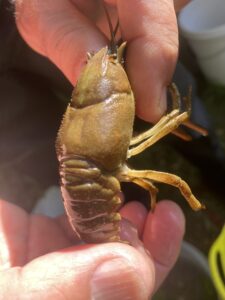
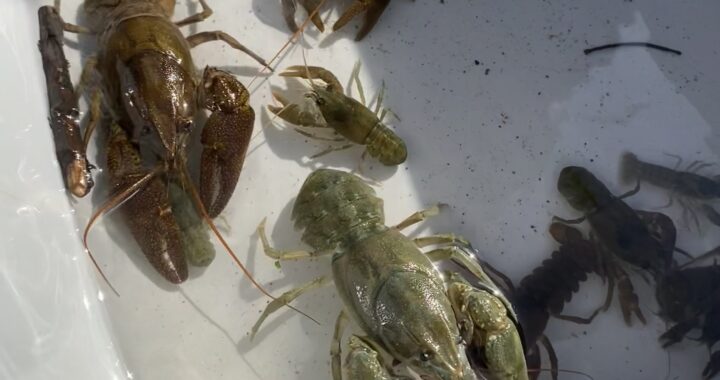
We have recently been in the process of translocating a metapopulation of White-clawed Crayfish with the help of our partners at BugLife and Environment Agency, as well as the assistance of staff from Derbyshire Wildlife Trust.

Along a particular river Leen tributary, a healthy White-clawed Crayfish metapopulation is threatened by the encroachment of the invasive American Signal Crayfish from downstream. Signal Crayfish cause severe problems for our native White-clawed through outcompeting them AND spreading the catastrophic crayfish plague. Signal Crayfish, having co-evolved with the disease, are carriers of crayfish plague, which is a fungal disease that can rapidly wipe out entire populations of White-clawed Crayfish. Crayfish plague can also be spread through infected equipment, so it is essential to thoroughly disinfect any fishing equipment or leave it out in the sun for 21 days if planning to use it at other sites. Follow the principles of Check Clean Dry to help protect ecosystems.

Logistics

Before a translocation can occur, potential ark sites (freshwater bodies with low threats of Signal Crayfish invasion, suitable habitat and good water quality) are assessed for suitability. For more information about site assessment, see this resource by our partners at BugLife.

As there is ongoing threat of Signal Crayfish invasion throughout the rivers Erewash, Leen and Maun catchments, site selection is an ongoing process, and translocations of various metapopulations to suitable ark sites will continue.

Trapping

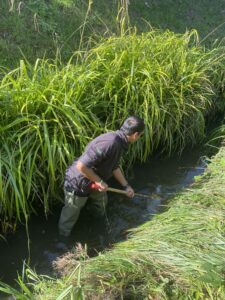
Following selection of a suitable site, we moved onto trapping under the guidance of licensed professionals. White-clawed crayfish should never be trapped or disturbed without a license. We aimed to catch 150 over 2 days, followed by another 100 the following week.
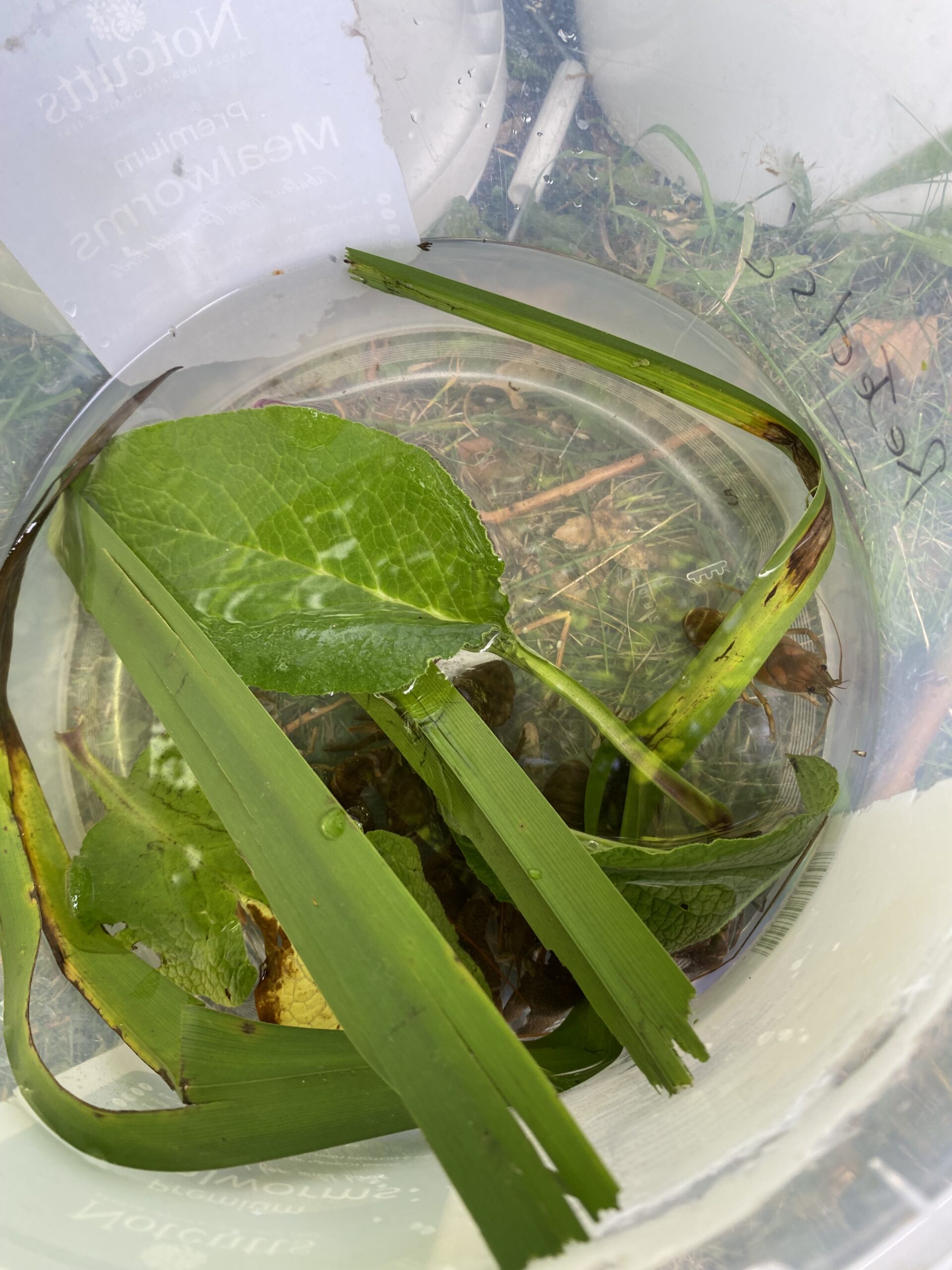
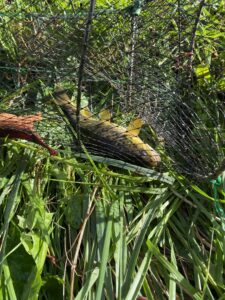
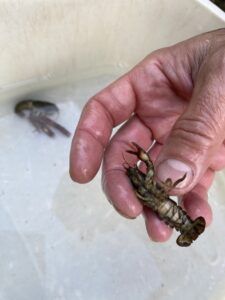
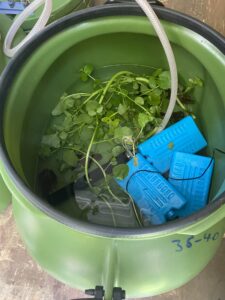
WCC waiting to be assessed, hiding under vegetation.

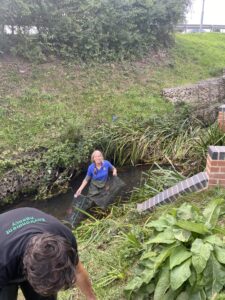
Biosecurity is essential in conservation, whether working with protected species, invasive non-native species or even performing routine habitat management; poor biosecurity is a key source of population decline amongst many species. Learn more about biosecurity here. All waders and trapping equipment were thoroughly sanitised with Virkon, a powerful disinfectant used by professionals who work with livestock and wildlife.
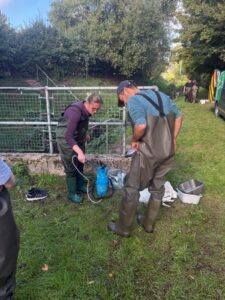
Sarah using Virkon to spray Chris’ waders, minimising the risk of accidentally spreading crayfish plague to a different site.

We used a variety of trapping methods including –

  • Fladen traps: these are baited with halibut pellets or mackerel. Any wildlife (i.e. fish or crayfish) that enters cannot escape; these must legally be checked within 24 hours of being set for animal welfare purposes.
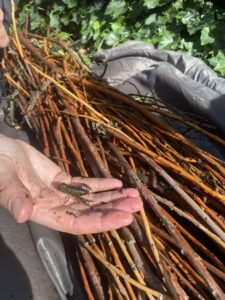
  • Brash bundles: piles of sticks which are tied together, creating attractive refugia for smaller crayfish. Wildlife can come and go as they please.
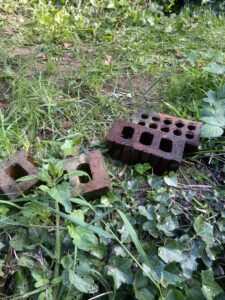
  • Perforated bricks: bricks with holes in them, which smaller crayfish may hide in.
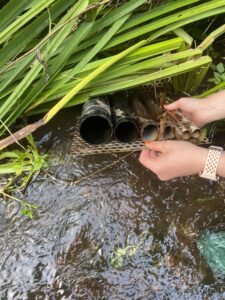
  • Artificial refuge traps (ARTs)/pan pipe traps: pipes with a backing. These can be left in-situ for longer periods of time as wildlife can come and go as they please. These catch a wider range of sizes.
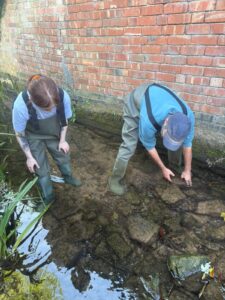
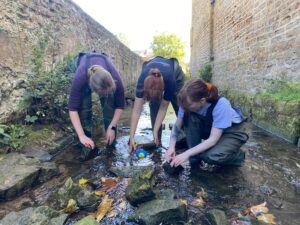
  • Netting & rock turning: actively catching crayfish by overturning rocks and using a net or hands to catch them, which can catch a range of sizes.

Assessing condition

Every crayfish we caught was then measured and checked for disease, injury, moult and breeding condition. As per licensing conditions, diseased and injured crayfish were released back into the stream to ensure an optimally healthy breeding population. Additionally, crayfish below and above a certain size threshold were released back into the stream for biosecurity purposes. For example, juvenile Signal crayfish below a certain size could be easily misidentified as White-clawed crayfish.

Healthy White-clawed crayfish were placed in water-filled buckets with vegetation for hiding, continuously oxygenated by a pump. They were then transported to a tank to be quarantined for 4 weeks. If they survive the quarantine process, they will then be relocated to a confidential ark site where their population can hopefully thrive, protected from crayfish plague.
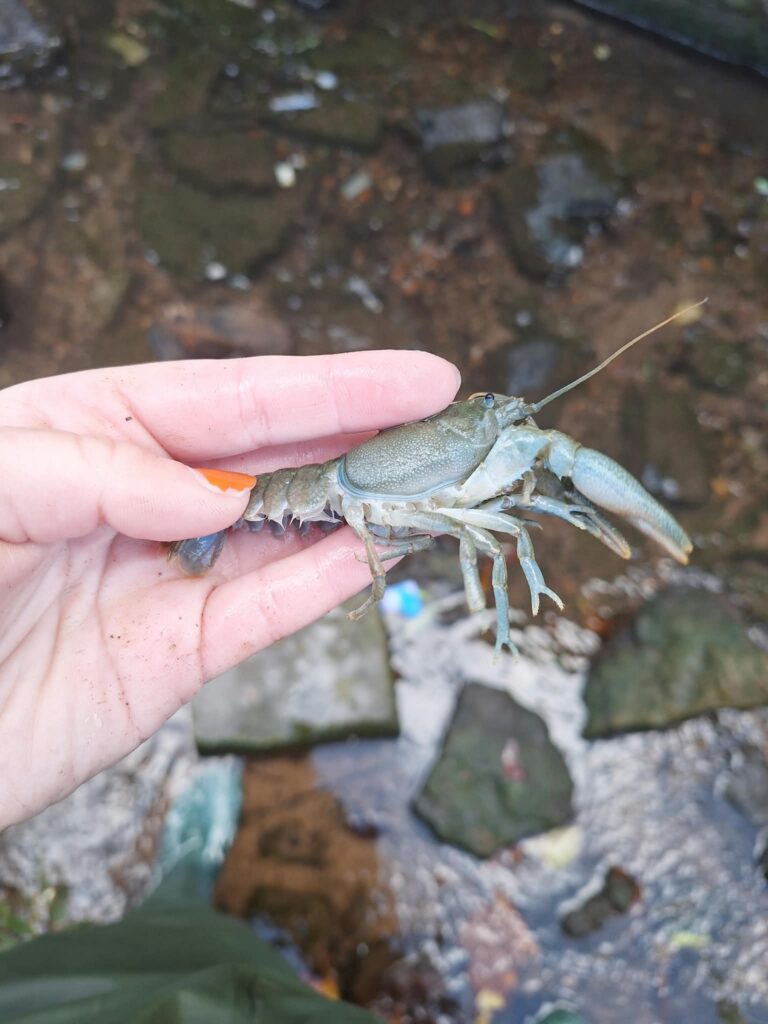
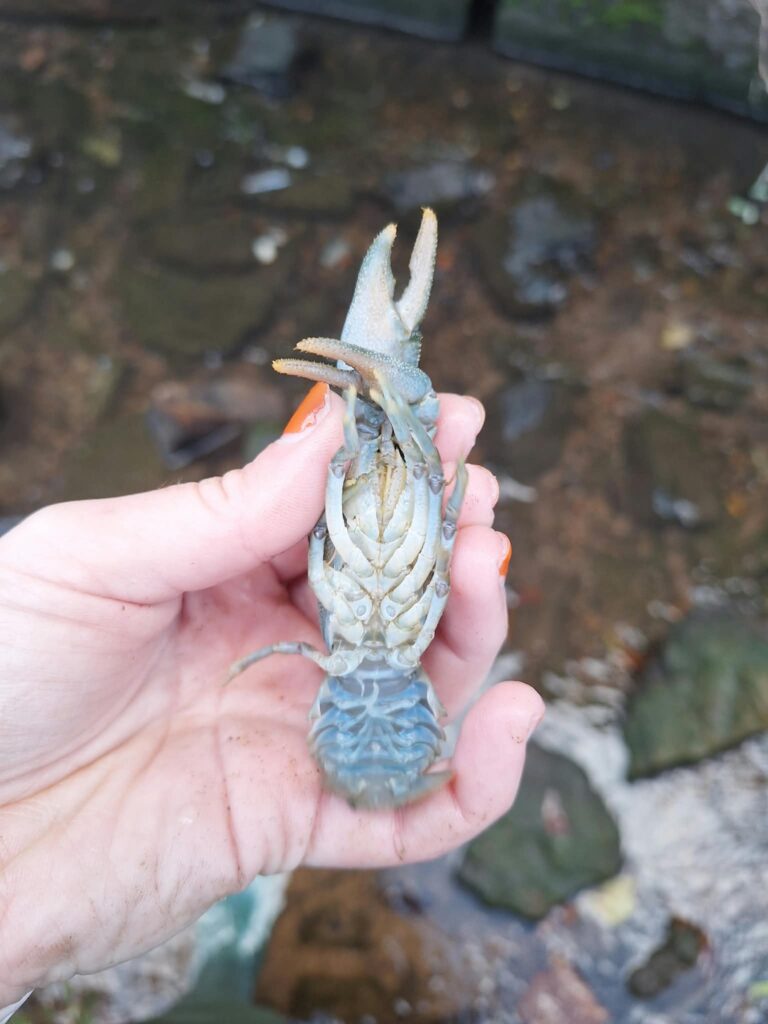
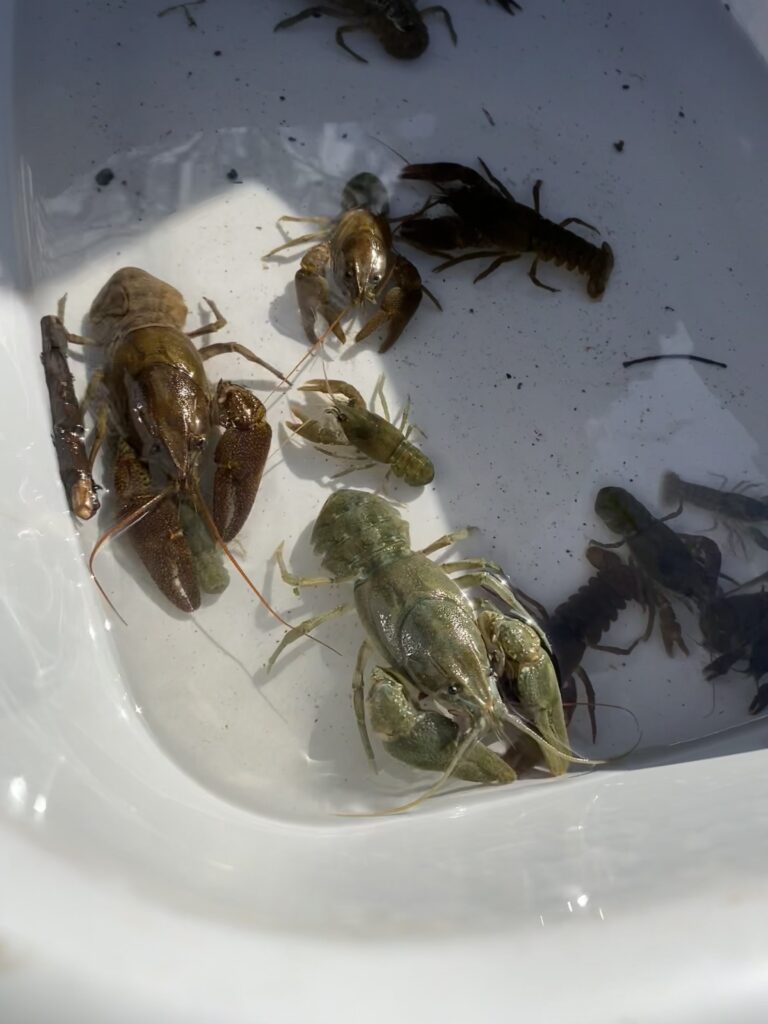
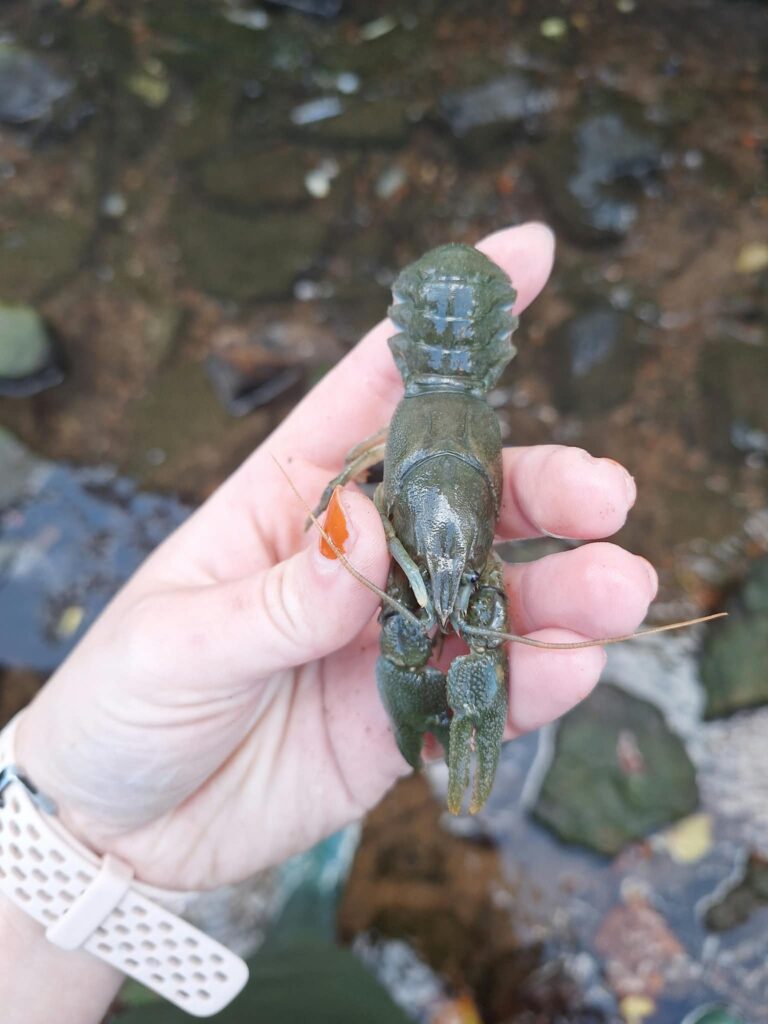
We also found a blue crayfish, which is a very rare colour variation. This would increase their risk of predation compared to a more inconspicuous brown crayfish, elucidating why the colour variation is so rare. Though probably unlucky for the crayfish, it definitely felt lucky to the team!
For more regular updates, you can join us on Instagram or Facebook.
 

The Weird & Wonderful World of Crayfish Reproduction

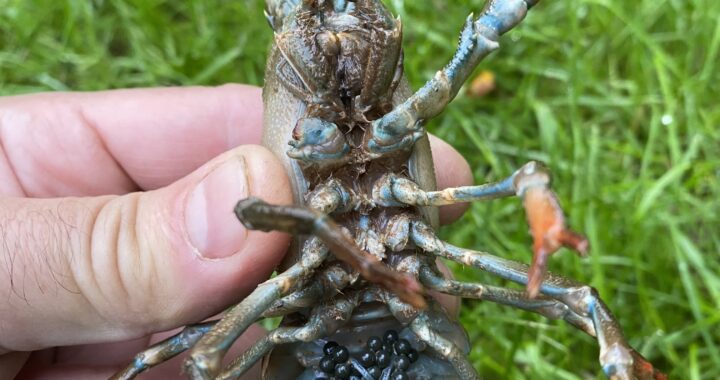
As of October 10th, we found our first berried female Signal Crayfish while undertaking work for our Signal Crayfish control project. The earliest we have ever found a berried Signal Crayfish is the 4th of October, across several years. But what does it mean for a female to be ‘berried’ anyway? Keep reading to learn about the bizarre world of freshwater crayfish reproduction.

This female must have lost quite a few eggs.

Entering breeding condition

In autumn, as the temperature of the water drops and the days get shorter, sexually mature female crayfish develop a sticky blue-white substance on the underside of their tail called glair, released by the glair glands. Glair glands are distributed across the underside of the abdomen and the cephalothorax. Glair has two purposes:

  1. It attaches the female’s eggs to her pleopods (or swimmerets – the extra appendages on the underside of the tail that facilitate swimming).
  2. It dissolves the male’s spermatophore walls, releasing spermatozoa which will then fertilise her eggs.

But what happens when we aren’t looking?

Courtship

During breeding season, females will release chemical cues through their urine indicating their sexual receptivity. Interestingly, all crayfish release urine during fights, meaning urine release is a signal of aggression. But when fighting turns to romance, males reduce how much urine they release. Female urine therefore simultaneously stimulates aggression and courtship in males. Why?

In crayfish, courtship begins with a fight. Females experience a spike in aggression prior to mating, which is when urine is released. The pair will then wrestle. Females will then become receptive once a male can successfully flip her onto her back – she only wants the strongest, largest male!

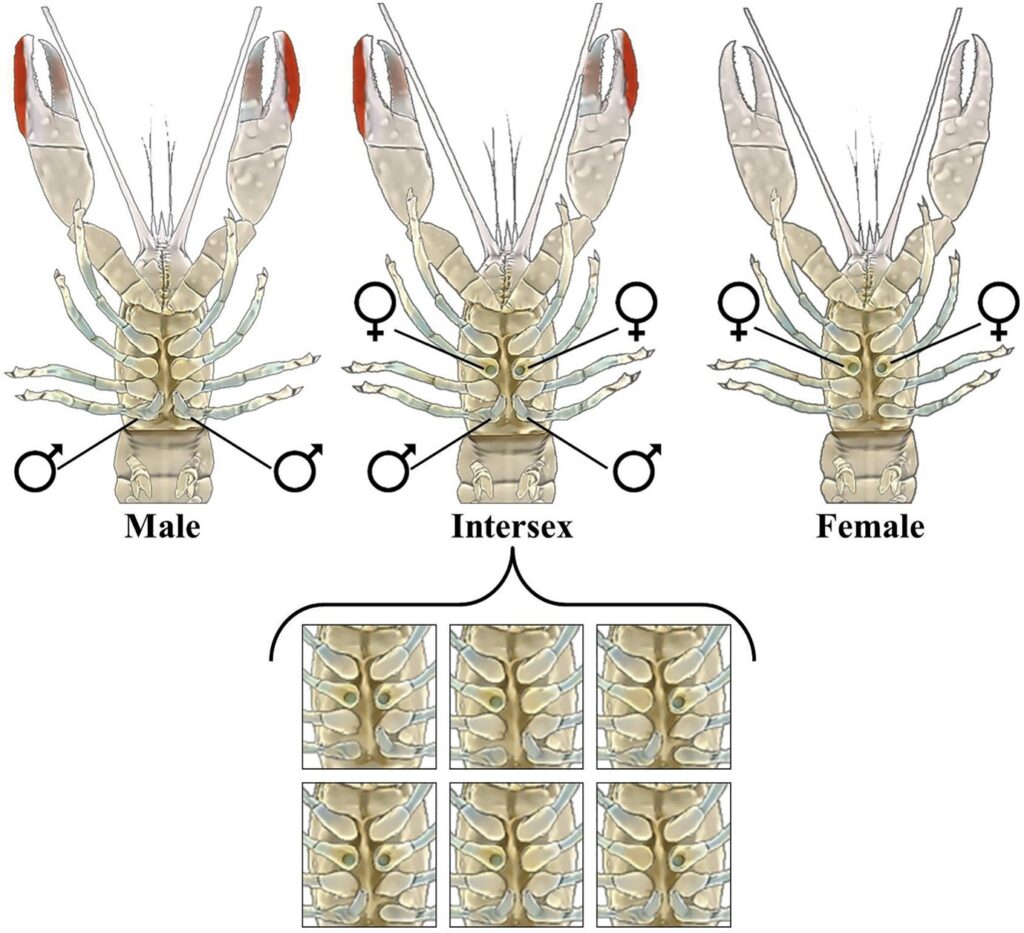
Once the female is immobilised (indicating receptivity) and flipped, the male’s spermatophores (packaged spermatozoa) are then deposited on the underside of the female cephalothorax through his gonopods (the male reproductive structure).

Image retrieved from Levy et al., 2020, displaying the male reproductive structure (gonopods) and the female reproductive structure (gonopores), as well as illustrating the possible sexual variations of an Australian redclaw crayfish.

However, if the male is not of suitable quality for her taste, she may remove the spermatophores, displaying mate selection. Females show a strong preference for males with both chelipeds (claws).

Offspring

Once the female has spermatophores deposited on her cephalothorax, she lays eggs through her gonopores (the female reproductive structure).  She then secretes glair from her cephalothorax glair glands which dissolves the spermatophore walls, fertilising the eggs with the spermatozoa. The eggs are then attached to her pleopods, or swimmerets, with the help of glair.

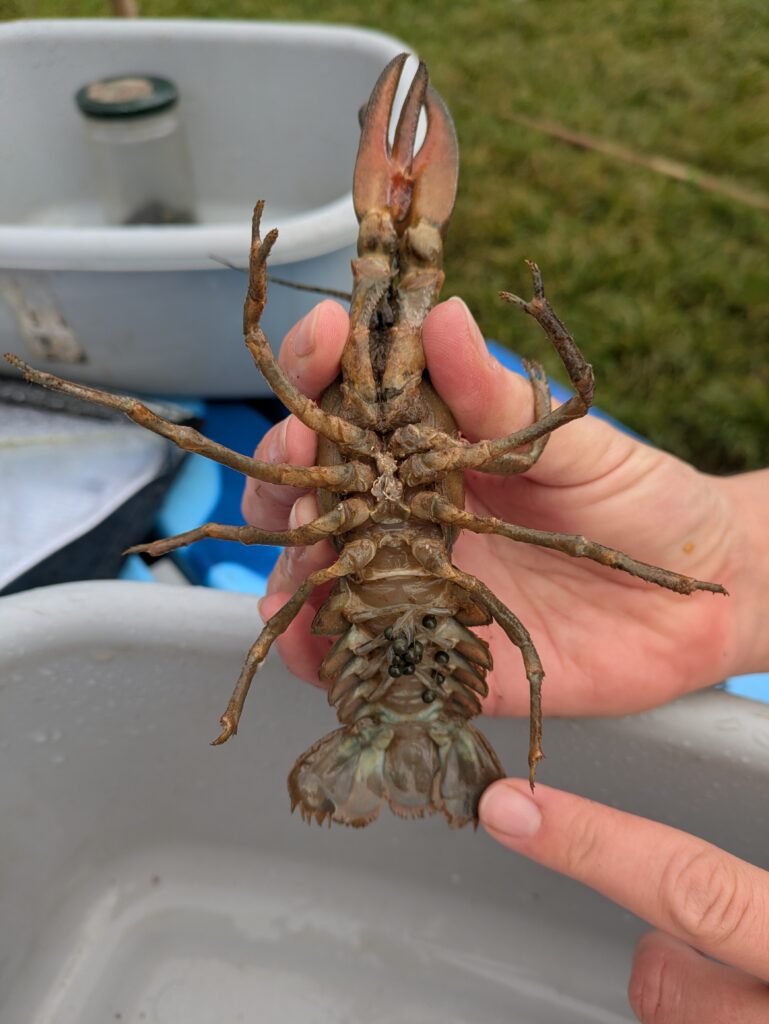
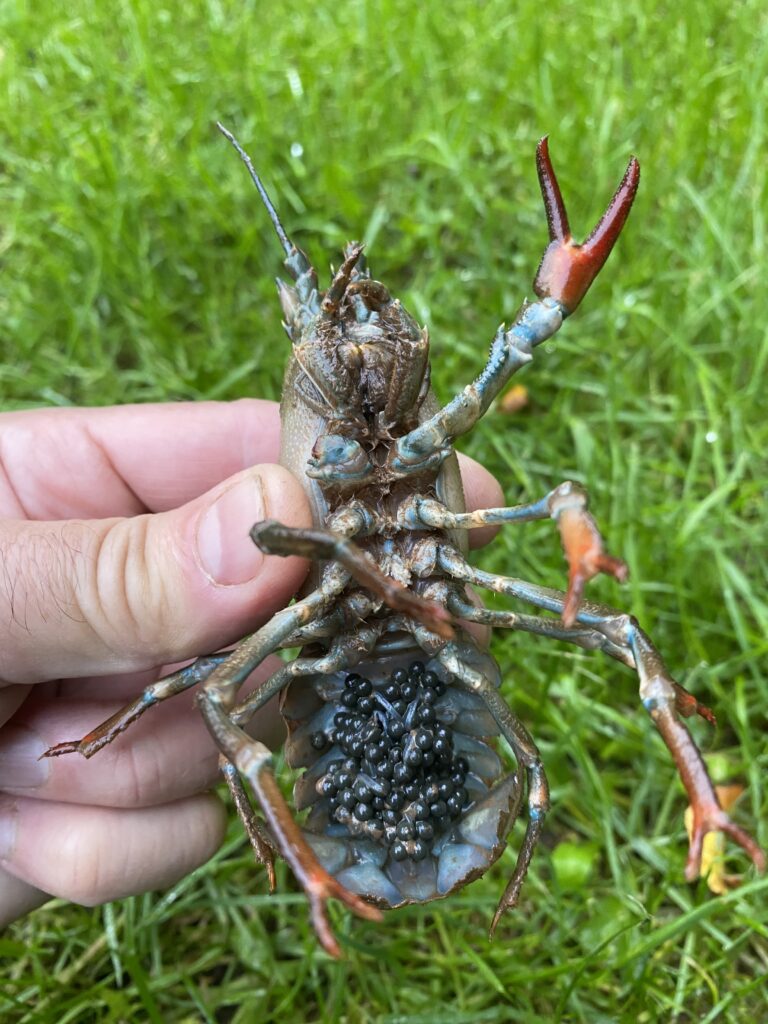
A female carrying eggs is called a berried female – see the image below to find out why that is! Larger females can carry more eggs than smaller females. As Signal Crayfish get larger on average than White-clawed Crayfish, this is another way they are able to outcompete our native crayfish. A berried White-clawed Crayfish carries between 20-200 eggs, with an average of 80. Signal Crayfish, however, can carry over 300 eggs.

A female crayfish ‘in berry’.


Females carry their eggs for 6 to 9 months (species-dependent) – up to a whole human pregnancy – until the eggs hatch. She will fan the eggs to keep them oxygenated and will clean them with her swimmerets, showing parental care.

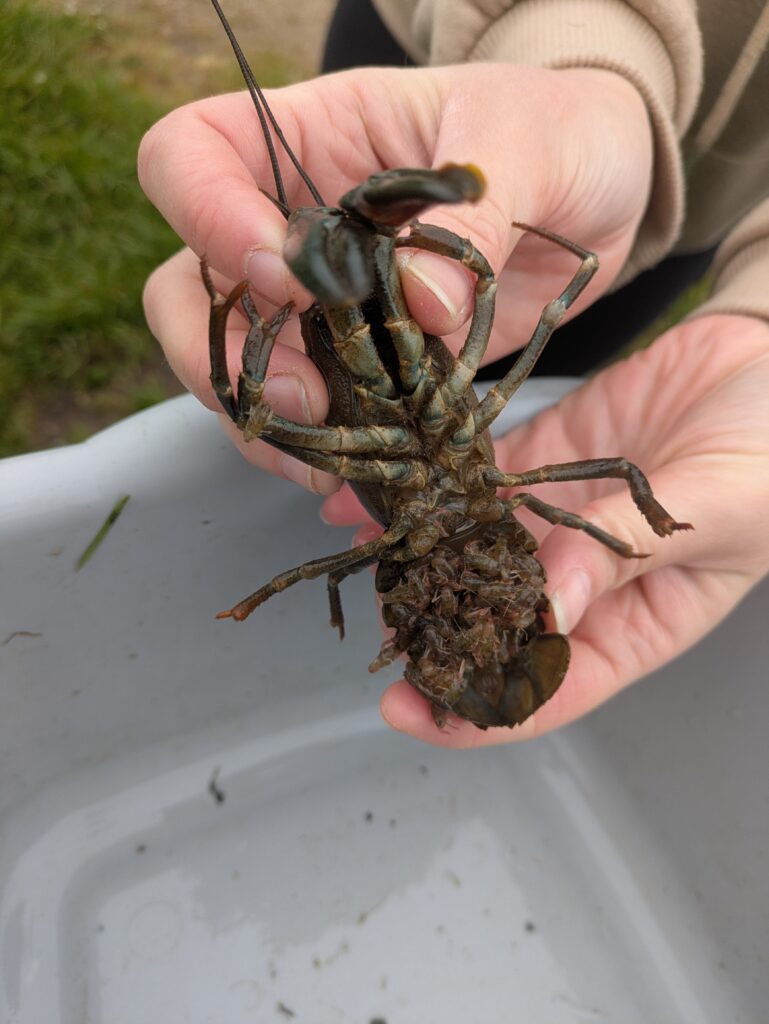
The hatchlings, or craylings, then stay attached to their mother’s pleopods for 2-3 weeks, where they first consume their yolk sac for nutrition, then begin to consume detritus and microorganisms from the safety of their mother’s body, then finally begin to detach for short periods of time to acquire food. From about mid July to mid September, their breeding season is over.

Hatchlings still attached to their mother; they will be literally hanging on by a telson thread.


References & further reading

Berry, Fiona & Breithaupt, Thomas (2010). To signal or not to signal? Chemical communication by urine-borne signals mirrors sexual conflict in crayfish. BMC Biology 8. https://link.springer.com/article/10.1186/1741-7007-8-25

Levy T. et al. (2020). Two Homogametic Genotypes – One Crayfish: On the Consequences of Intersexuality. iScience 23(11) https://www.cell.com/iscience/fulltext/S2589-0042(20)30844-0#fig2

Villanelli F. & Gherardi F. (1998). Breeding in the crayfish, Austropotamobius pallipes: mating patterns, mate choice and intermale competition. Freshwater Biology 40. https://www.researchgate.net/publication/229559494_Breeding_in_the_crayfishAustropotamobius_pallipesmating_patterns_mate_choice_and_intermale_competition

Mott, N. (2009) White-clawed Crayfish. Staffordshire Wildlife Trust, Stafford, UK. https://www.staffs-wildlife.org.uk/sites/default/files/2018-12/crayfish.pdf

Yazicioglu B., Reynolds J. & Kozák P. (2016). Different aspects of reproduction strategies in crayfish: A review. Knowledge & Management of Aquatic Ecosystems 417. https://www.kmae-journal.org/articles/kmae/full_html/2016/01/kmae160066/kmae160066.html

Ranger Conservation Work: Protecting Woodlands and Riverbanks

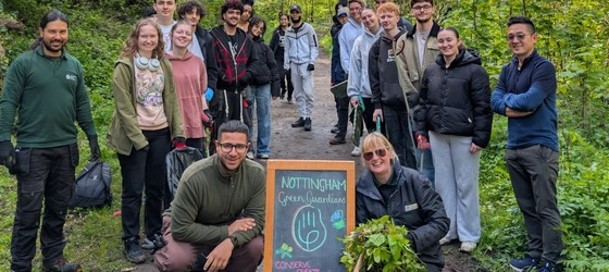
Himalayan balsam is being carefully controlled at Clifton Woods to protect native plants and riverside habitats. Already this year, Nottingham City Council have hosted three corporate action days, with volunteers from NTU and Ideagen, joining forces to remove Himalayan Balsam by hand – many thanks to everyone involved! The Nottingham Green Guardians also run regular sessions on the first and third Wednesday of each month, offering more opportunities to get involved.

The Nottingham Green Guardians at their Himalayan Balsam Control Session!

This effort is truly part of a partnership: and is part of a much wider project aiming to clear Himalayan balsam from 7 river catchments in central Nottinghamshire, including the River Greet, River Leen, River Maun, Ouse Dyke, Cocker Beck, Dover Beck and Rainworth Water. Collaborations like these are vital to protecting our local habitats and keeping Nottingham’s greenspaces thriving!

[Many Thanks to Jemma Maguire from Nottingham City Council, for providing the news and photo for this blog]

Biodiversity Highlights from the IDB

Black Poplar

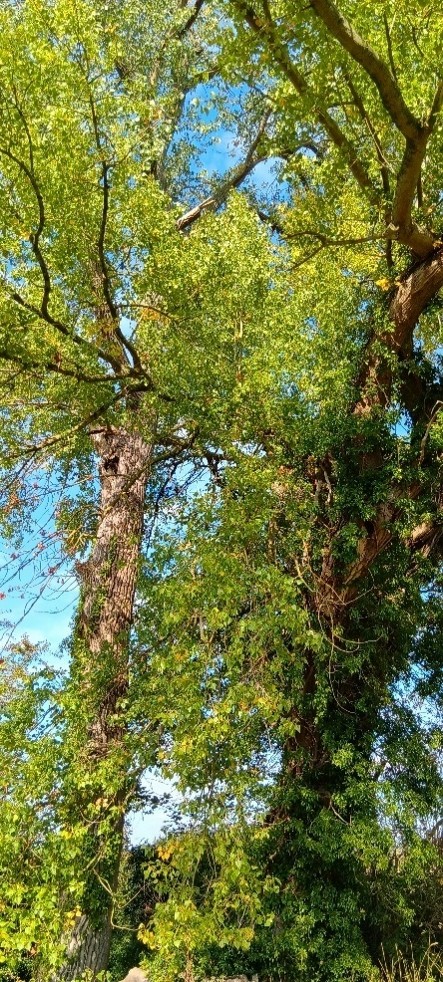
Whist undertaking protected species surveys along the Halam Beck, in the Trent Valley & in the Isle of Axholme (North Nottinghamshire), the Internal Drainage Board (IDB) team stumbled across a mature Black poplar on private land. The location has been confirmed with Notts BAG, and there is some potential that this tree could assist with the conservation of the species in Nottinghamshire. Once landowner approval has been sought, we will aim to take cuttings from the tree to establish its genetic origin and confirm (or not) its native status.

Nottinghamshire Black Poplar

Improving biodiversity on drains

After reforming approximately 1 mile of drain in Sutton on Trent during flood relief works, the IDB team trailed hydroseeding for the first time to enhance biodiversity. Despite the drought, some species are poking through, specifically red campion, yellow rattle, oxeye daisy and knapweed. Signs of water vole have also been recorded on this drain, so there is hope that this flourishes in 2026 (and looks less bald!).

Invasive Non Native Species

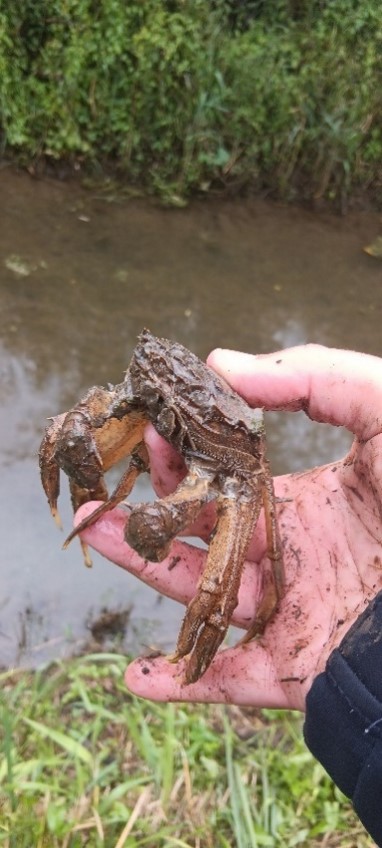
The IDB team have seen an increase in water fern whilst undertaking surveys in Doncaster and Chesterfield Canal in north Nottinghamshire.  Unfortunately, Himalayan Balsam has been vigorous across all of IDB’s districts this year, and Chinese Mitten Crabs have proved to be in high numbers in the Catchwater Drain catchment (West Burton Power Station)

Chinese Mitten Crab

The IDB team continue to promote “CHECK, CLEAN, DRY” amongst the Operations Team and continue researching best practise to deal with problematic species. There is hope for a realistic ‘working party’ to be brought together to help pull balsam, and depending on the resources, this can be arranged within the setup of the IDB.

2025 Records

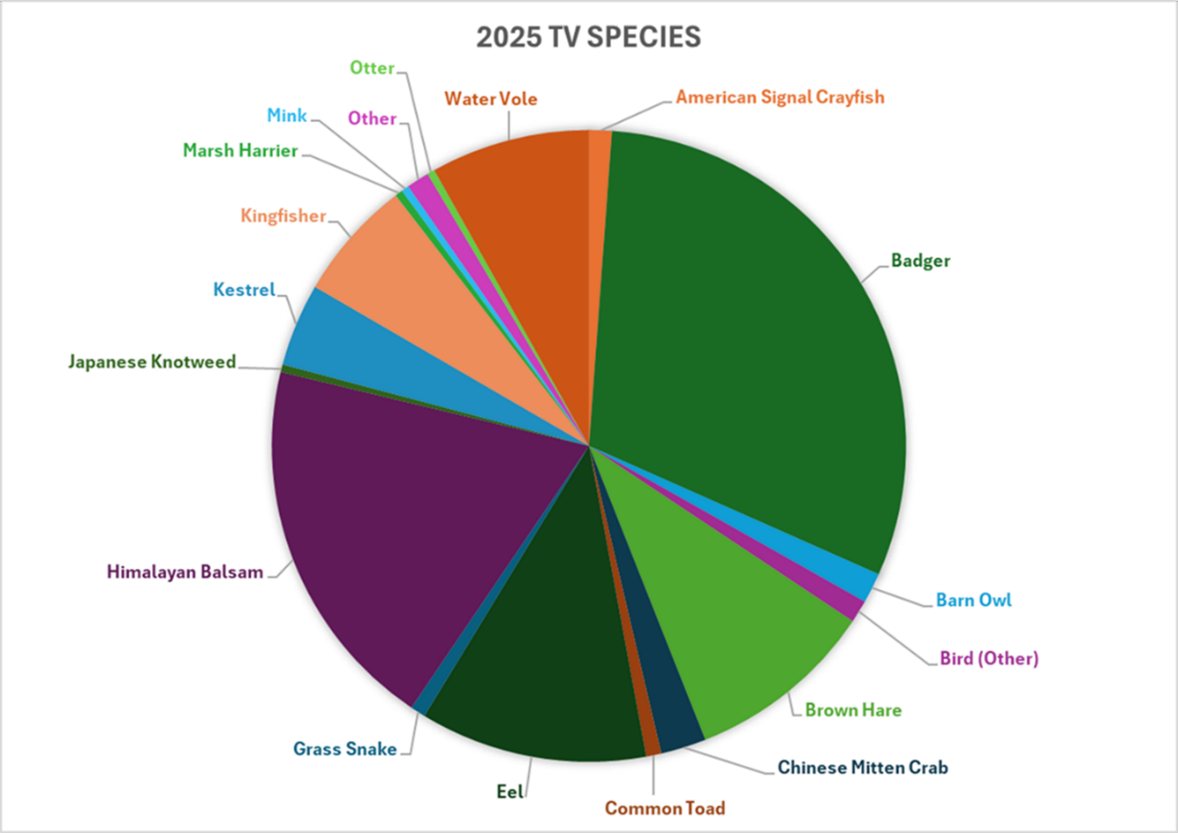
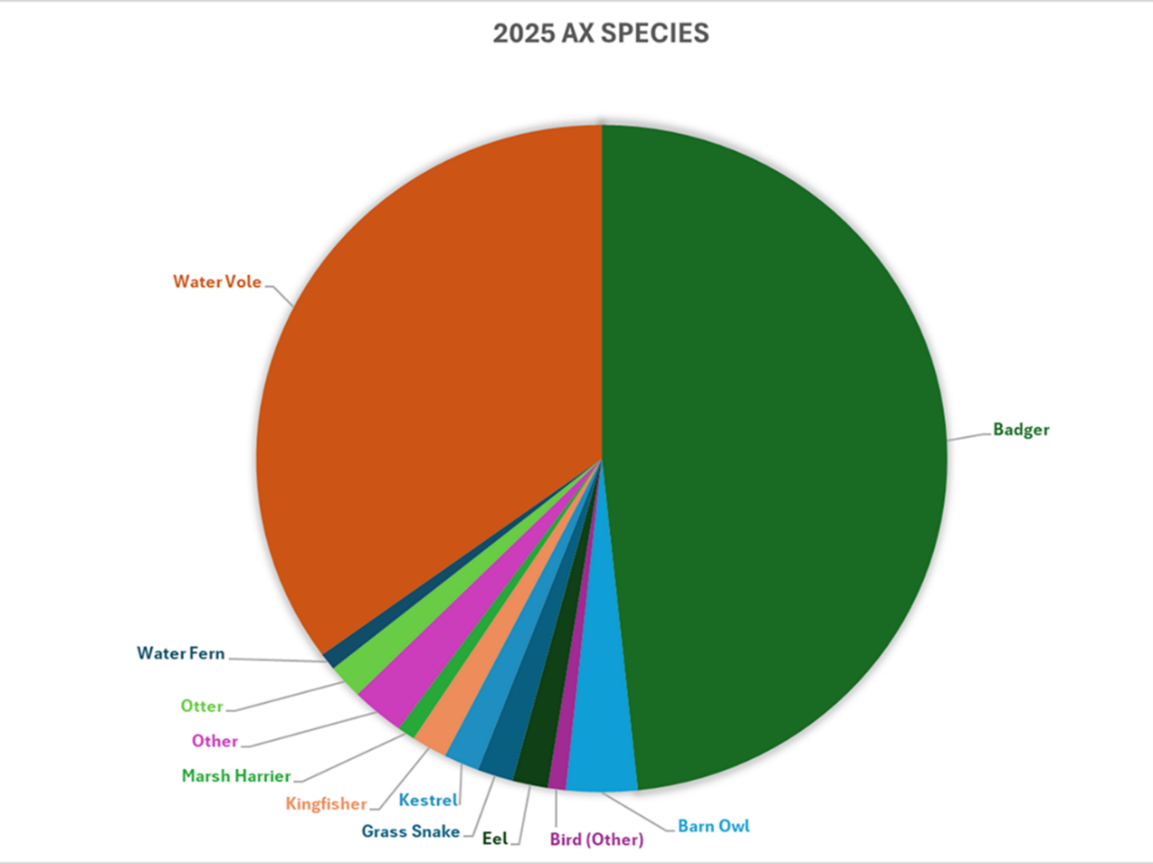
The IDB have spent time during the winter collating the biological records collected during 2025. Over 1,200 records were collected across the IDB area, and these will be shared with Local Record Centres. The table below gives an idea of what has been recorded locally! The main species recorded include Himalayan Balsam, Eel, Brown Hare and Water Vole, whilst in the Isle of Axholme & North Nottinghamshire, Water Vole are more commonly recorded.

Pie charts above show the records of species in the Trent Valley (TV) and the Isle of Axholme & North Nottinghamshire (AX)

[Many Thanks to Iain Turner from the IDB  for providing the news and images for this blog]

Water Fern Control at Nottingham Trent University

Nottingham Trent University (NTU) continues to lead the way in campus-based conservation, with recent efforts focused on invasive species control – specifically, the persistent Water Fern (Azolla filiculoides).

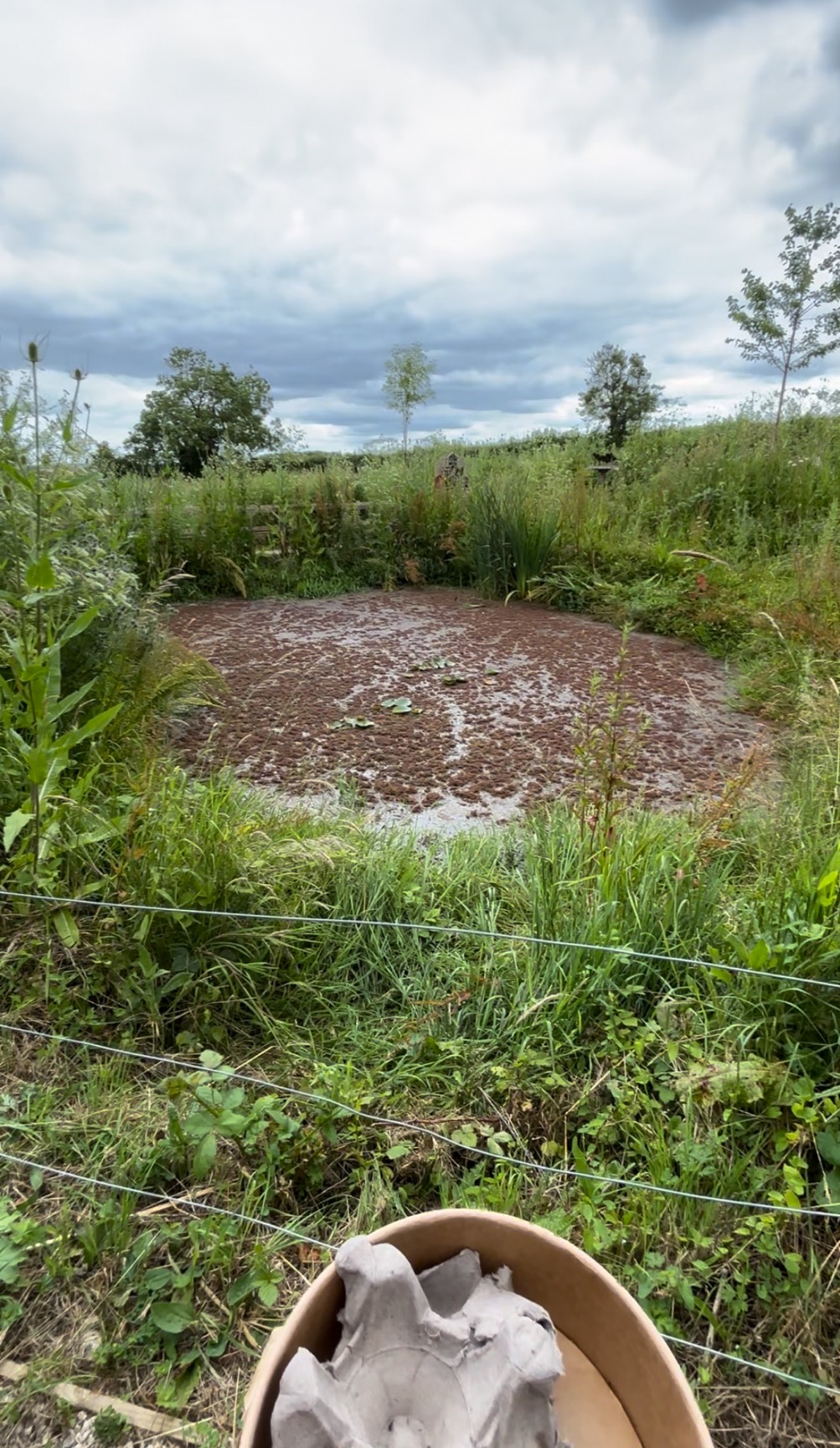
The plant is a fast-growing, non-native and quickly blankets ponds and lakes, blocking light and reducing oxygen levels, which harms aquatic life. In 2024, NTU successfully trialled a biological control method at Brackenhurst Campus, introducing the North American weevil (Stenopelmus rufinasus), known to those involved in invasive species control as the ‘azolla weevil’.  At 2mm long, they are tiny insects which feed exclusively on Water Fern. The results were impressive, with the weevils rapidly reducing the dense plant cover and restoring balance to the pond ecosystem.

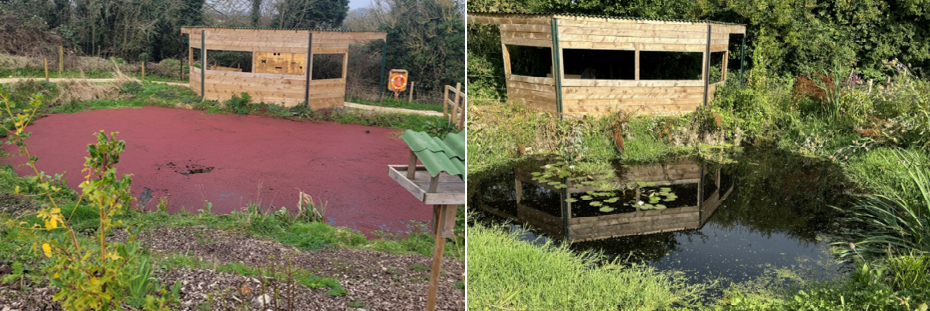
An impressive difference: Left: Before the weevils were introduced. Right: The result of hungry azolla weevils!

This summer, the initiative was extended to a second pond where the fern had reappeared. The work was carried out by an NTU (ARES) student Esther Tennant and the Flowerpod Team.  They applied the weevils and monitored the site. Since then, the Water Fern has died back significantly. While it’s unclear whether this was solely due to the weevils or also influenced by lower water levels, the outcome is a healthier aquatic habitat.

A pond covered with the invasive Water Fern (pink foliage), with a container in the foreground containing weevils

A pond covered with the invasive Water Fern, with a container in the foreground containing azolla weevils

All campus water bodies continue to be actively monitored for invasive species as part of NTU’s Great Crested Newt Conservation Programme, ensuring long-term protection for this priority species.  Click HERE to find out more!

Himalayan Balsam control in full throttle

As the Himalayan Balsam season is well underway, we’ve seen some great community and partner engagement across Nottinghamshire in the battle against this invasive species. This year’s efforts are a continuation of our long-term commitment to managing Himalayan Balsam, and it’s great to see the momentum continuing to build.

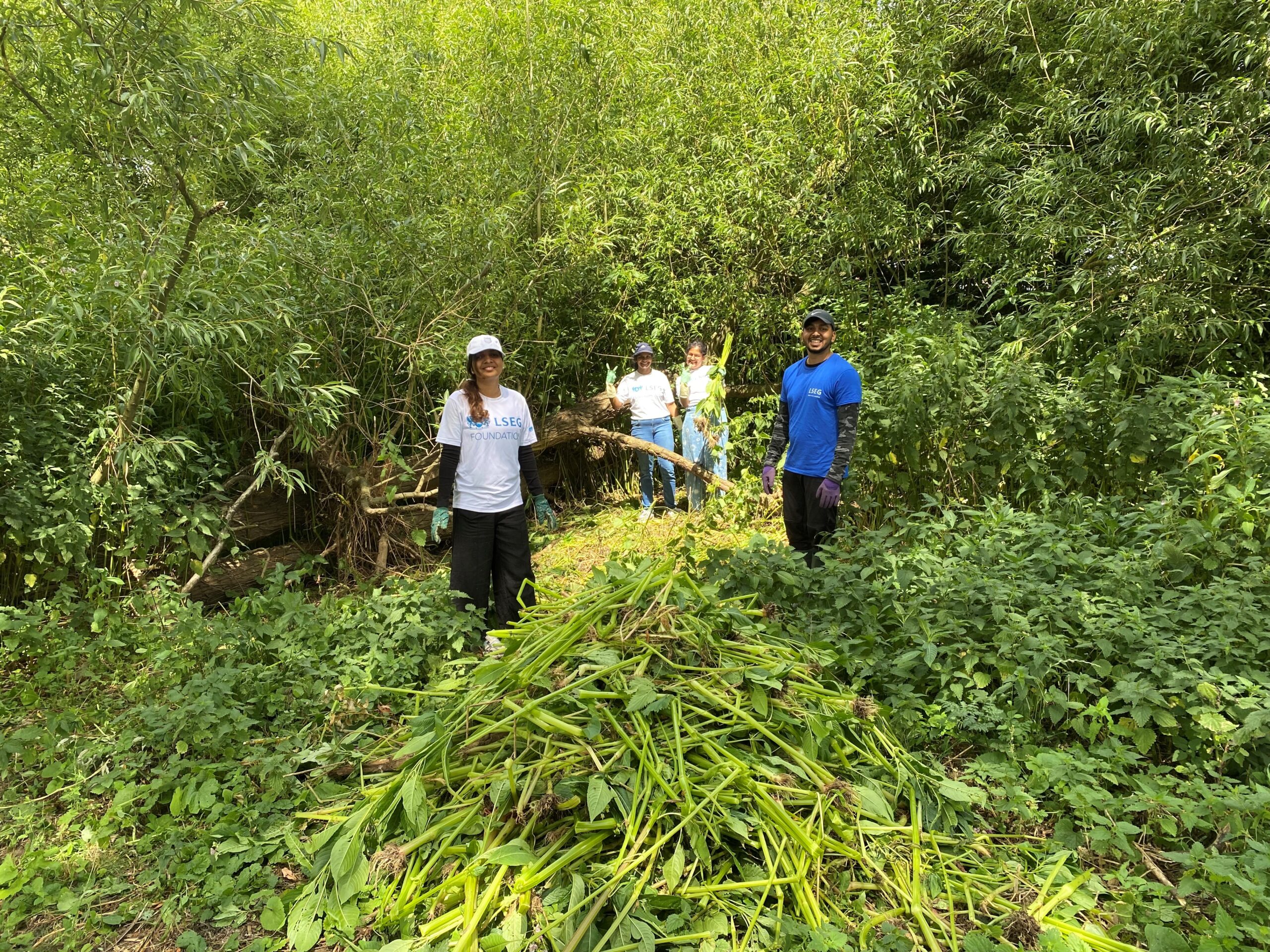
Lseg at Beeston Fields along the River Trent

So far this season, we’ve achieved:

       1. Spa Ponds and Cavendish Wood, Clipstone

With support from the Environment Agency, Virgin Media, L’Oréal, AECOM, and staff and students from Nottingham Trent University, we’ve made major progress in this woodland area. These efforts build on years of dedicated clearance work, and we’re now close to eradicating balsam from the site altogether!

      2. Rainworth Water

Here, volunteers from the Environment Agency and Mitie joined forces with us to protect this beautiful wetland. The site is home to rare native flora such as opposite-leaved golden saxifrage, marsh bedstraw, and celery-leaved buttercup. With balsam in retreat, these species are beginning to reclaim their rightful space.

      3. River Trent 

Teams from the Environment Agency, Boots, and LSEG tackled one of the fastest-growing balsam hotspots along the River Trent. Their hard work is helping to keep this vital river corridor healthier and more biodiverse.

These are just a few highlights from the past few weeks. Every plant pulled means one less seed pod ready to explode and spread this invader further through our woodlands and waterways!

A massive thank you to all the volunteers who’ve made this progress possible. As the season continues, we’re looking forward to more successful balsam bashing sessions across the county.

Crayfish Project Update – A Promising Start to 2025

As we wrap up the spring and early summer crayfish sessions in Nottingham city, a big thank you to all those who have helped out with the project.

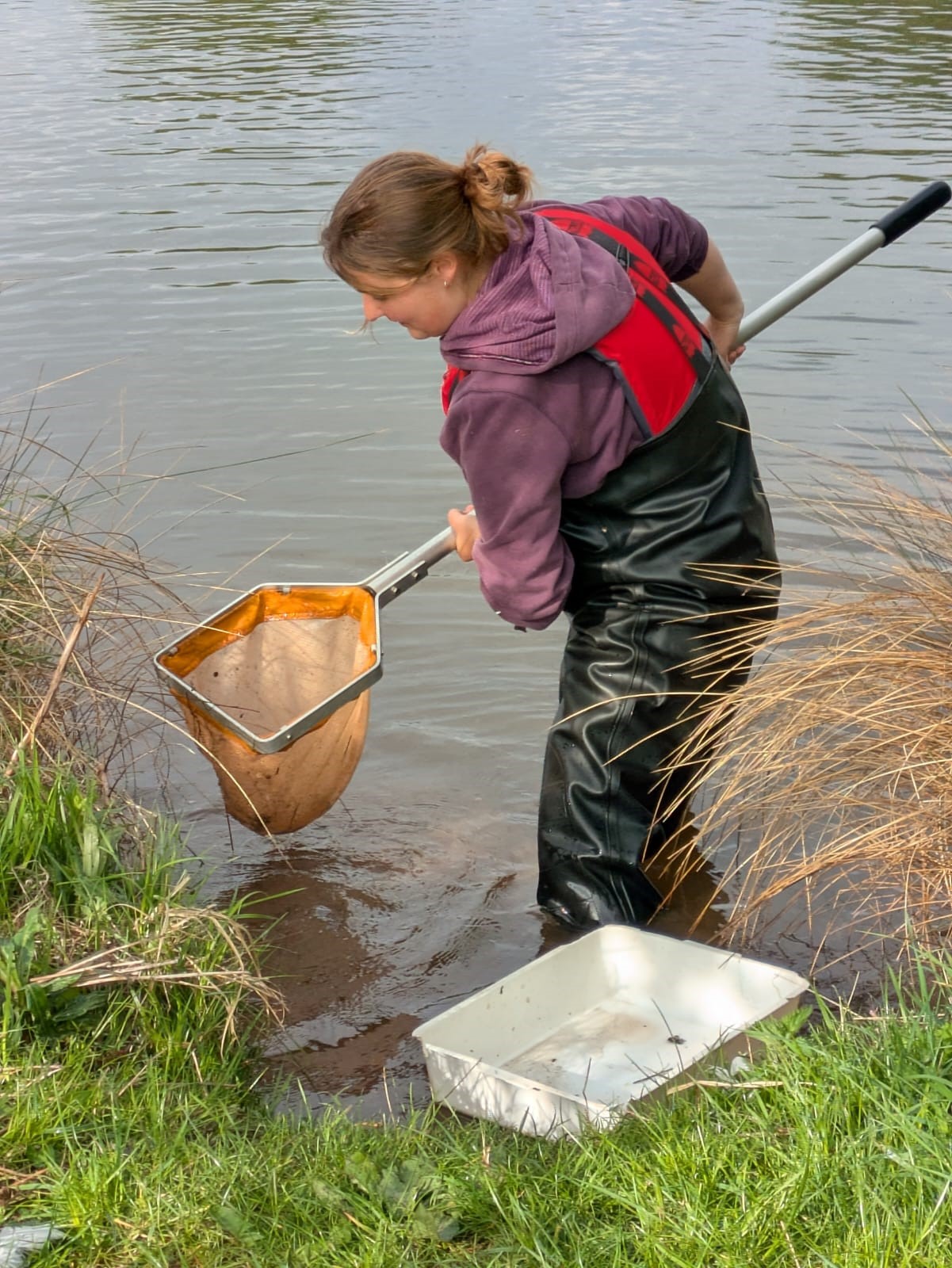
So far, the numbers are looking very positive. We’ve seen a decrease in crayfish caught—even with more traps being set. We also saw a significant drop in young crayfish during netting—only about a third of previous years. The catch-per-minute rate fell to the lowest it’s been in five years. This points to fewer young crayfish entering the population, which is a very encouraging sign.

Crayfish volunteer netting around the edge of the pond

Female crayfish numbers were up again, but the average size of breeding females continues to decline. Smaller females produce fewer young, which helps reduce recruitment. Fewer berried females were also caught, despite the overall increase—another indication we’re intercepting them at the right time.

Overall, it’s been a positive start to the year. With your continued support—especially consistent netting—we’re seeing real progress in controlling the signal crayfish population in Nottingham city.

Help tackle the invasive and non-native Himalayan Balsam in Notts

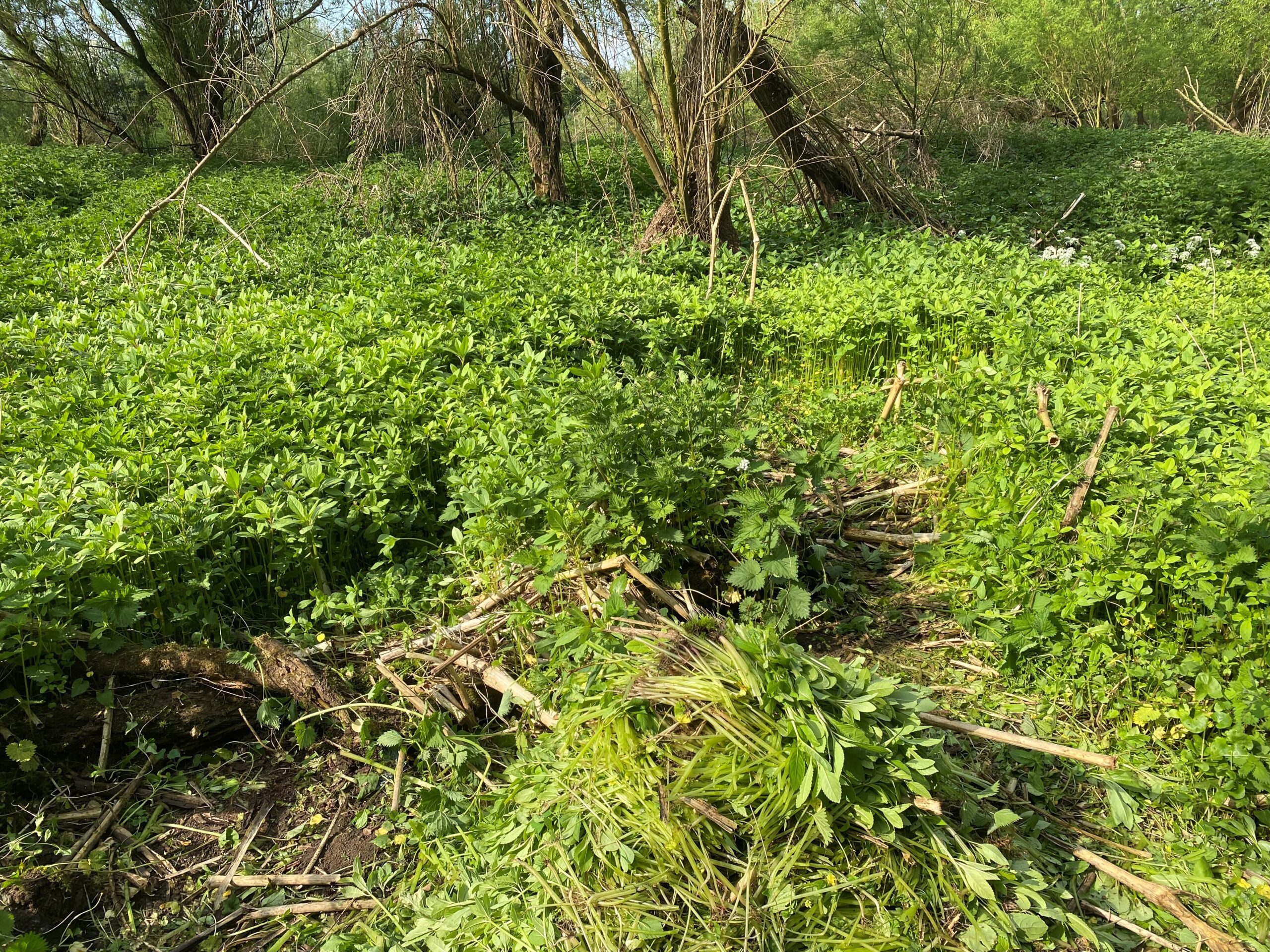
Himalayan balsam is an invasive plant that spreads quickly, particularly along rivers and in wetlands, outcompeting native plants and reducing biodiversity. It grows densely and creates a uniform layer of vegetation, making it harder for other species to survive.

To manage this, volunteers have been working across central Nottinghamshire each summer to control its spread and support the recovery of native wetland plants. The work began in 2018 at the upper end of the watercourse near Mapperley, where consistent effort has cleared much of the area. Now, attention has turned further downstream, where the plant is still widespread along parts of the river.

More volunteers are needed to continue this progress. If you’d like to help, you can join one of the many sessions advertised on our Events page.

To find out more or to get involved, contact Mark at mark@respectforanimals.org or call 07850 768337. Or, get in touch at biodiversity@nottscc.gov.uk for the regular Tuesday evening sessions at Cavendish Wood or Garibaldi Plantation.