




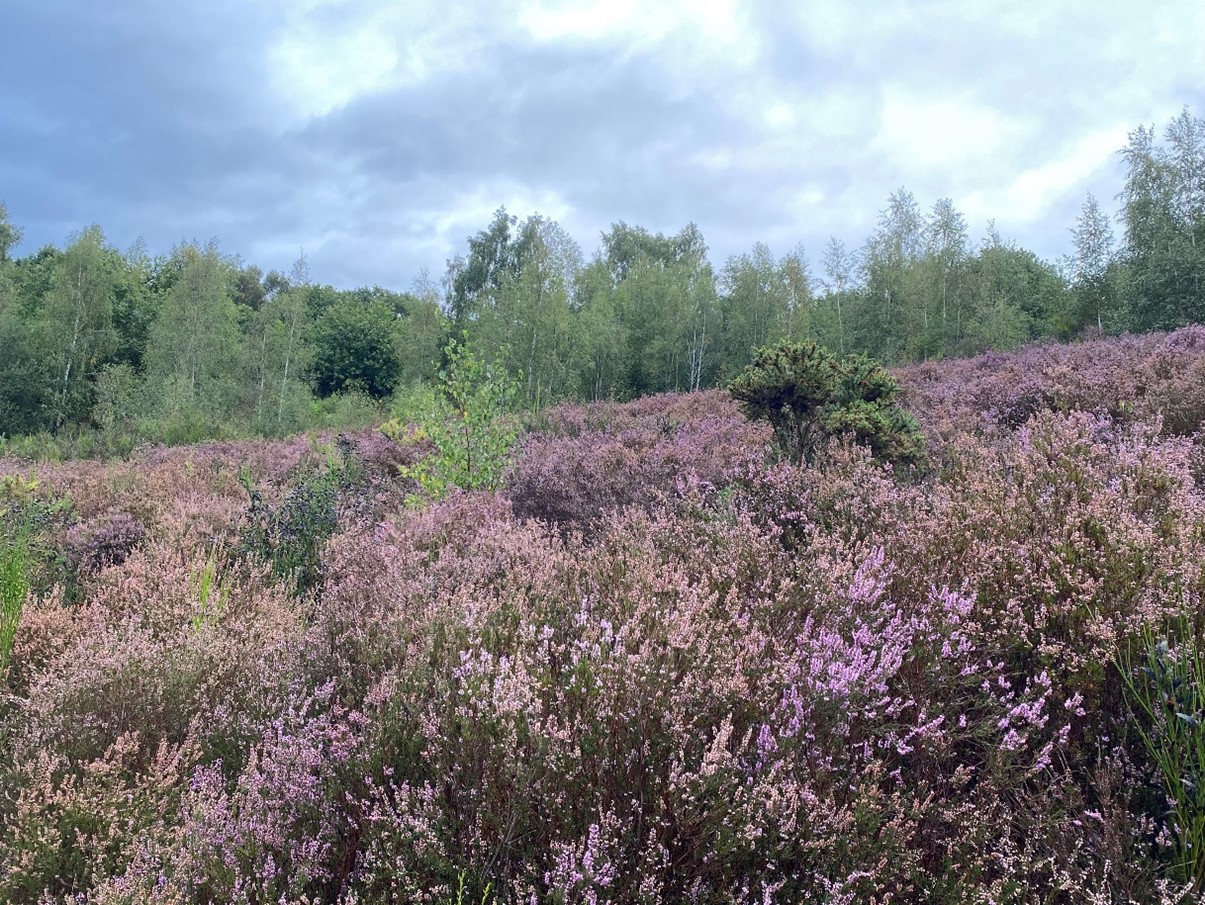


Grizzled Skipper Project

The grizzled skipper is a locally rare butterfly. The project is supported by local volunteers who undertake practical habitat management as well as surveying and monitoring the butterfly during the flight season (April-June)....read more
Nottinghamshire & Nottingham’s LNRS
The Local Nature Recovery Strategy (LNRS) is a strategy to improve the state of nature by identifying priorities for nature recovery, identifying locations and habitats to improve which will have the greatest benefit for the environment, and influence local planning policy for nature recovery... read more
Nottinghamshire Wildlife Trust
 Nottinghamshire Wildlife Trust (NWT) believes that everyone should have the opportunity to live in a healthy, wildlife-rich natural world. Sadly our environment is under threat like never before, and Nottinghamshire Wildlife Trust is committed to working with others to limit and reverse the impacts of the nature and climate emergencies, and to inspire individuals to take action for nature...read more
Restoring Biodiversity at Freckland Wood: A Day of Conservation
On 11th November, staff from Nottinghamshire County Council visited Freckland Wood (one of the county’s green spaces sites) located on the edge of Newstead village. A fascinating site that was once a colliery pit tip, this is now a thriving broadleaved woodland. With its wide grassy rides (paths and tracks) open glades, and a monument at the highest point commemorating the area’s mining heritage, the wood is a great example of how restoration can bring positive changes to areas previously managed for industry.
The main task of the day was to clear vegetation along some of the woodland rides, which were overgrown with regenerating scrub and woodland. By widening these pathways and opening up woodland edges, transitional habitats (ecotones) can be created to support a diverse range of species.
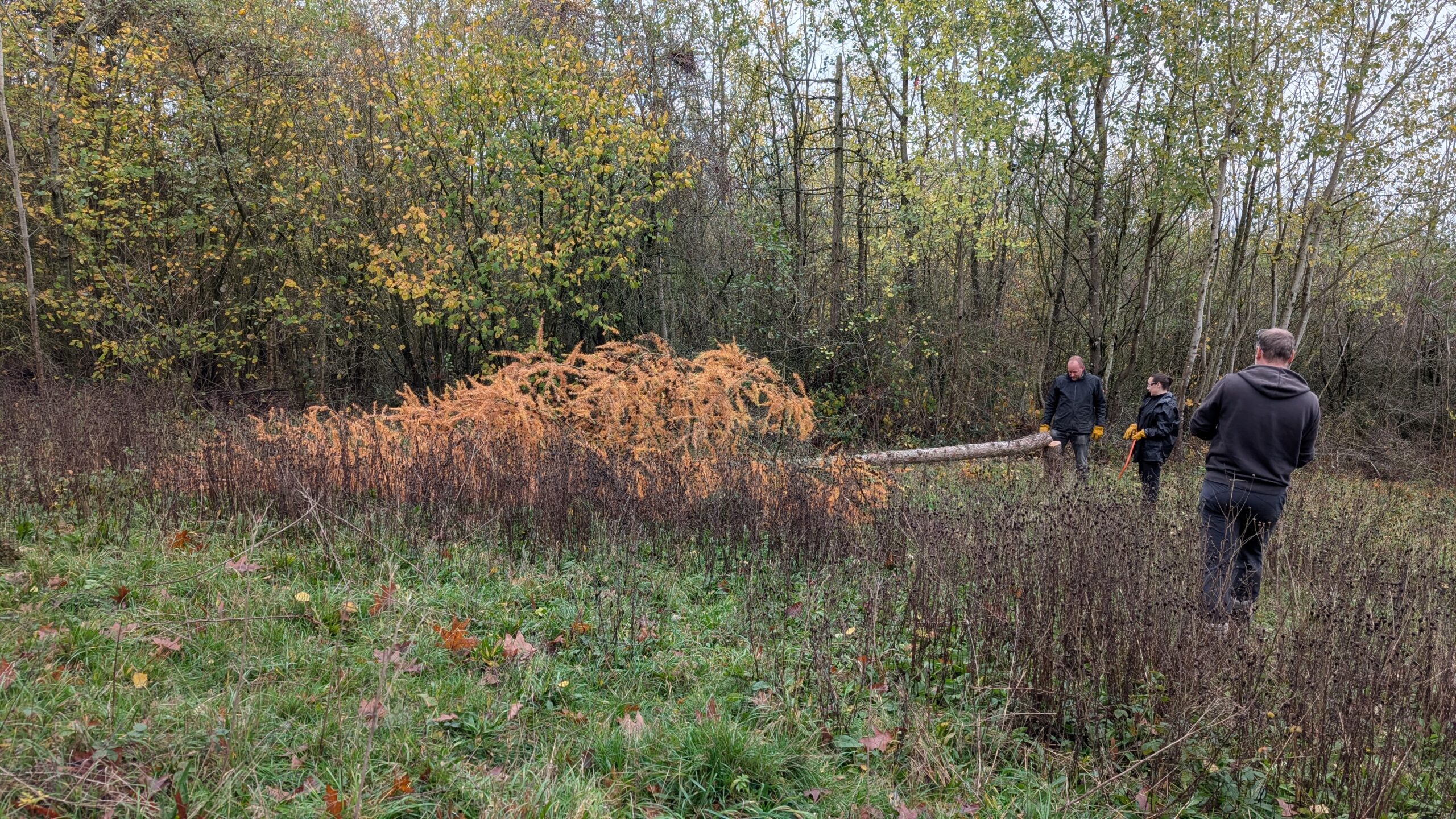
The conifer tree fell safely!
These changes will help boost biodiversity by creating sunny, open areas where wildflowers can flourish, attracting pollinators and other species. Woodland edges are particularly valuable because they offer a mix of shelter and feeding opportunities for wildlife.
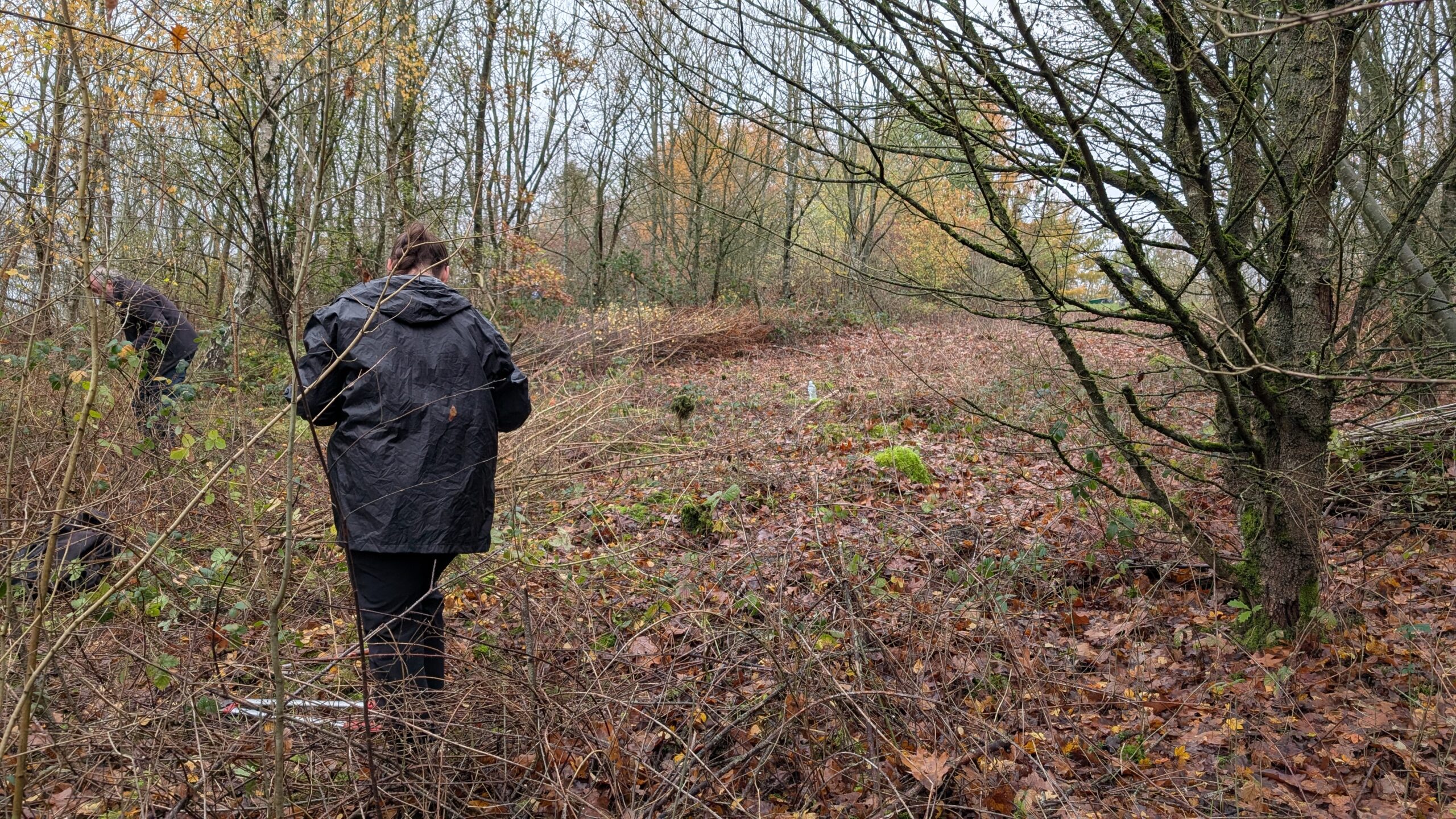
Clearing the vegetation along the rides to improve biodiversity
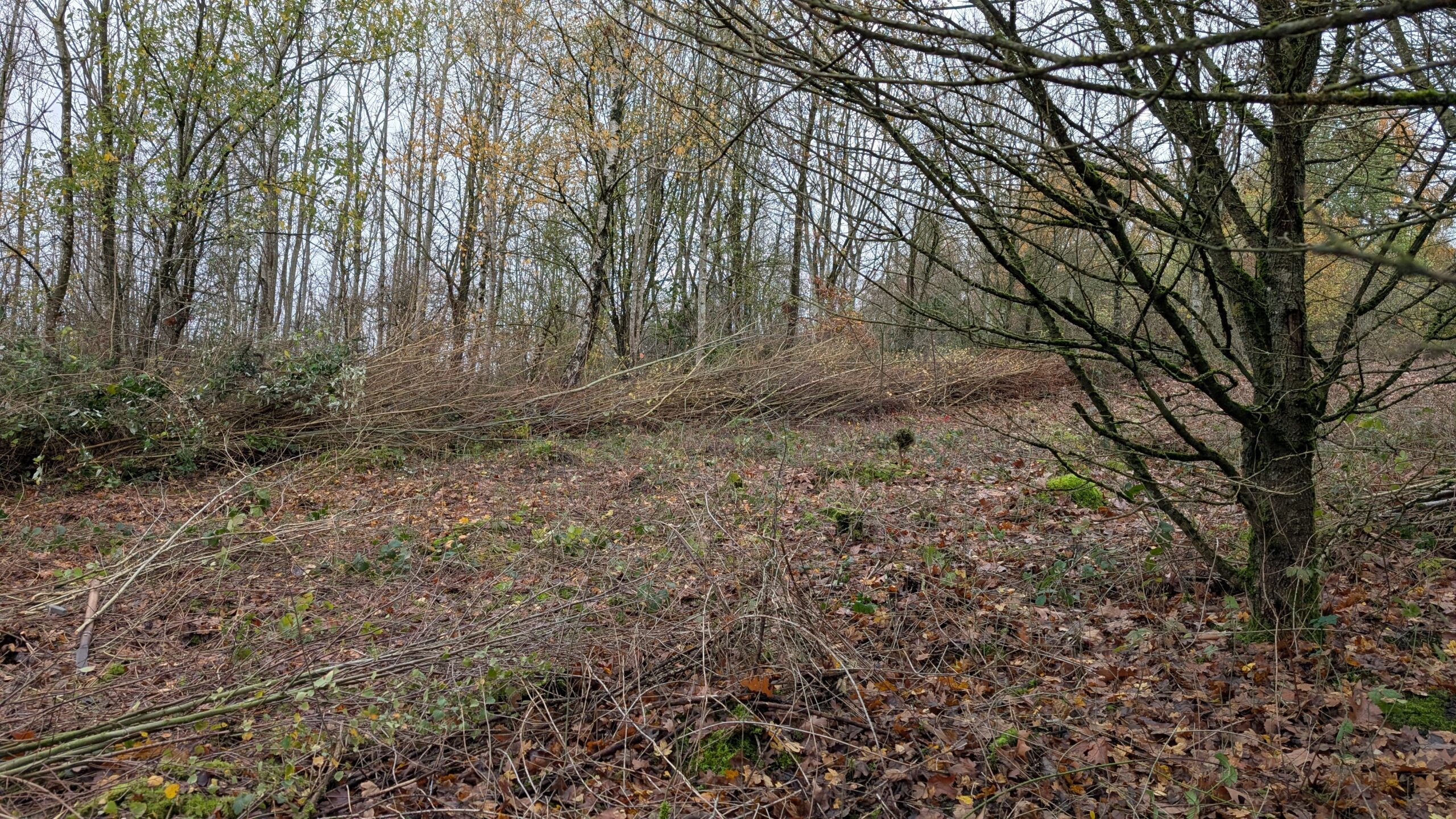
Clearance completed!
During the day, interesting signs of the site’s biodiversity were encountered; an old wren’s nest was found tucked away in the undergrowth – a lovely reminder of the woodland’s role as a home for birds. Crepidotus fungi were spotted growing on fallen branches, showing the natural cycle of decay and renewal at work.
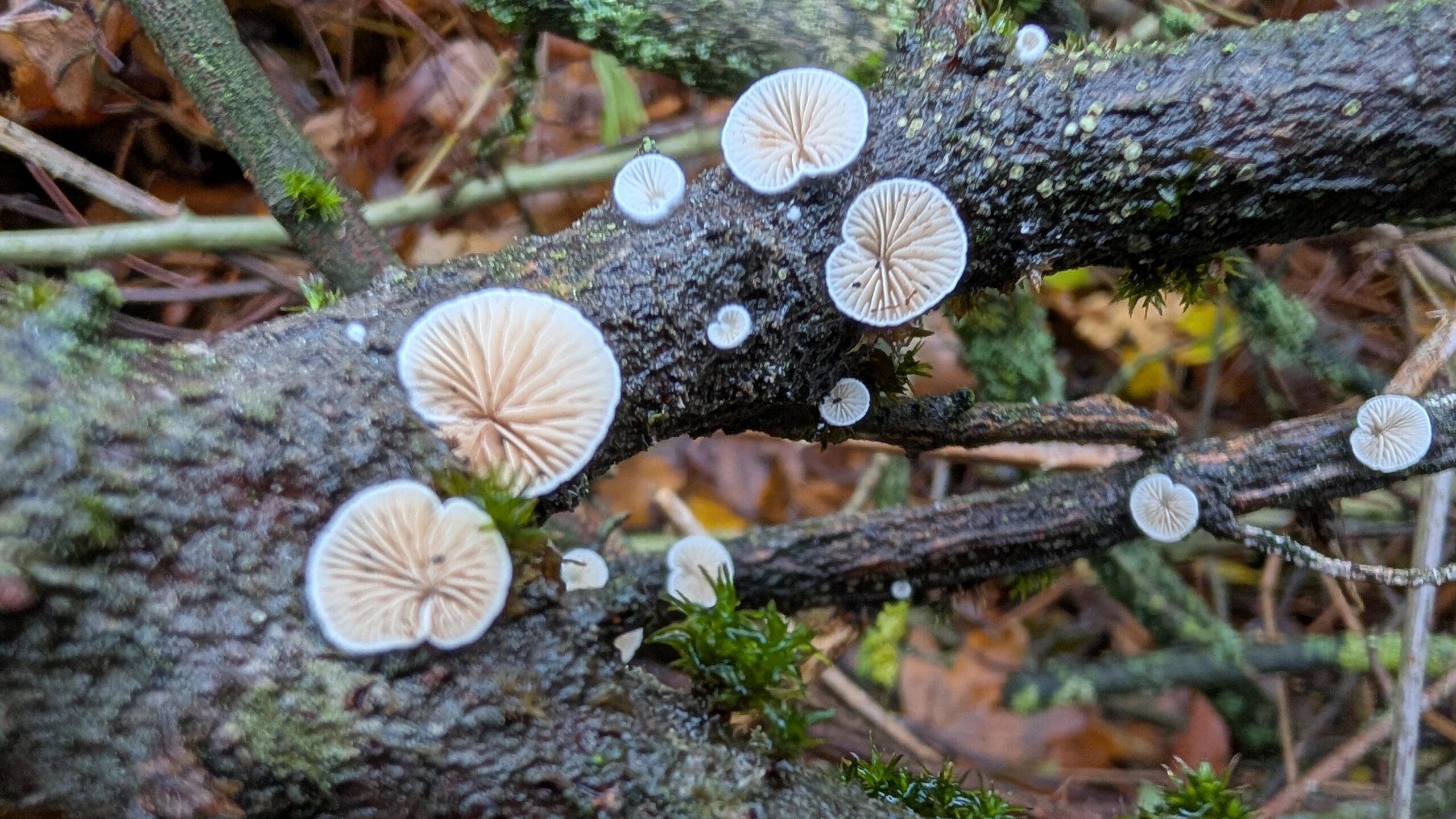
Crepidotus fungi growing on fallen branches
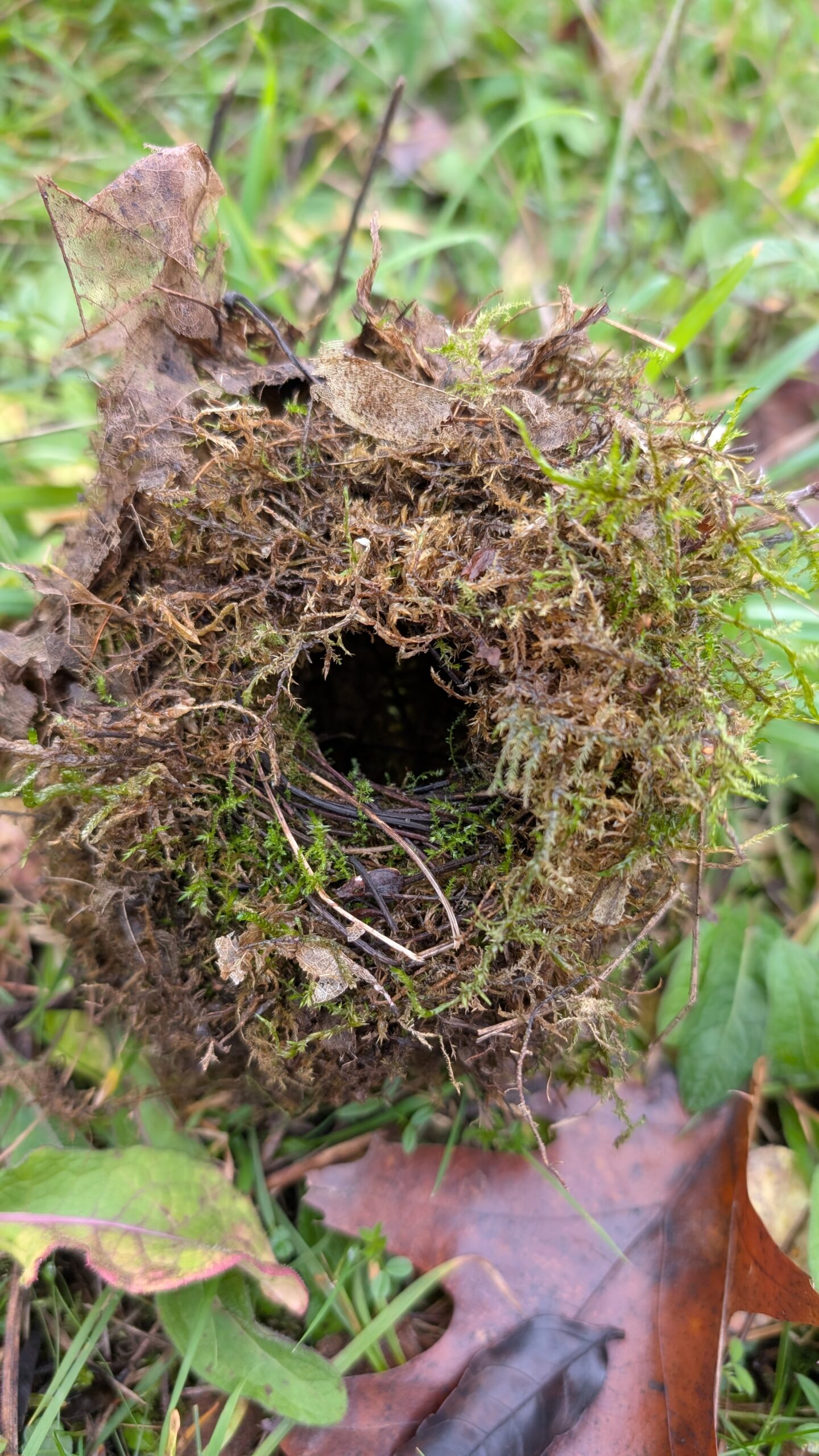
An abandoned Wren’s nest – notice the little doorstep!
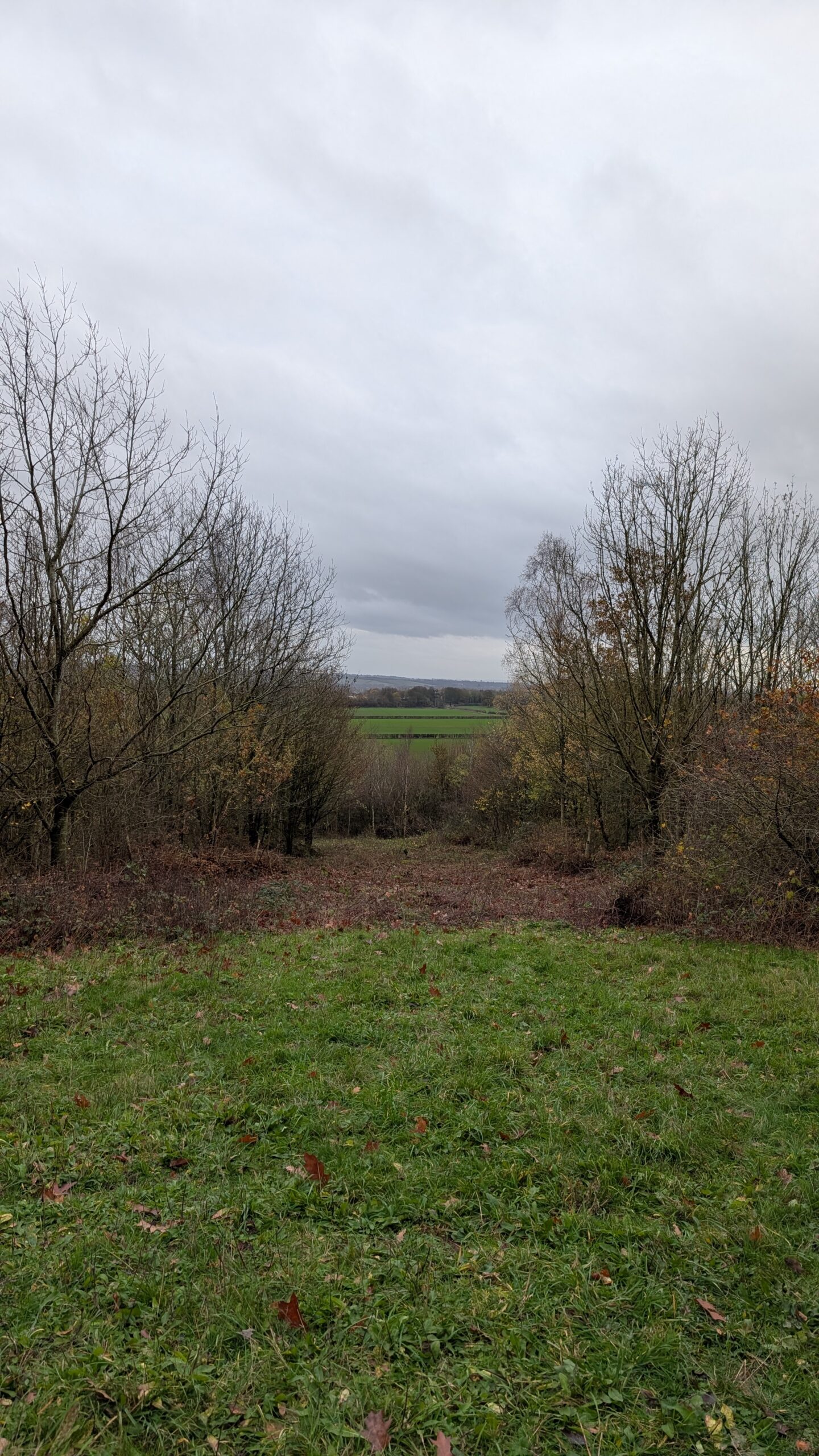
The cleared ride at the end of the day which has created woodland edges which are dynamically biodiverse
By the end of the day, great progress had been made opening up the rides and woodland edges. It will be interesting to see how these changes encourage more wildlife and plant diversity in the months ahead.