Manual Labour & Clouded Yellows (Grizzled Skipper Project Update)

This week, we have been doing some habitat management work for the Grizzled Skipper Project.

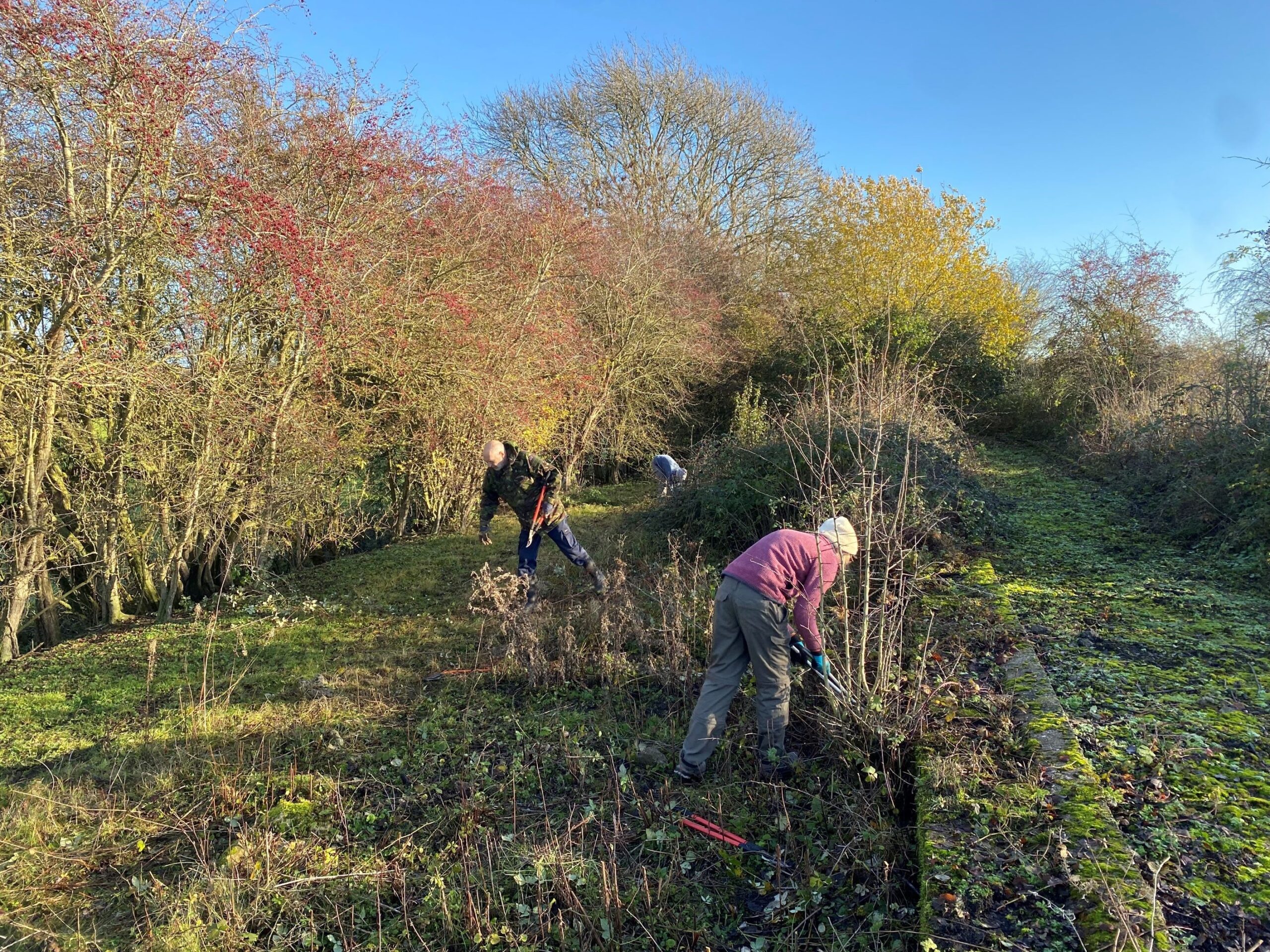
On the 21st, we visited a privately owned site near Flawborough, which we manage with the consent of the landowner. As part of a scheme run by Rushcliffe Borough Council, we were granted the use of a remote-controlled mower to cut the regenerating scrub and grass across the site. This allowed us to leave plenty of sunny open space for the butterfly. We left a good area of species-rich grassland habitat uncut for the benefit of the diverse invertebrate species utilising the site. We also left areas dominated with vast growth of Creeping Cinquefoil to assist the Grizzled Skipper butterfly. Creeping Cinquefoil is one of the larval food plants for the Grizzled Skipper, so we managed the scrub in areas dominated by Creeping Cinquefoil with more targeted work by hand – using loppers and secateurs – to avoid harming the butterflies’ pupae. We will be hosting a volunteer work party to finish off work to manage the site (keep your eyes peeled) but we have made a very good inroads.

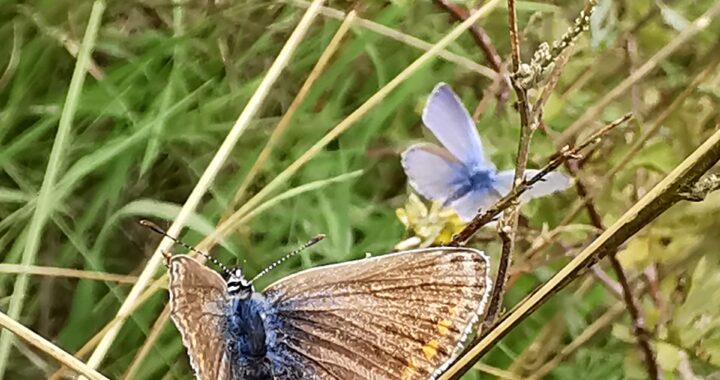
Additionally, due to the unusually warm and dry September weather we have been experiencing, there has been plenty of invertebrate activity. We spotted many Brown Argus, Common Blue, Small White and surprisingly, at least three Clouded Yellows.
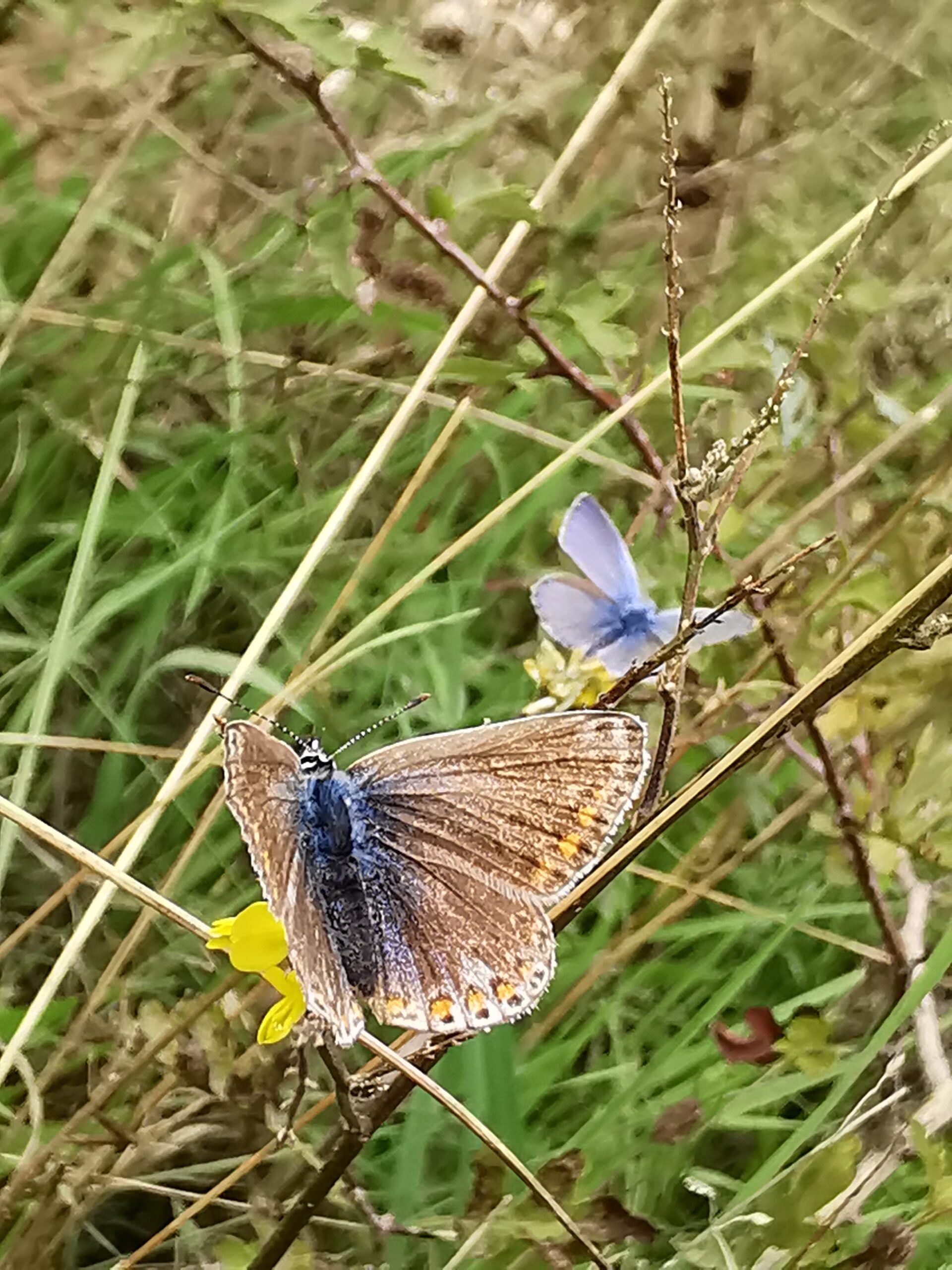
2 Common Blue butterflies

We then went to Staunton Quarry to harvest some Agrimony seed for our partners at Sherwood Forest Trust to grow on at their nursery. Agrimony is another larval food plant of the Grizzled Skipper, so we are hoping to plant it at some of our Grizzled Skipper sites. Staunton Quarry appears to be recovering from a series of poor years for Grizzled Skippers, as this spring produced more records than in recent years. Other butterflies seem to be enjoying the site too; we saw many Small Whites and Brown Arguses. And what do you know – we saw another Clouded Yellow! According to Butterfly Conservation’s Nottinghamshire butterfly recorder, Clouded Yellow are having their biggest year in decades.

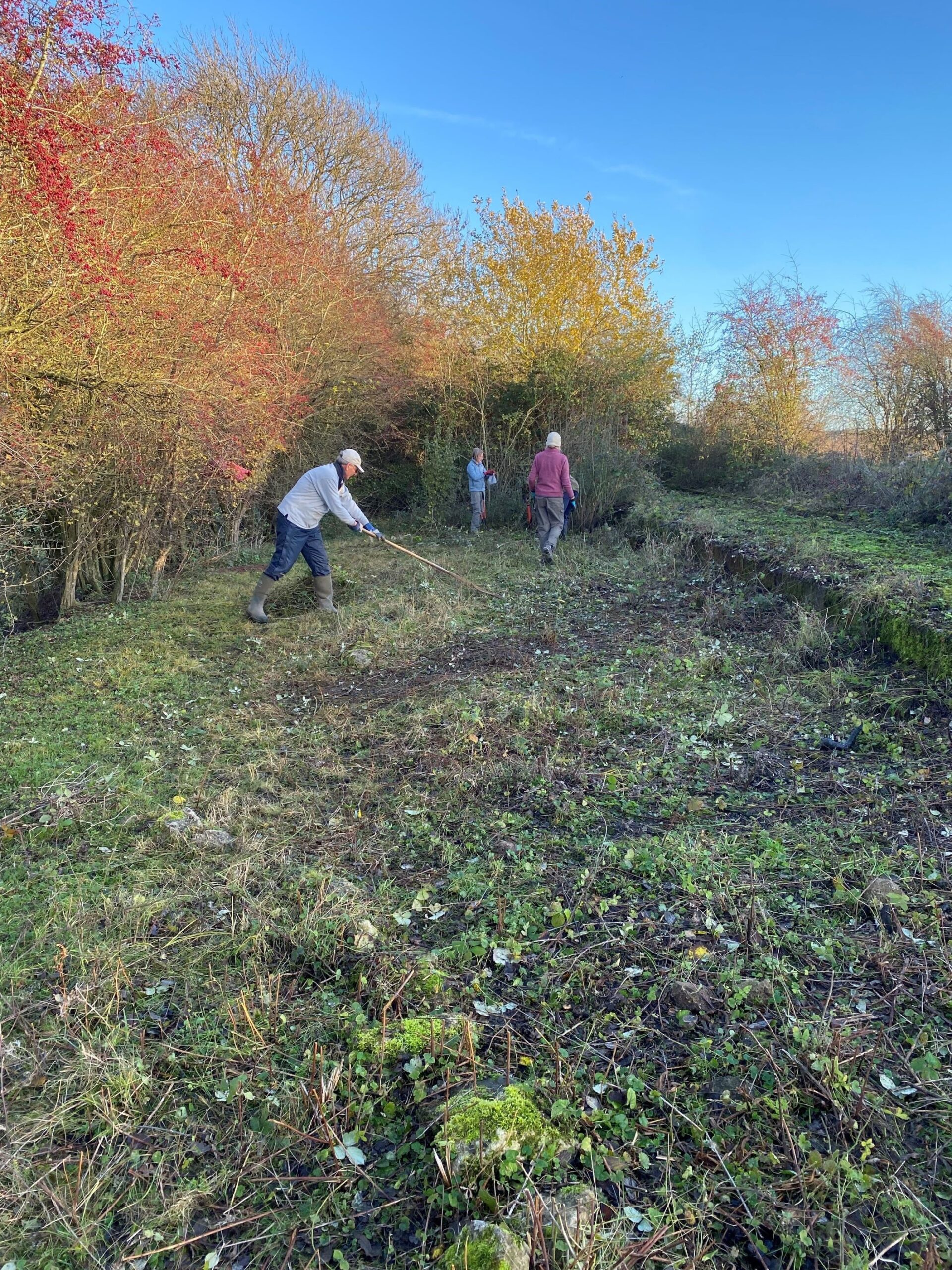
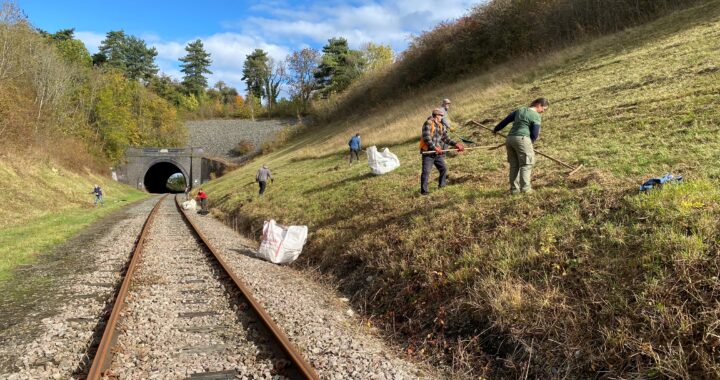
On the 22nd, we headed to our Granby Disused Railway site, where the remote mower was once again used to cut the long grass and invading bramble and thorn scrub. We spent a good few hours raking and removing the cut grass, moving it too the bottom of the embankment of this former railway. This created some bare soil patches, which will hopefully allow more wildflowers to dominate – especially Creeping Cinquefoil, which will benefit the Grizzled Skipper. The grass down the side of the banks will create new habitat for other invertebrates too; we saw quite a few moths (including a Heart & Dart) taking shelter in the bales. The site was rife with invertebrate life, and the birds were busy too.
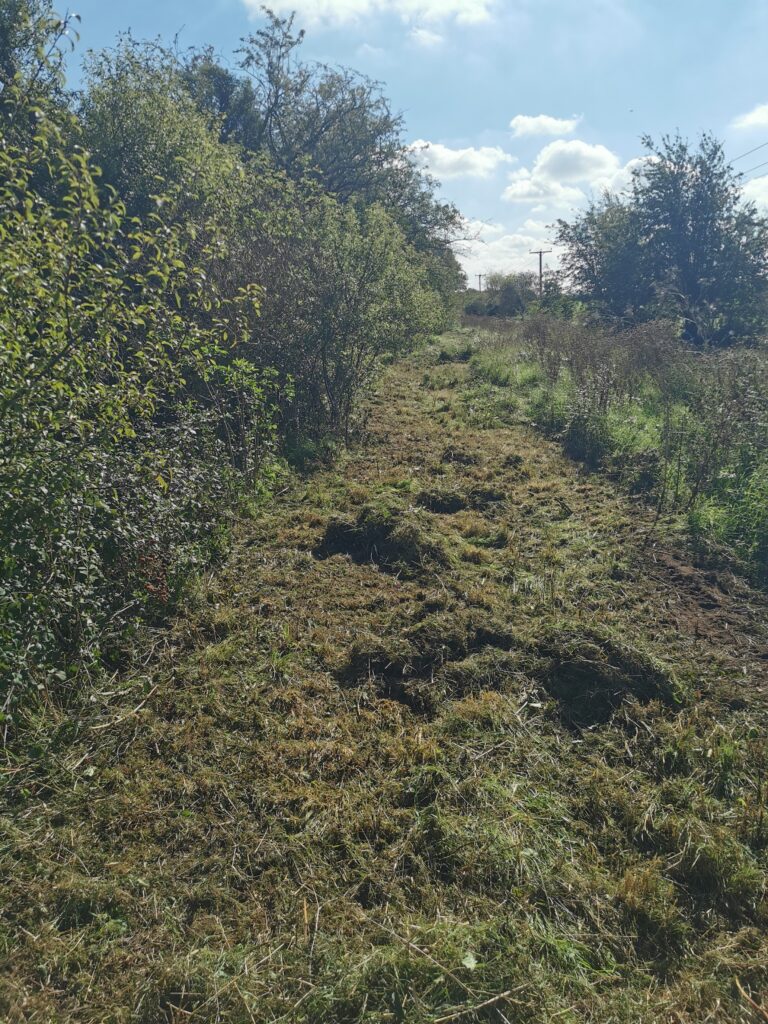
Lots of hard work raking

Our first volunteer work party will be on Sunday the 27th of September, at the Granby Disused Railway Site. If you’d like to come along, head to the events page for more details – the more the merrier. And do make sure to record any birds or invertebrates you see!

Keep an eye on the events page to find out our next dates for our annual Grizzled Skipper volunteer work parties. And keep up-to-date with new developments on our Facebook, as well as our brand new Instagram page.
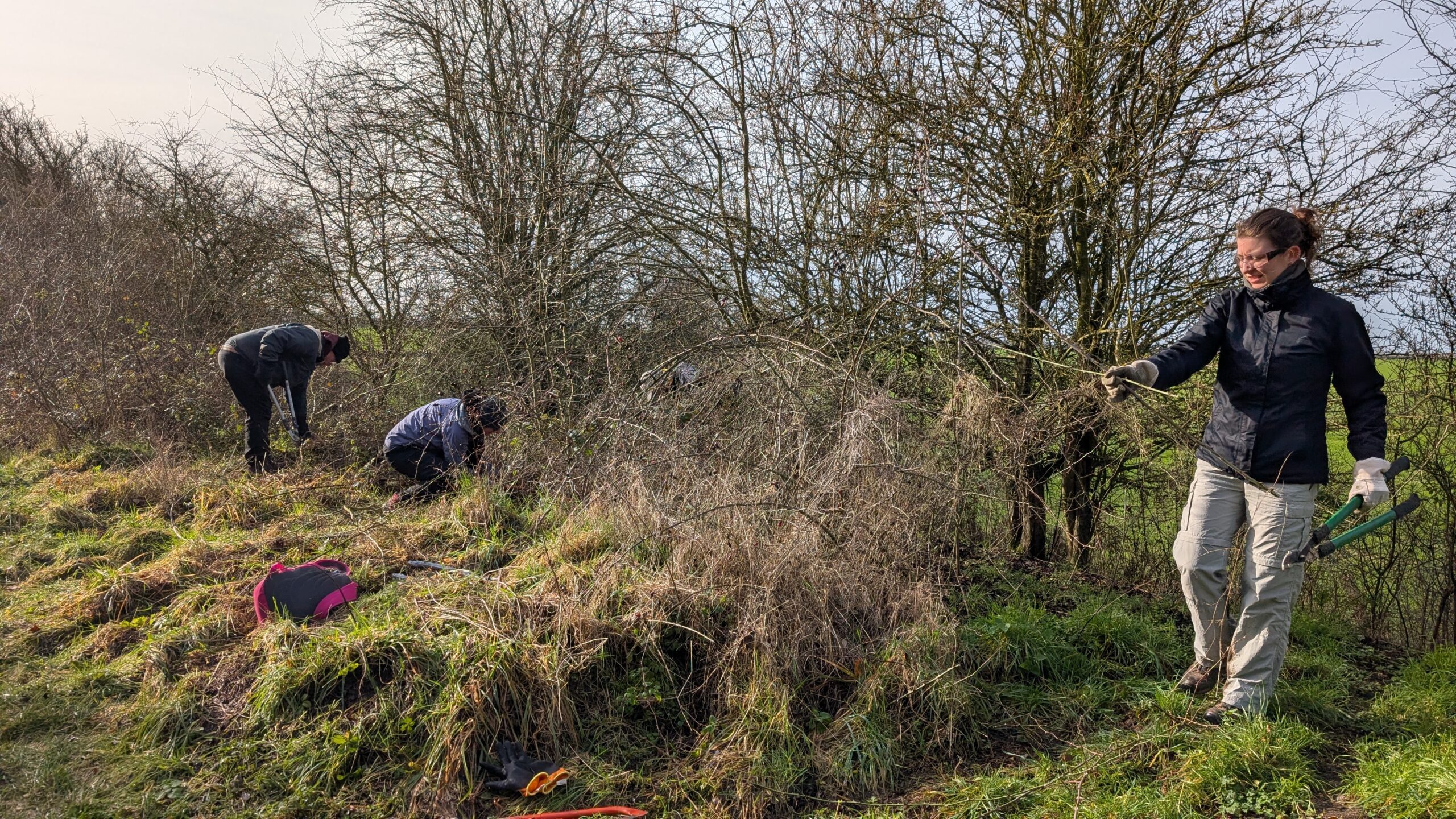
Grizzled Skipper Work Parties Completed (2025-26)

After starting in September 2025, this month we have officially finished our Grizzled Skipper work parties for the winter season!

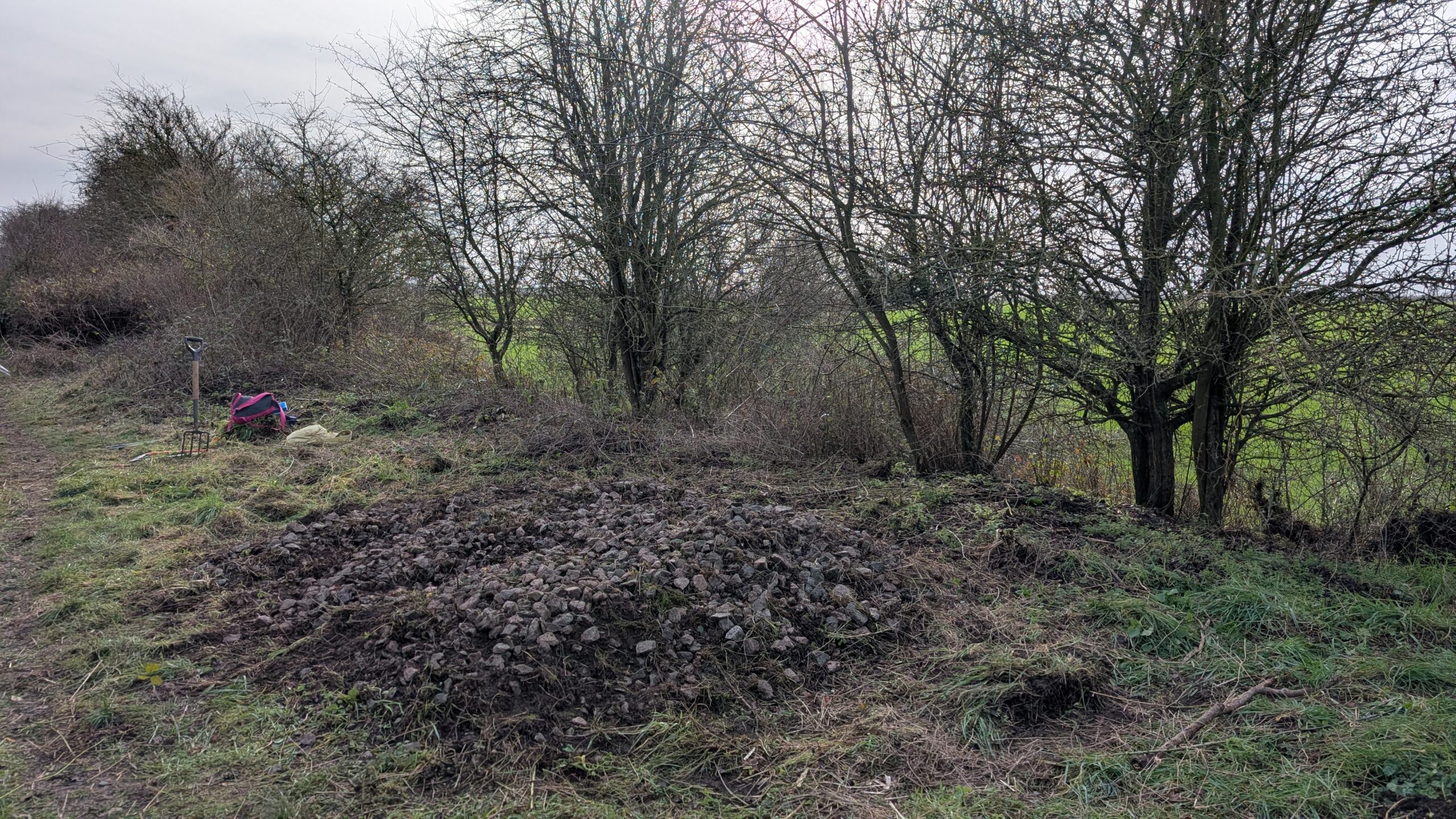
(Above) Before and After: Weeding and clearance of potential egg laying sites, Alverton Disused Railway

With funding from Butterfly Conservation East Midlands Branch, Nottinghamshire Biodiversity Action Group successfully organised a total of 10 volunteer work parties, targeting locations across South Nottinghamshire. The work parties led to habitat improvements (scrub clearance and enhancements of potential egg laying sites) that will support grizzled skipper and other invertebrates at these sites.

(Above) Before and After: Scrub clearance at Saxondale Railway

Through a variety of different weather conditions, our volunteers worked tirelessly raking grassland sites, clearing scrub and weeding ballast piles to make these sites more attractive to the Grizzled Skipper. The work parties also planted up their favoured larval food plants, agrimony, wild strawberry and creeping cinquefoil on sites where these plants were previously scarce or absent.

(Above) Before and After: Scrub clearance at Grange Farm, Normanton-on-the-Wolds

We are looking forward to and hoping for a good flight season this coming spring and early summer, when we will be surveying and monitoring sightings of the butterfly.  We welcome any records and photographs.

If you see the Grizzled Skipper in Nottinghamshire, we would love to know so we can add it to our records – please email us on biodiversity@nottscc.gov.uk.  All we need is a date of sighting, the time and a location of where you have seen the butterfly, and we welcome any photos taken of them too.

A big thank you goes out to all the volunteers who have participated in this project, come rain or shine!

Grizzled Skipper Habitat Work Resumes at Lime Sidings

The Nottinghamshire Biodiversity Action Group is back in action this autumn, with work parties returning to key sites across south Nottinghamshire to support one of the UK’s fastest declining butterfly species—the Grizzled Skipper (Pyrgus malvae).

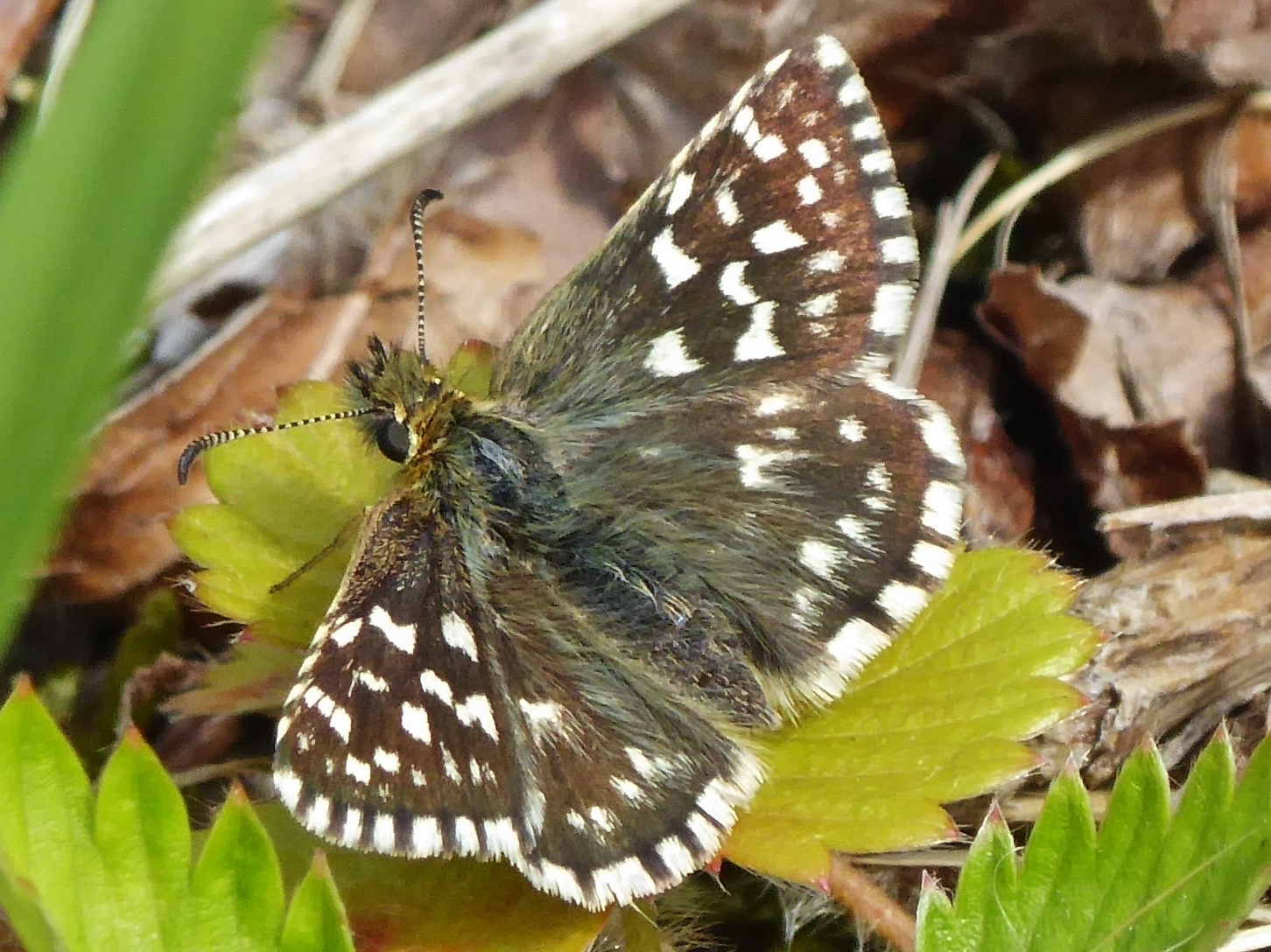
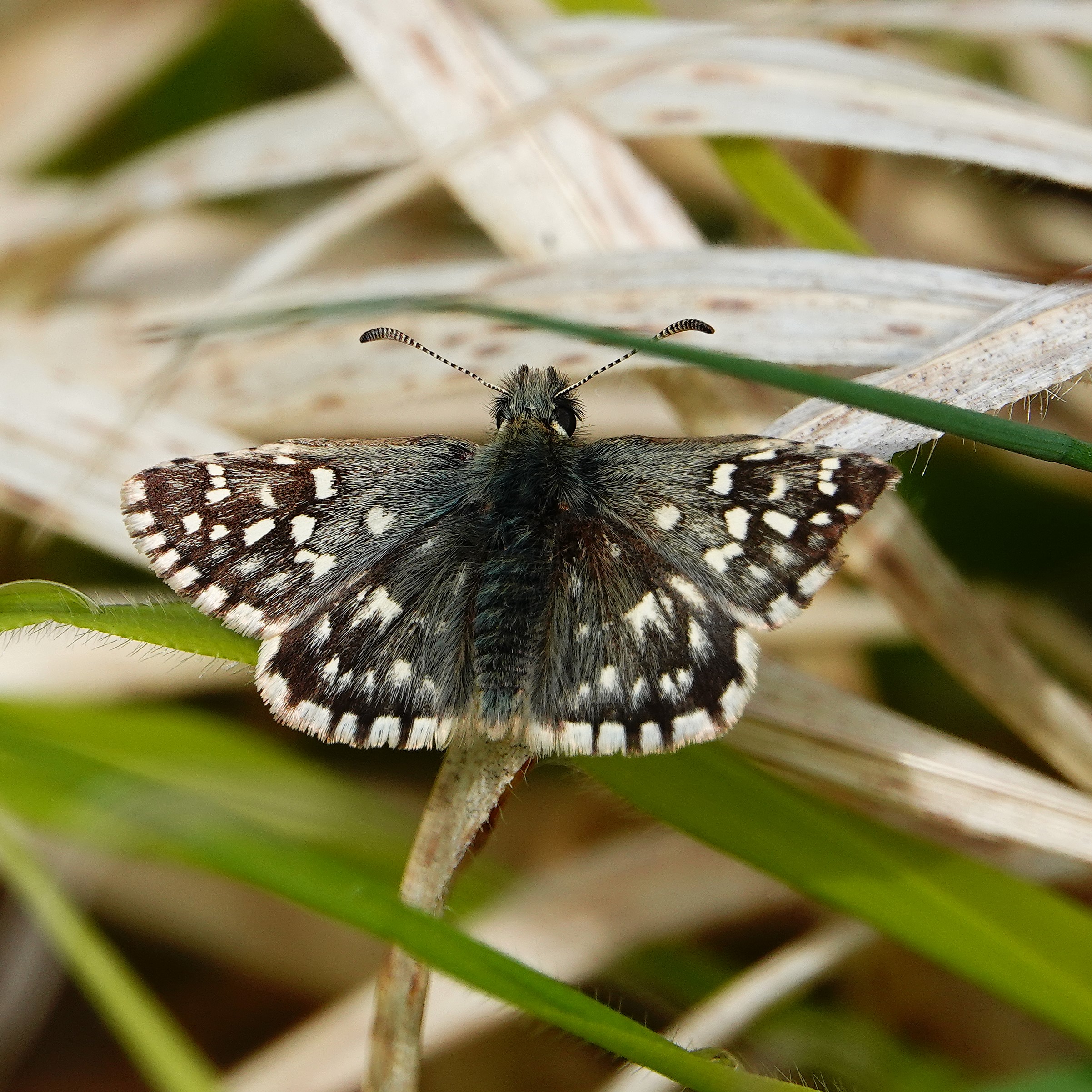
Small brown butterfly with white spotted pattern along the edges and within the wings.

Grizzled Skipper (Pyrgus malvae)

This month, volunteers gathered along a stretch of the Great Central ‘heritage’ Railway, a stretch of disused railway line in south Nottinghamshire, to carry out vital habitat maintenance.

The focus was on raking off mown grass to expose patches of Creeping Cinquefoil, a plant the Grizzled Skipper uses to lay its eggs. By removing the thick grass layer, volunteers are helping to mimic the bare ground conditions the butterfly prefers for breeding.

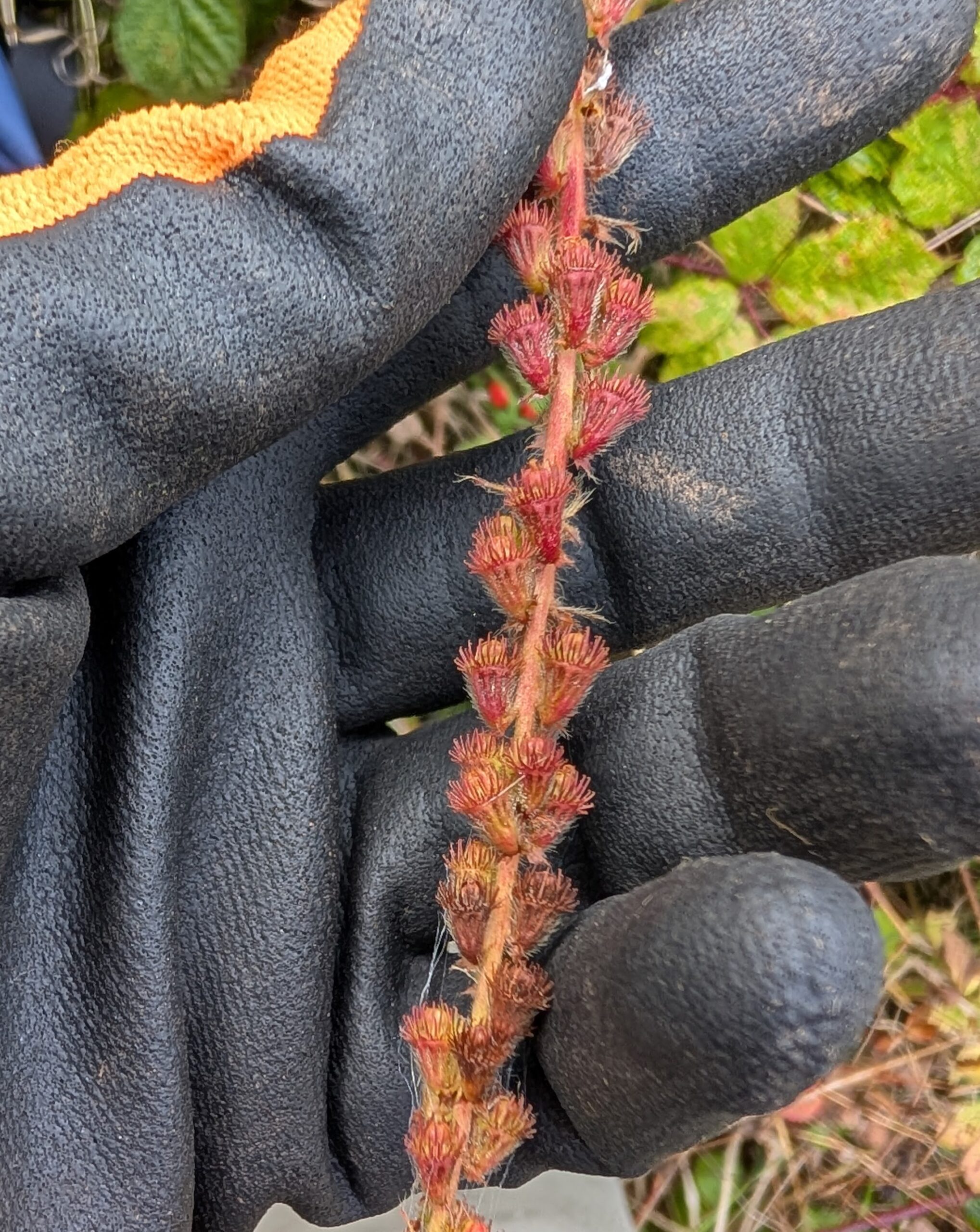
Long red stem being held in a black gloved hand. Triangular shaped seeds are attached to the stem at their point, and each seed has many burrs on them which help them stick to animals' coats (And ecologists coats too!)

Agrimony Seed

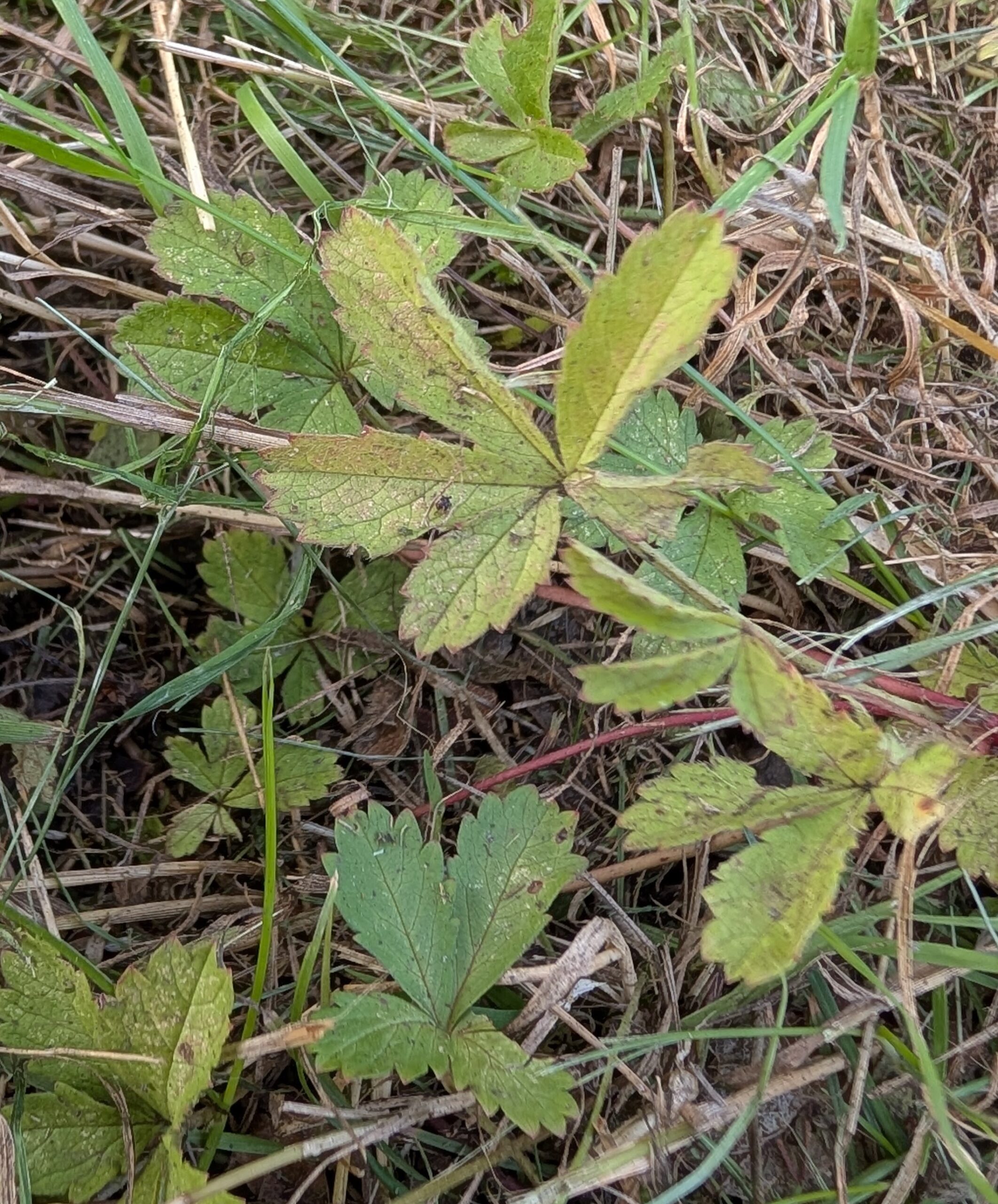
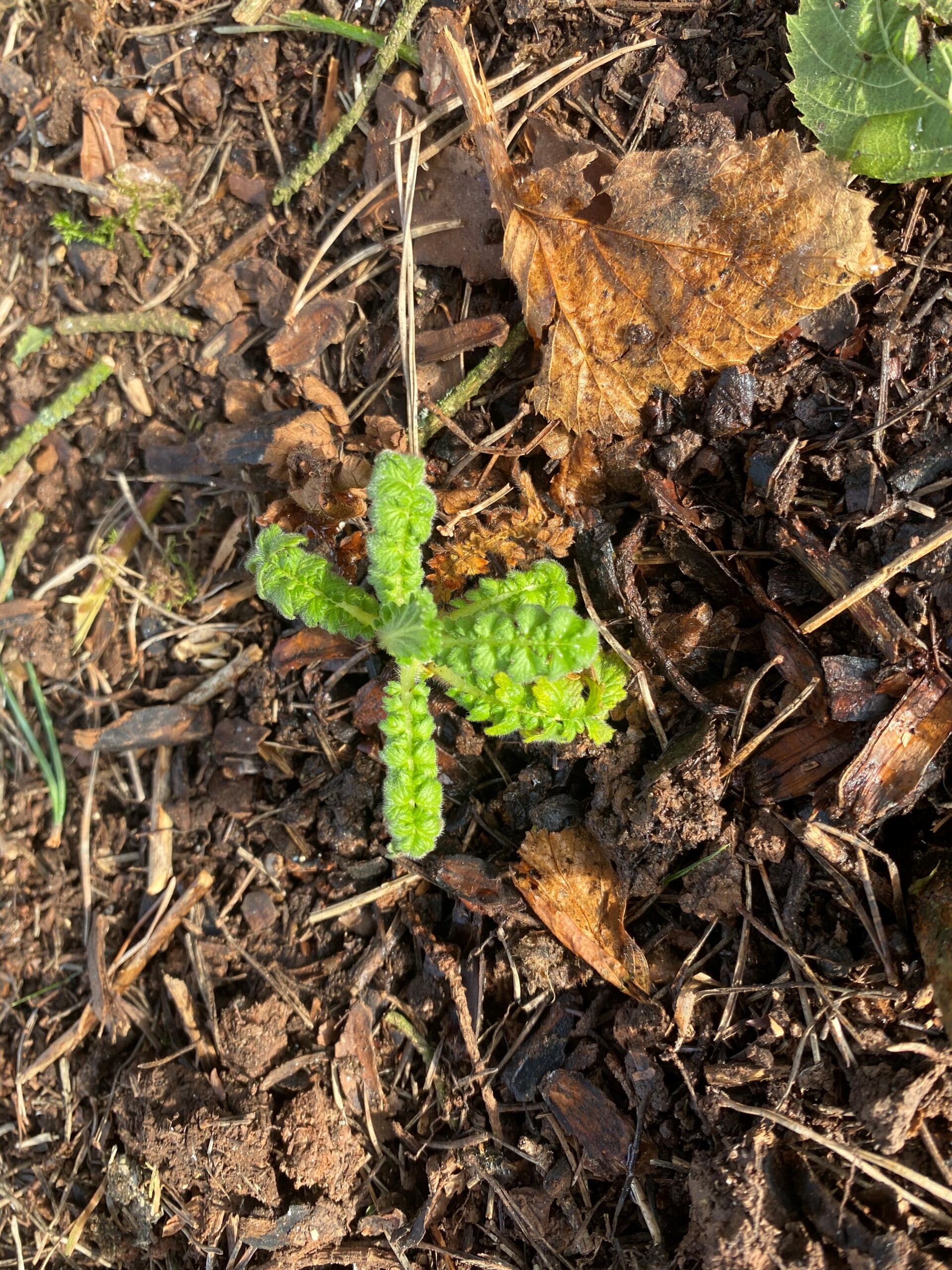
Plant in leaf, each leaf has 5 lobes spread out evenly. The stem is long and spindly, allowing it to creep (hence the name) along the ground.

Creeping Cinquefoil

In addition to clearing scrub and maintaining open areas, the team also harvested a generous supply of Agrimony seed, one of the butterfly’s key food plants. These seeds will be planted out to enhance the site and improve its suitability for egg-laying and larval development.

The Grizzled Skipper is a high conservation priority, and Nottinghamshire supports the northernmost population in England. However, with climate change and habitat fragmentation posing serious threats, targeted conservation efforts like these are essential to ensure the species can thrive and expand its range.

Work parties will continue over the winter months, with volunteers working to create and maintain suitable habitat at several sites across the county. If you’re interested in joining a future session, please contact us at biodiversity@nottscc.gov.uk. For details of the sessions, please see the events page: https://nottsbag.org.uk/events/

First Grizzled Skipper Sightings of 2025 in Nottinghamshire

Spring is officially in flight with the first Grizzled Skipper (Pyrgus malvae) sightings of 2025 recorded in Nottinghamshire!

On 10th April, butterflies were spotted at Staunton Quarry Nature Reserve and Kilvington Lakes, two important sites south of Newark where habitat work in recent years has supported small but significant populations of this nationally scarce species.

A Grizzled Skipper (Picture by Brian Johnson)

There have also been multiple sightings across the East Leake area, where the Grizzled Skipper continues to do well thanks to a network of sites that are maintained by volunteers through ongoing conservation management. 2024 was a very disappointing year, in which persistent wet and cool weather led to the lowest number of Grizzled Skipper sightings in Nottinghamshire, since work to support this species started back in 2012. It has been encouraging to receive some reports of early sightings from across the county perhaps indicating a promising year ahead for the Grizzled Skipper!

We’re still waiting to hear from some key locations around the Bingham and Langar areas — where suitable habitat exists, and past records suggest the species may still be present. If you’re out walking in these areas, keep an eye out!

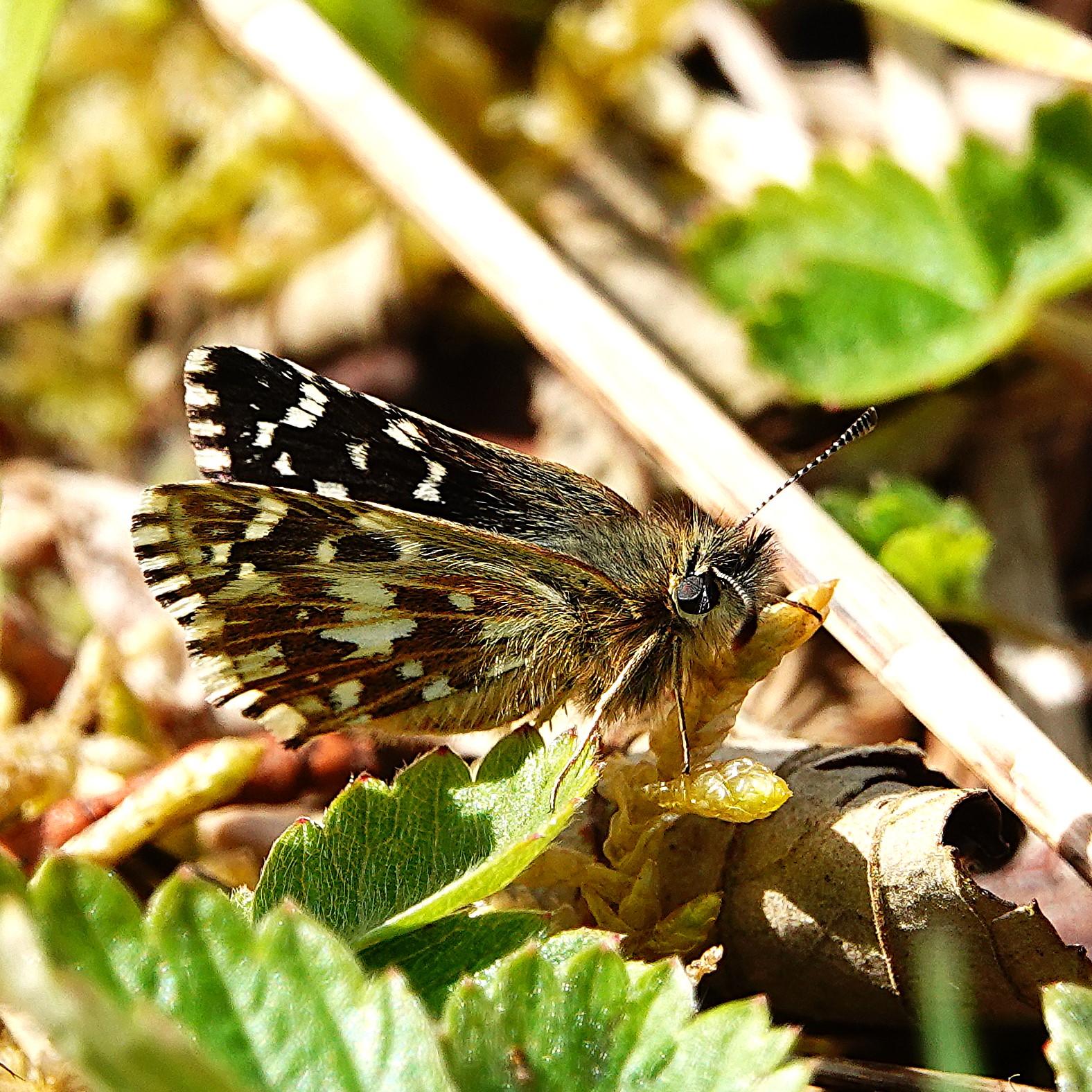
A Grizzled Skipper on wild strawberry (Picture by Brian Johnson)

The Grizzled Skipper is one of Nottinghamshire’s priority species. It favours open, sunny habitats with sparse vegetation and is often found in Nottinghamshire in old quarries and disused railways where its food plants like agrimony and creeping cinquefoil grow.

If you spot a Grizzled Skipper, please report your sighting via iRecord or directly to Notts BAG at biodiversity@nottscc.gov.uk. Clear photos are always appreciated to help confirm records.

Grizzled Skipper Project: A Season of Success!

Our programme of Grizzled Skipper work parties has successfully come to an end. Over the winter months, we’ve carried out habitat works at 9 sites across south Nottinghamshire, working alongside an incredible team of volunteers. In total, we’ve engaged with 51 dedicated individuals, all helping to restore vital habitats for the Grizzled Skipper and other invertebrates.

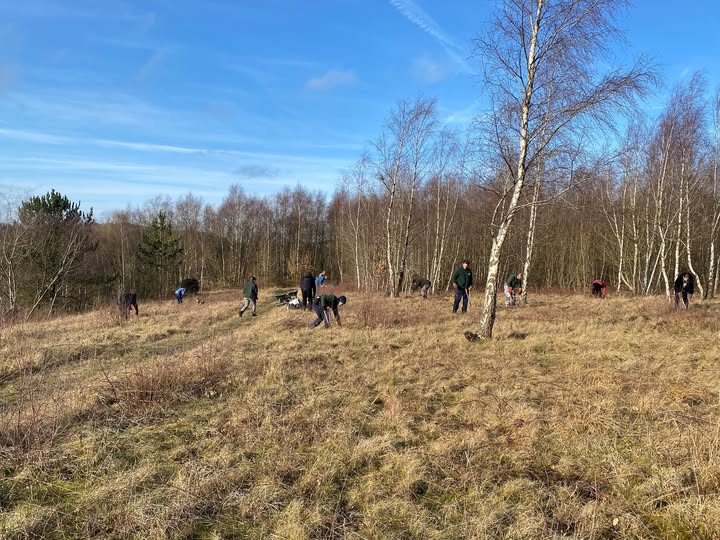
Volunteers working at Newstead and Annesley Country Park

   A planted Agrimony at Grange Farm, Normanton-on-the-Wolds

Thanks to this effort, our sites are in the best condition they’ve been in since pre-Covid (2019), and we are hoping this will make a real difference for this threatened species. The volunteers have worked hard clearing scrub like hawthorn and bramble to open up the grassland for the Grizzled Skipper. We have also planted agrimony, one of the three main food plants for the butterfly, and have taken cuttings from the other two food plants to grow on and plant in future years – creeping cinquefoil and wild strawberry. The habitat management we’ve carried out should provide the ideal conditions for the forthcoming Grizzled Skipper flight season (mid-April to mid-June).

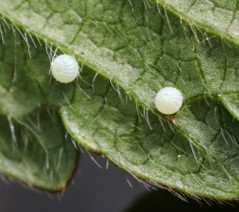
Ova (eggs) on the underside of Creeping Cinquefoil (picture from Mark Searle)

Now, as we approach the recording season for the butterfly, it’ll be fascinating to see what impact our hard work has had. Last year, numbers were at their lowest since 2012 in part due to the wet and cold weather conditions – the wetter winters will undoubtedly have a negative impact on grizzled skipper and other spring butterflies. With better conditions this spring (fingers crossed!), we’re hopeful for a strong bounce back.

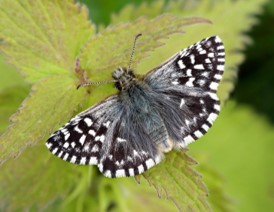
Grizzled Skipper (picture from Mark Searle)

We are always looking for more volunteers so if you are wanting to help out with the habitat management and recording sightings of the butterfly, then please get in touch here.

Helping to Save Nottinghamshire’s Threatened Butterfly

Grizzled Skipper (Pyrgus malvae) is one of the UK’s fastest declining butterfly species and a high conservation priority. In Nottinghamshire, we are fortunate to support the northernmost population of grizzled skipper in England but with climate change the future is uncertain. While climate change may drive the species further north, habitat fragmentation could limit its spread without some help.

The Nottinghamshire Biodiversity Action Group has been working with the partnership to protect the Grizzled Skipper and maintain their habitat. Over winter, work parties are undertaken at grizzled skipper sites across south Nottinghamshire.  They tend to focus on clearing scrub and creating suitable areas for egg laying (mimicking areas of bare ground within which the butterfly’s food plants can grow unhindered). The volunteers also plant the three known food plants that the Grizzled Skipper larvae is known to rely on in Notts: agrimony, wild strawberry and creeping cinquefoil, to enhance potential egg-laying sites.

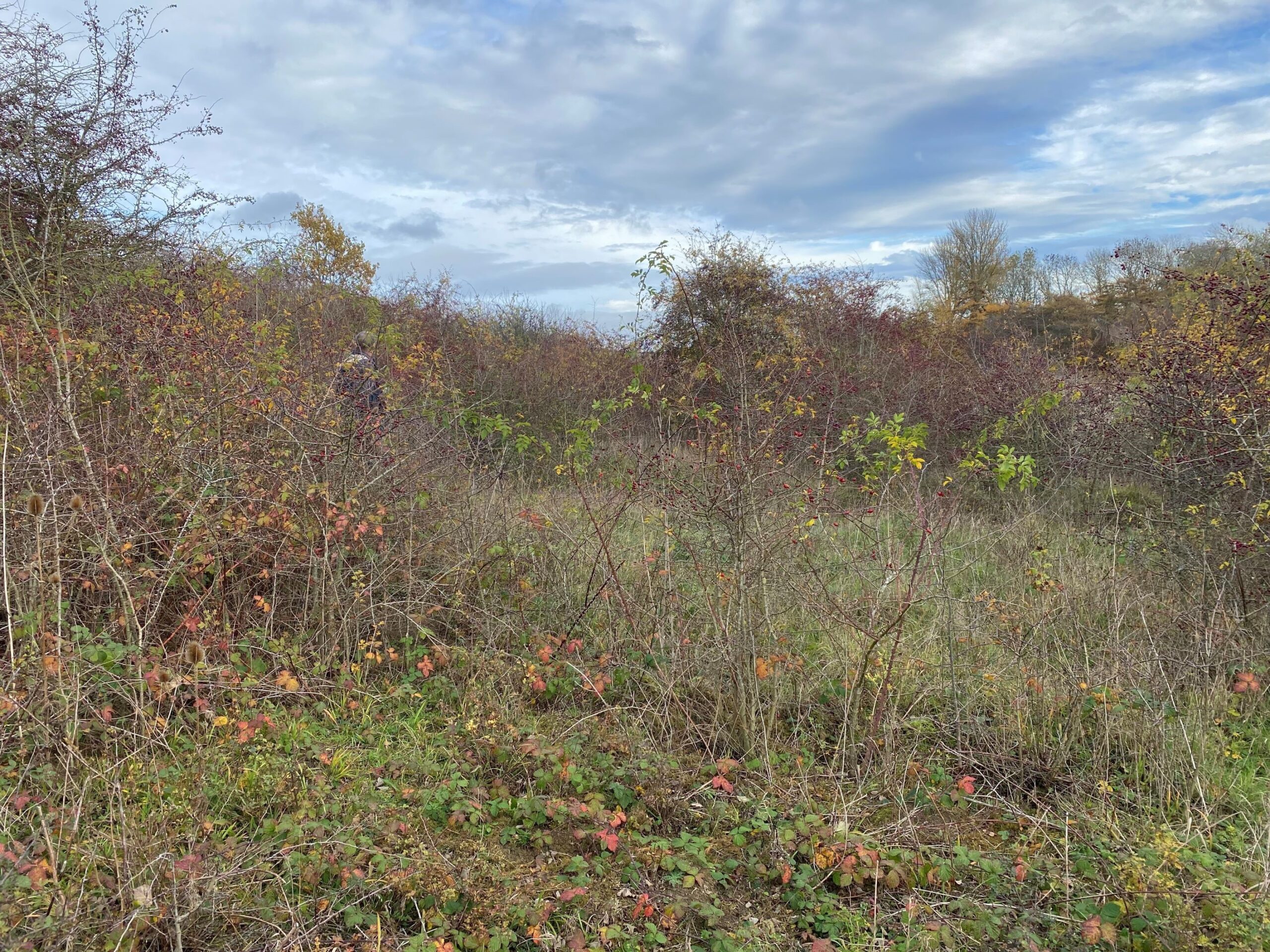
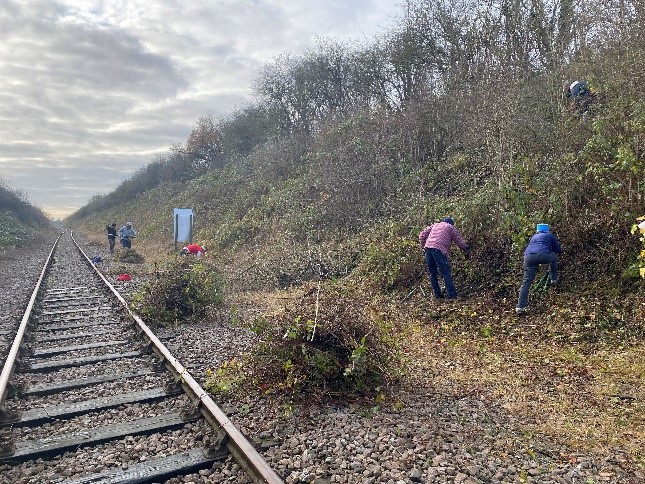
Scrub clearance (before) at Rushcliffe Halt

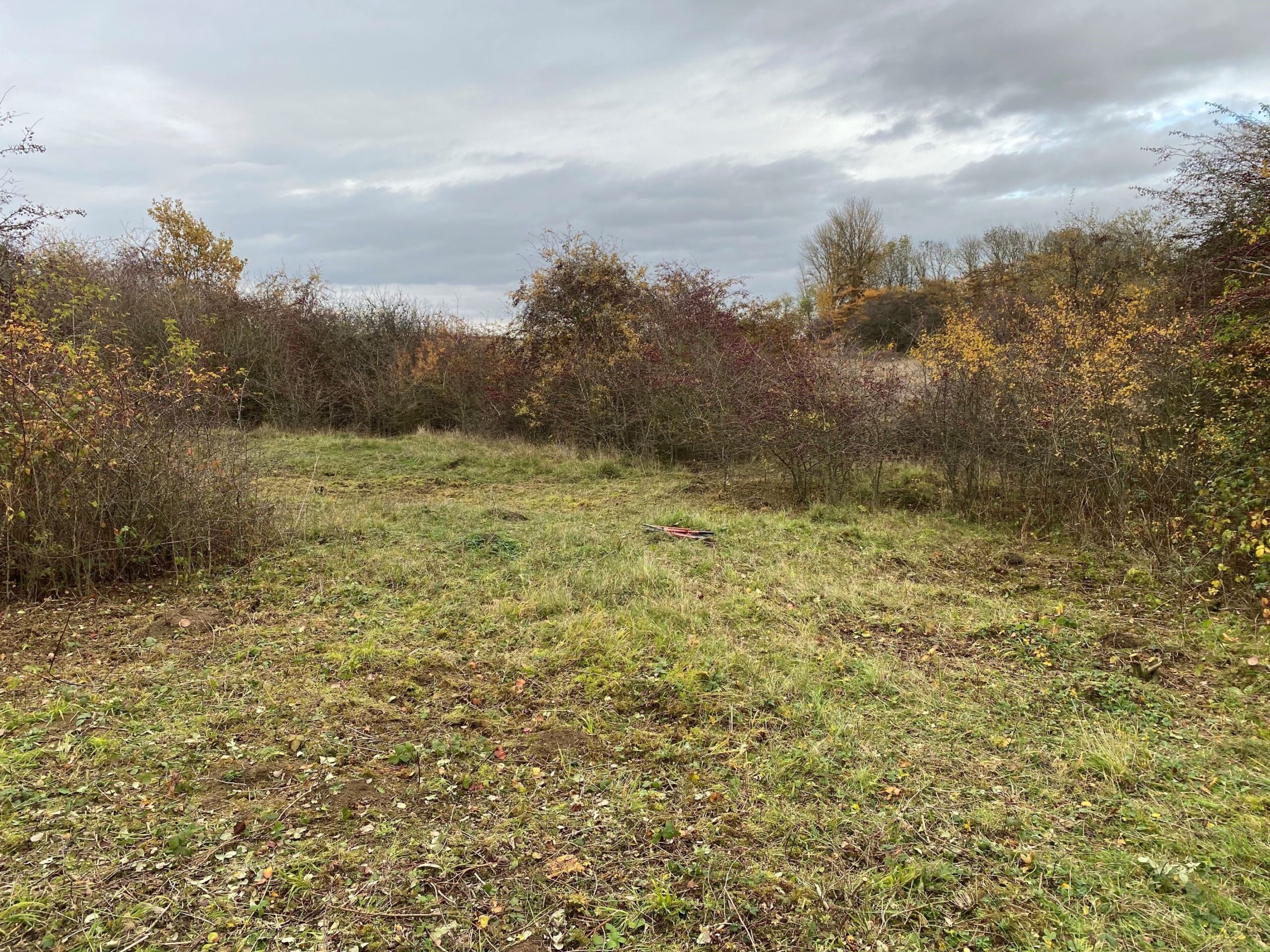
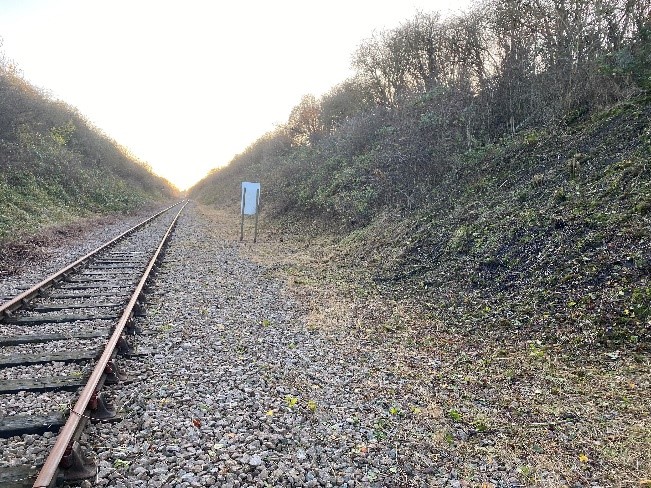
Scrub clearance (after) at Rushcliffe Halt

Earlier this month, a small group of dedicated volunteers headed out to Rushcliffe Halt near East Leake to help to transform a short stretch of the old railway line, making it a much more attractive site for the grizzled skipper to utilise in the coming spring when they will be back on the wing.

If you’re interested in helping out, the final work party of 2024 will take place on Sunday 15th December at Grange Farm, close to East Leake. The work will focus on cutting back scrub. For more information see the Events page: https://nottsbag.org.uk/events/