
The native Black Poplar (Populus nigra subsp. betulifolia) is one of Britain’s rarest native trees. Nationally, fewer than 7,000 mature trees survive—possibly as few as 2,500—and females are especially scarce due to historic planting preferences. These trees are now mostly found as isolated individuals, making natural regeneration extremely unlikely.
In Nottinghamshire, the species is thinly scattered, with an estimated 800–1,000 native-type trees, mostly in Greater Nottingham, Mansfield, and south Rushcliffe. However, only a handful are mature, non-hybrid females. Their natural habitat—floodplain meadows—has been lost or altered, and the species has become heavily reliant on cuttings and artificial propagation.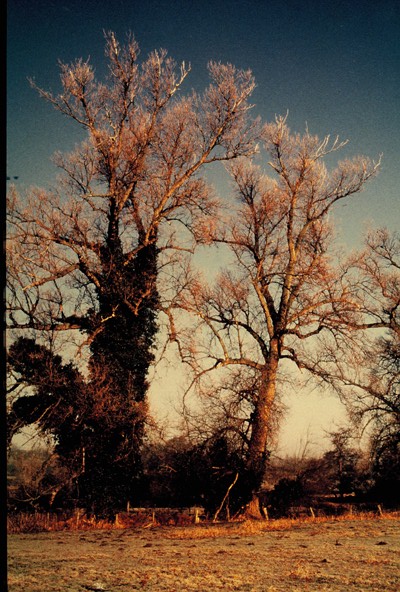
Black Poplar in Nottinghamshire
In late 2023, a Black Poplar working group was set up, involving the Environment Agency, Nottinghamshire County Council, Nottinghamshire Wildlife Trust, Trent Rivers Trust, and Notts BAG. The group’s goal is to improve coordination of conservation work across the county.
Key plans include:
- Establishing a nursery to grow native Black Poplar cuttings and develop coppice stools
- Representing a wider range of native variants to support genetic diversity
- DNA testing trees across the county with Forestry Research to confirm if the tree is native
- Creating a county-wide database of known and suspected native trees, including genetic data
Two potential nursery sites have been identified—NTU Brackenhurst and the Sherwood Forest Trust.
Currently, efforts are focussed on DNA testing as many Black Poplars across the county as we can. Efforts are beginning to be focused on increasing planting in suitable natural/semi-natural locations and boosting the proportion of female trees to improve the chances of natural regeneration in partnership with nurseries.