
What is the current problem?
Throughout Nottinghamshire, the Canal & River Trust (CRT) manage a number of waterways, some of which have had an invasion of water fern. One of these was the Erewash Canal, much of which runs through Nottinghamshire. In 2012, sections of the Erewash were invaded by the plant and biological control measures were introduced which kept the plant in check for 8 years. However, in 2020 the plant had once again appeared on the canal and had spread from Trent Lock towards Long Eaton in Derbyshire.
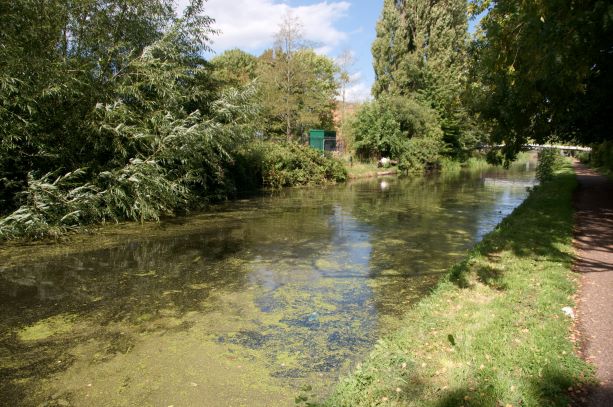
Water fern on a stretch of the Erewash Canal – Long Eaton Lock to Clumber Street © CRT
Issues with Removal
This plant invades a region very rapidly and can double in area within a few days. Due to its ability to regenerate new plants from very small fragments of free-floating vegetation, it is necessary to remove all parts of the plant when undertaking eradication. This is virtually impossible to do though manual removal alone and therefore other methods have been developed and used to control the plant.
Control Methods
These include biological, mechanical and chemical methods. The Canal & River Trust have not used chemical or mechanical control in Nottinghamshire due to the lack of effectiveness and cost involved. Instead, they have introduced a method of biological control using a tiny insect from the plant’s natural range which eats the water fern.
Biological control
This method introduces one of the plants natural enemies, the Azolla weevil (Stenopelmus rufinasus) whose adults and larvae feed off the plant. They are specific just to this species of fern; therefore, they do not harm any other native species of flora or fauna. The weevils were obtained from CABI and released by trained volunteers onto the water fern in the Erewash Canal. Weekly surveys were then completed to monitor the effect of the weevil on the plant. The weevil started to feed on the fern almost immediately which turned the plant from bright green in colour to a reddy-brown, a sign that it was under stress. The weevil took effect on the water fern within 2 weeks.

Azolla weevil © Rob Reeder, CABI
Mechanical control
Fragmentation of the fronds makes control by mechanical means virtually impossible. This is compounded by the annual production of millions of tiny spores, which are released in autumn and grow into new plants the following year. Mechanical methods that have been tried elsewhere include physical removal using a weed boat, but have proved to be ineffective in controlling water fern.
Chemical control
There is now only one group of herbicides licensed for use on UK waters. All use the active ingredient glyphosate which is a non-selective contact herbicide. Increasingly there is public pressure to find more selective and environment-friendly alternatives, and this is not a method used by the Canal & River Trust in Nottinghamshire.
What has been achieved so far
In 2020, the Azolla weevils were released at various sections of the Erewash Canal and the % coverage of water fern significantly reduced in less than 2 weeks, with compete eradication on some stretches. There have been no reports of recurrence on the Erewash up to 2021.
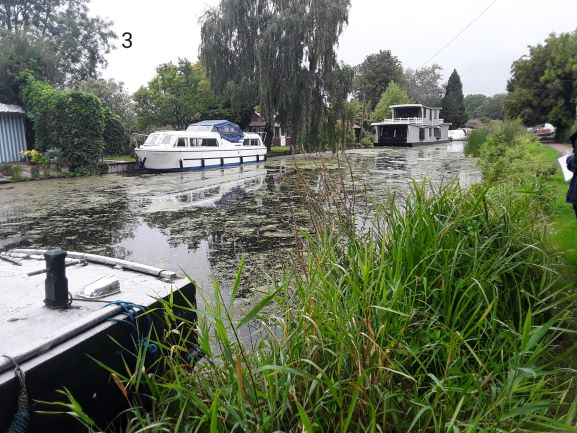
A stretch of the Erewash Canal Pre biological treatment © CRT
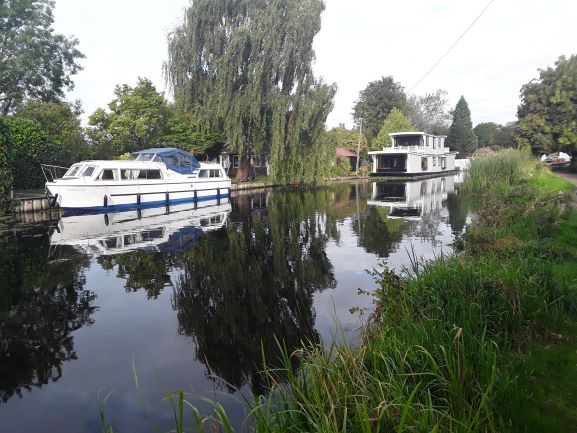
A stretch of the Erewash Canal Post biological treatment © CRT
If you have any further questions, get in touch with Richard Bennett, Heritage & Environment Manager at: Richard.Bennett@canalrivertrust.org.uk