




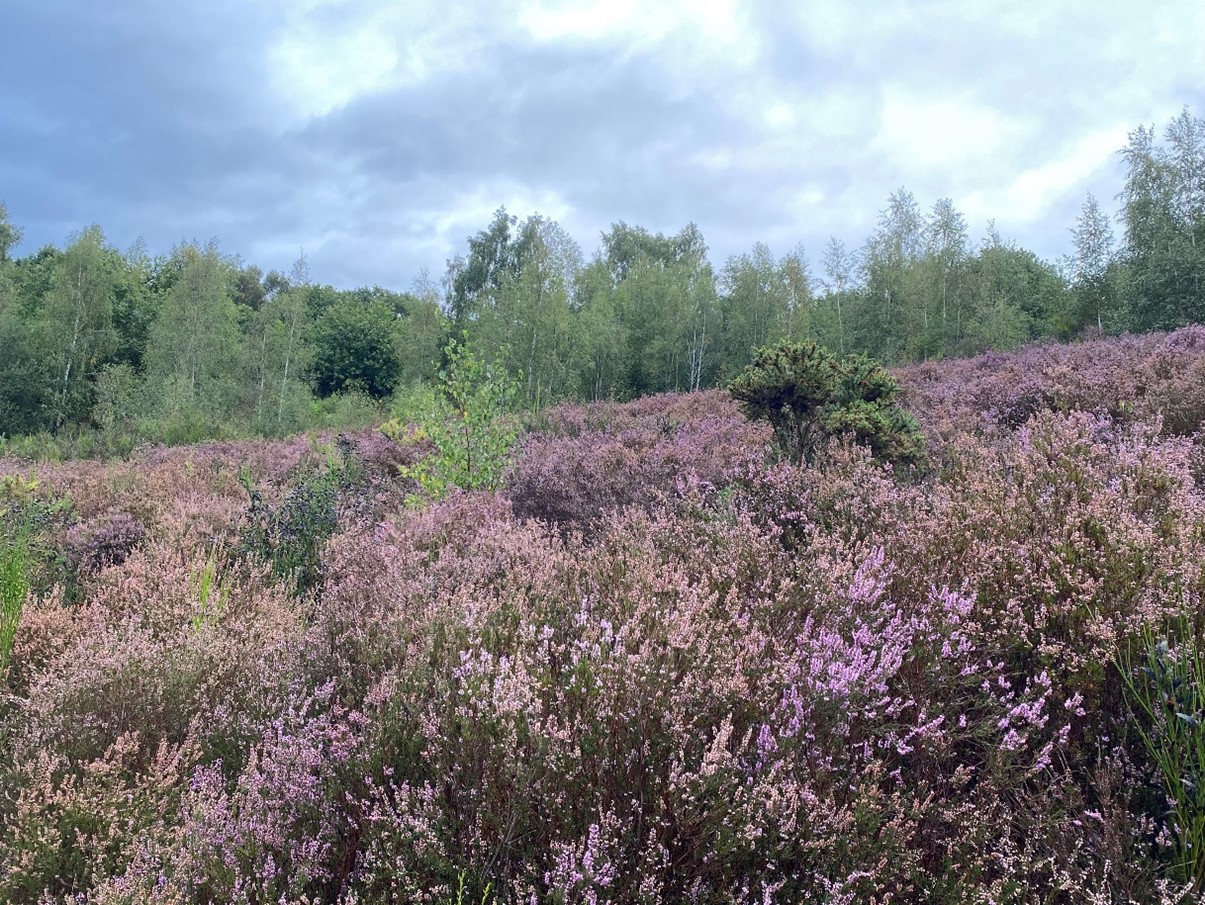


Grizzled Skipper Project

The grizzled skipper is a locally rare butterfly. The project is supported by local volunteers who undertake practical habitat management as well as surveying and monitoring the butterfly during the flight season (April-June)....read more
Nottinghamshire & Nottingham’s LNRS
The Local Nature Recovery Strategy (LNRS) is a strategy to improve the state of nature by identifying priorities for nature recovery, identifying locations and habitats to improve which will have the greatest benefit for the environment, and influence local planning policy for nature recovery... read more
Nottinghamshire Wildlife Trust
 Nottinghamshire Wildlife Trust (NWT) believes that everyone should have the opportunity to live in a healthy, wildlife-rich natural world. Sadly our environment is under threat like never before, and Nottinghamshire Wildlife Trust is committed to working with others to limit and reverse the impacts of the nature and climate emergencies, and to inspire individuals to take action for nature...read more
Bats, Grass Snakes and Donkeys (oh my!)
Over the summer, Newark & Sherwood District Council (NSDC) have been working hard to engage the community with their bat walks and seedbombs. Additionally, they have some exciting grass snake updates and even recruited the help of some donkeys for a balsam-bashing work party.
Bat Walks
NSDC have been hosting bat walks across their council parks, including Sconce & Devon Park and Vicar Water Country Park, leading over half-a-dozen fully booked sessions throughout summer and autumn.
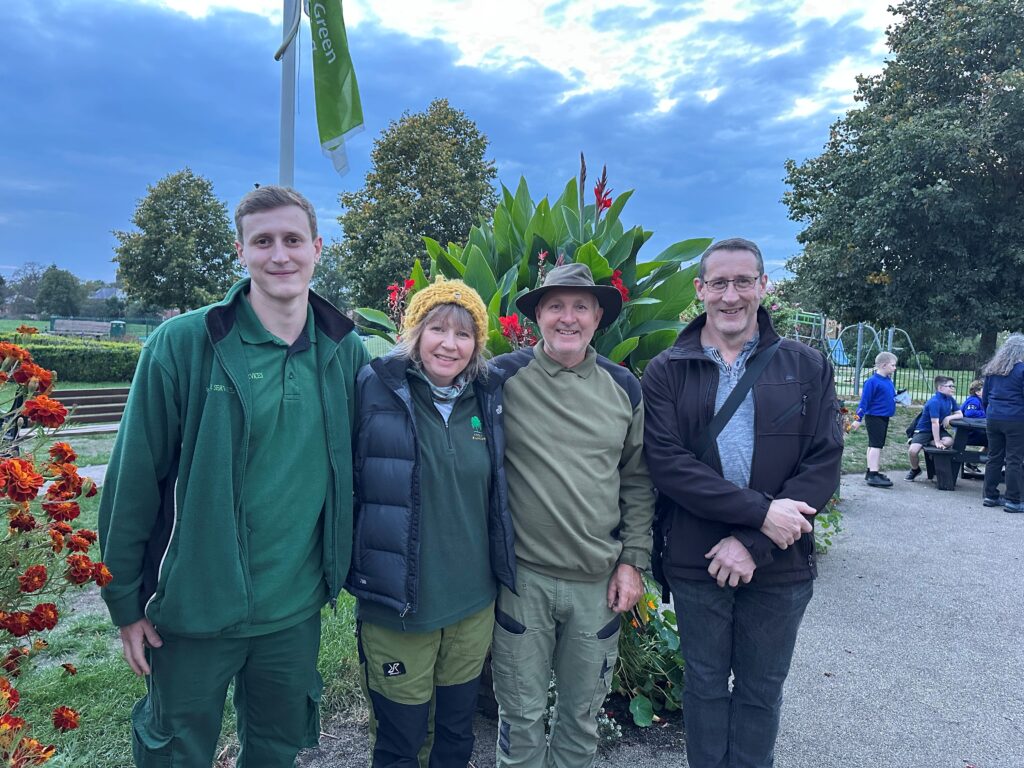
Simon, Issac, Lynn and Allister have been leading several bat walks over the past quarter.
Five species of bat were recorded across their sessions in Vicar Water Country Park using their bat detectors, including:
- Noctule – Our largest resident bat with a wingspan between 32-40cm. They can fly at 50km/h, often high above the treetops, and their echolocating calls range from 20 to 45kHz.
- Common Pipistrelle – This bat, weighing around the same as a 20p coin, eats thousands of insects in a night, flying around with a speed as they hunt by aerial hawking. They can be heard making a wet slap sound between 45 and 70kHz.
- Soprano Pipistrelle – Soprano Pipistrelles are distinguished from Common Pipistrelles by sound only, though are more selective in their habitat use than the latter. Their calls are heard between 55 and 80kHz.
- Daubenton’s – This water specialist bat put on an exciting display at Vicar Water Country Park, scooping up insects from the small pond with its big feet and tail membrane. Their machine gun-like calls range from 35 to 85kHz.
- Brown Long-eared – As described by its common and scientific name (meaning large, twisting ear), this gleaning bat has large ears with such precise hearing that it can detect a ladybird walking on a leaf. They are also known as the ‘whispering bat’ due to their quiet echolocating calls heard between 25 and 50 kHz.
If you missed out and are keen to see a marvellous Daubenton’s bat, they will be hosting more bat walks from spring next year. Learn more about bats at https://www.bats.org.uk/ .
Grass Snakes
Grass snakes are harmless, non-venomous snakes native to the UK. They have been having a good year across Sconce & Devon Park, with many sightings near water rather than their usual distribution around orchards. Grass snakes prefer open woodland and edge habitats, also preferring edges of freshwater bodies. They are strong swimmers, being semi-aquatic. A 1.2m long individual was spotted this summer at Sconce & Devon Park!
They prefer to feed on amphibians but will occasionally feed on ants and larvae. They often search for their prey around the edges of a freshwater body using their Jacobson’s organ (flicking particles into the organ with their tongue) and their sight. As winter approaches, they will overwinter underground.
Grass snakes have some interesting defence strategies, including secreting a garlic-like fluid from their anal glands, feigning death (which may be accompanied by secreting blood from the nose and mouth), and performing an aggressive display by hissing and striking with a closed mouth. However, they rarely bite in self-defence so don’t be afraid and be sure to give them plenty of personal space if you come across one.
DIY Wildflower Seedbombs
Following on from their spring bee bomb-making sessions, NSDC hosted a series of drop-in wildflower seedball-making sessions across four weeks during this year’s school summer holidays. Attended by over 150 people, a mix of children and adults partook in making seedballs to take home and plant this autumn or next spring.
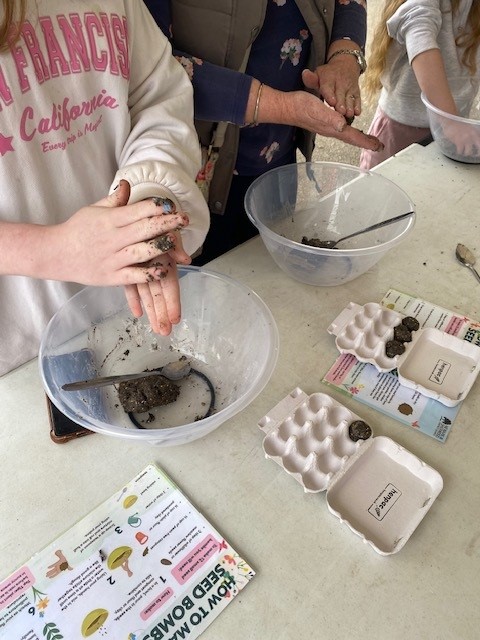
Residents getting their hands dirty making seedballs for a wildlife-friendly garden.
These sessions helped raise awareness of the ecological role of pollinators while using a fun activity to inspire residents to make their own garden more wildlife-friendly.
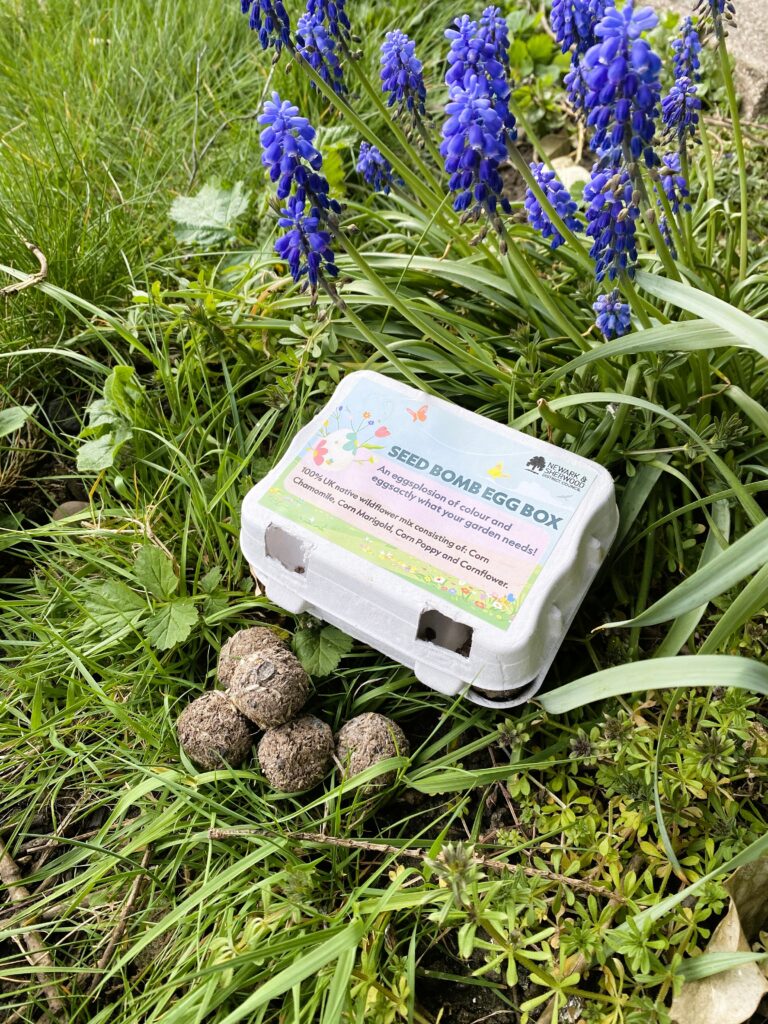
Their seedballs used a mix of native UK wildflower seeds, including Corn Chamomile, Corn Marigold, Corn Poppy, Common Vetch, Birdsfoot Trefoil, Common Knapweed, Oxeye Daisy, Salad Burnet, Red Campion and many more.
Donkey Balsam Bashers
After a very busy and coordinated summer of balsam-bashing along Potwell Dyke and the River Greet, volunteers ran into some very curious donkeys! Lynn Preece had recently learned about controlled grazing and, knowing Himalayan Balsam was not toxic to cattle, equines or bovines, thought she’d let the donkeys have a taste.
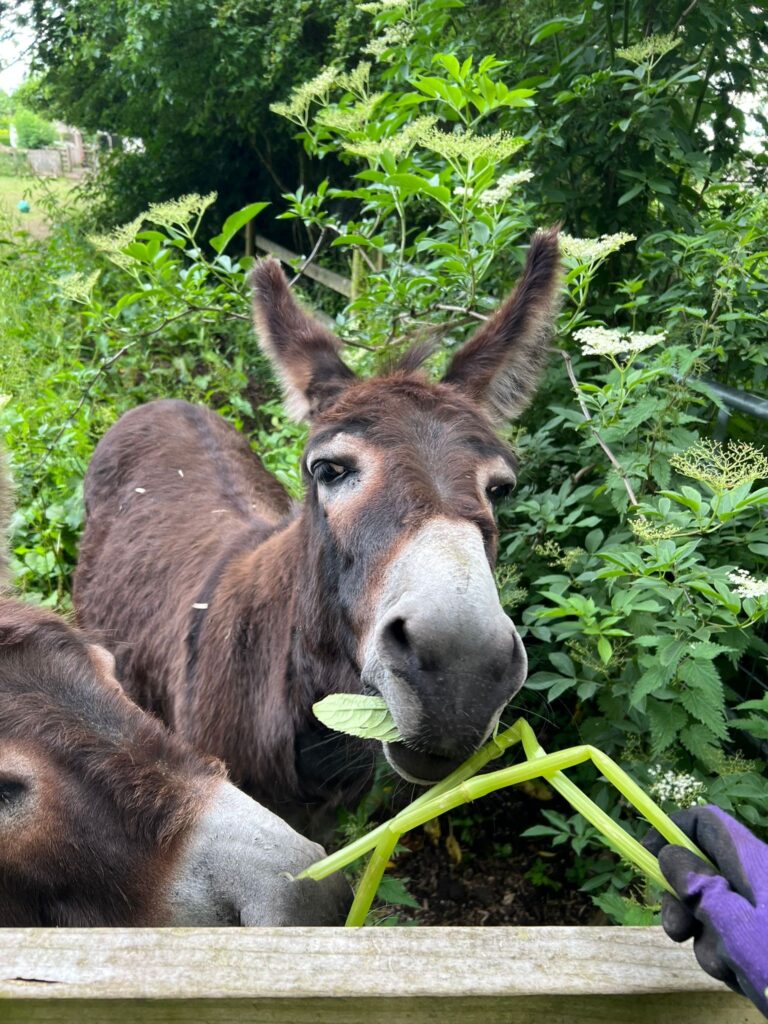
A hungry donkey helping volunteers clean up.
They thought it was very tasty, so a special thanks to the donkeys for their hard work in cleaning up our environment.
A special thanks to…
Hayley Hurst, Danielle Davies and Lynn Preece for their contributions.