You may have heard of conservation breeding programmes and reintroductions, but have you heard of translocations? In conservation, translocations involve deliberately moving a threatened population of a species from one site to another more suitable site, following extensive planning to ensure they will be protected and able to thrive in their new site.
A translocation might be performed due to threat of habitat loss, climate change or an invasive species, for example. It is not an action taken lightly due to the risks involved and inherent invasiveness of removing a species out of its natural range and relocating it elsewhere, but the attitude to translocations have changed over time from a last resort to a proactive measure.
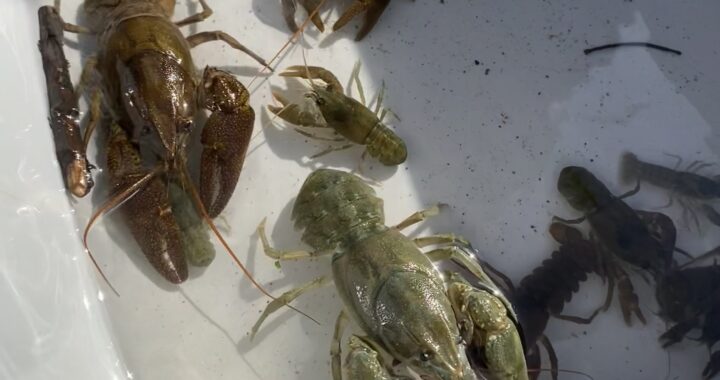
We have recently been in the process of translocating a metapopulation of White-clawed Crayfish with the help of our partners at BugLife and Environment Agency, as well as the assistance of staff from Derbyshire Wildlife Trust.
Along a particular river Leen tributary, a healthy White-clawed Crayfish metapopulation is threatened by the encroachment of the invasive American Signal Crayfish from downstream. Signal Crayfish cause severe problems for our native White-clawed through outcompeting them AND spreading the catastrophic crayfish plague. Signal Crayfish, having co-evolved with the disease, are carriers of crayfish plague, which is a fungal disease that can rapidly wipe out entire populations of White-clawed Crayfish. Crayfish plague can also be spread through infected equipment, so it is essential to thoroughly disinfect any fishing equipment or leave it out in the sun for 21 days if planning to use it at other sites. Follow the principles of Check Clean Dry to help protect ecosystems.
Logistics
Before a translocation can occur, potential ark sites (freshwater bodies with low threats of Signal Crayfish invasion, suitable habitat and good water quality) are assessed for suitability. For more information about site assessment, see this resource by our partners at BugLife.
As there is ongoing threat of Signal Crayfish invasion throughout the rivers Erewash, Leen and Maun catchments, site selection is an ongoing process, and translocations of various metapopulations to suitable ark sites will continue.
Trapping
Following selection of a suitable site, we moved onto trapping under the guidance of licensed professionals. White-clawed crayfish should never be trapped or disturbed without a license. We aimed to catch 150 over 2 days, followed by another 100 the following week.
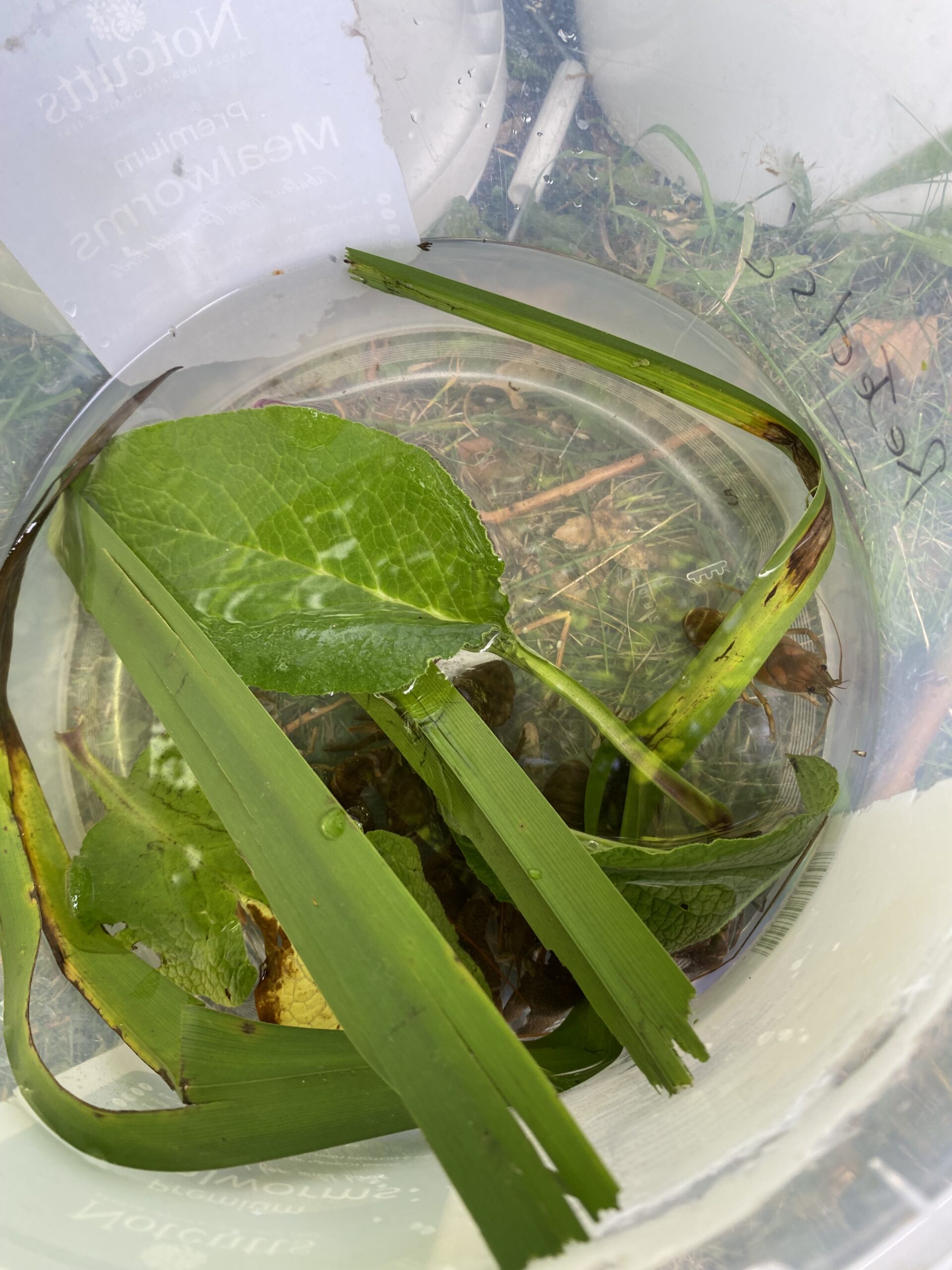
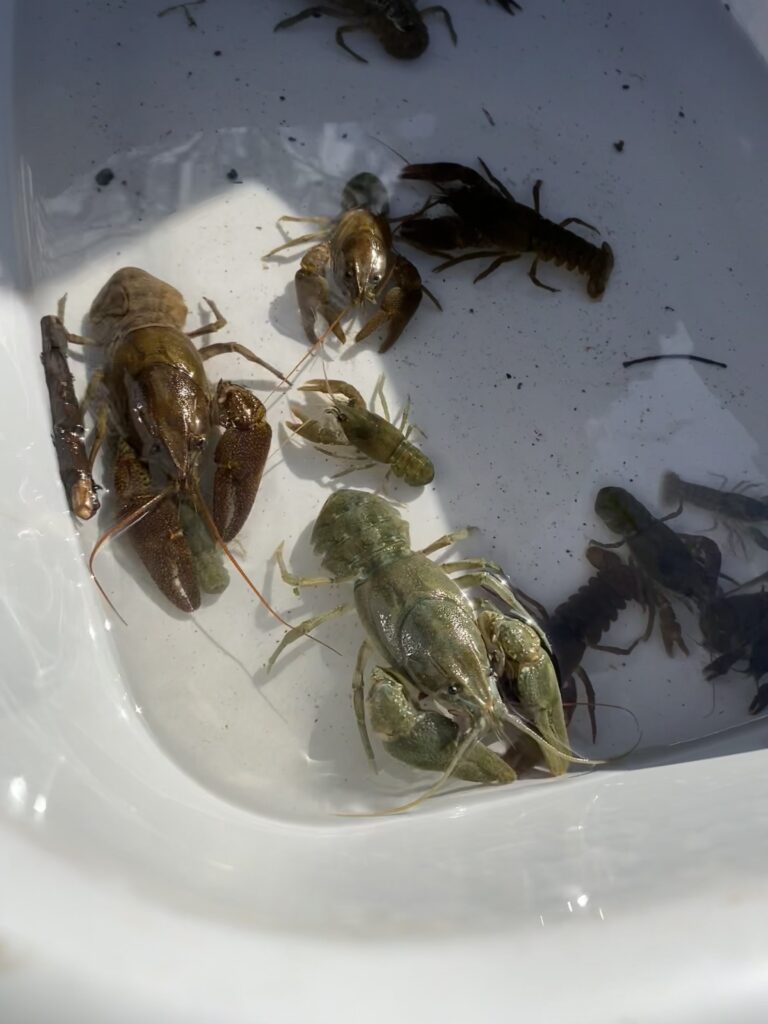
WCC waiting to be assessed, hiding under vegetation.
Biosecurity is essential in conservation, whether working with protected species, invasive non-native species or even performing routine habitat management; poor biosecurity is a key source of population decline amongst many species. Learn more about biosecurity here. All waders and trapping equipment were thoroughly sanitised with Virkon, a powerful disinfectant used by professionals who work with livestock and wildlife.
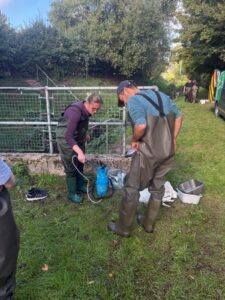
Sarah using Virkon to spray Chris’ waders, minimising the risk of accidentally spreading crayfish plague to a different site.
We used a variety of trapping methods including –
- Fladen traps: these are baited with halibut pellets or mackerel. Any wildlife (i.e. fish or crayfish) that enters cannot escape; these must legally be checked within 24 hours of being set for animal welfare purposes.
- Brash bundles: piles of sticks which are tied together, creating attractive refugia for smaller crayfish. Wildlife can come and go as they please.
- Perforated bricks: bricks with holes in them, which smaller crayfish may hide in.
- Artificial refuge traps (ARTs)/pan pipe traps: pipes with a backing. These can be left in-situ for longer periods of time as wildlife can come and go as they please. These catch a wider range of sizes.
- Netting & rock turning: actively catching crayfish by overturning rocks and using a net or hands to catch them, which can catch a range of sizes.
-
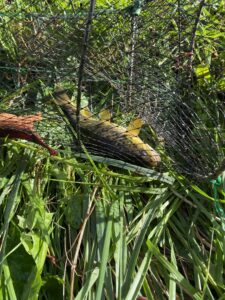
- A beautiful brown trout caught in a fladen trap – released without harm.
-
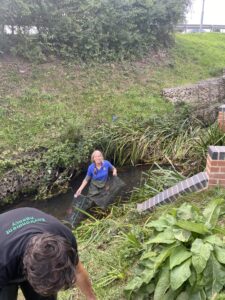
- Liz from BugLife resetting the fladen traps with a smile on her face!
-
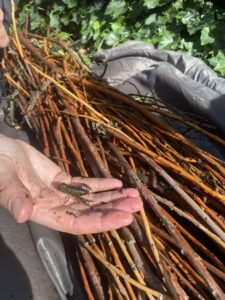
- Searching brash bundles for crayfish; bullheads also enjoy this refugia.
-
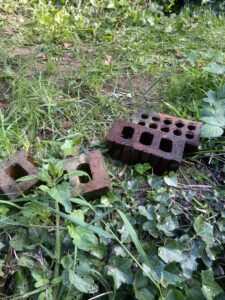
- These perforated bricks provide refugia for crayfish.
-
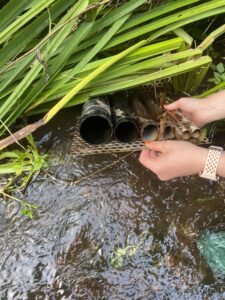
- Artificial refuge traps, or pan pipe traps, catch a wider range of sizes of crayfish.
-
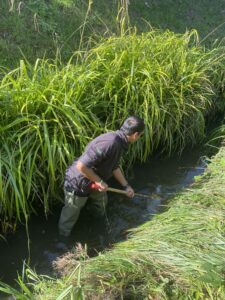
- Working hard netting for WCC in the stream.
-
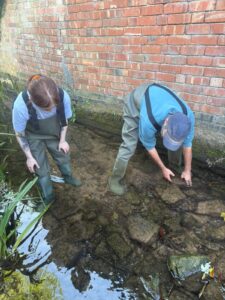
- Carefully turning rocks to find WCC beneath them.
-
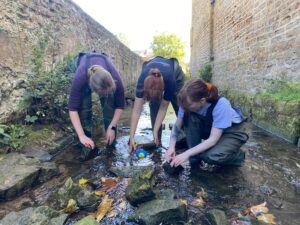
- Volunteers work together to catch an escapee!
Assessing condition
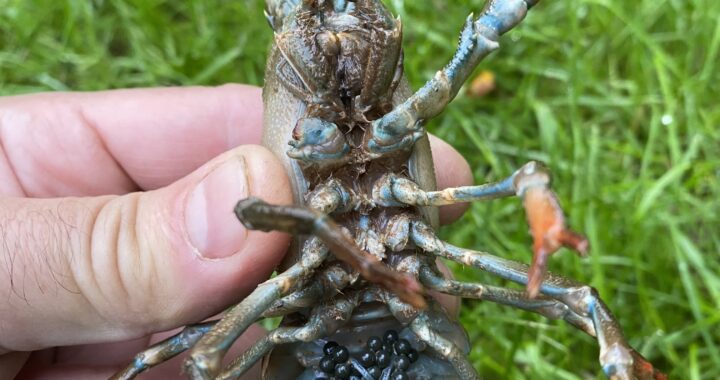
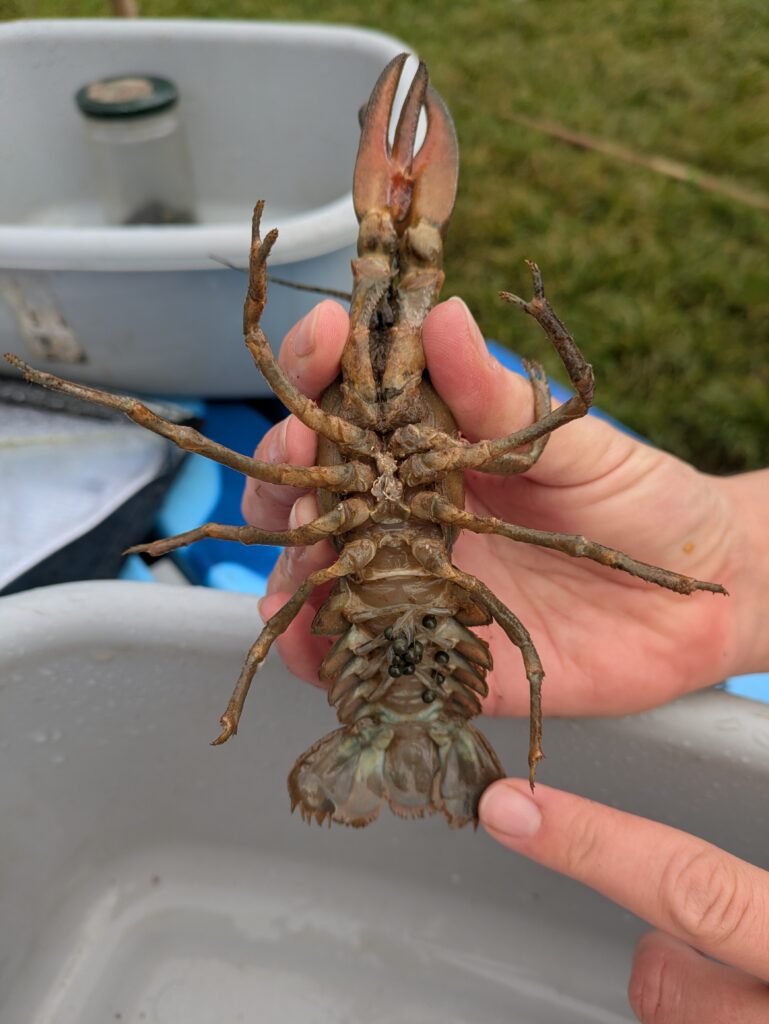
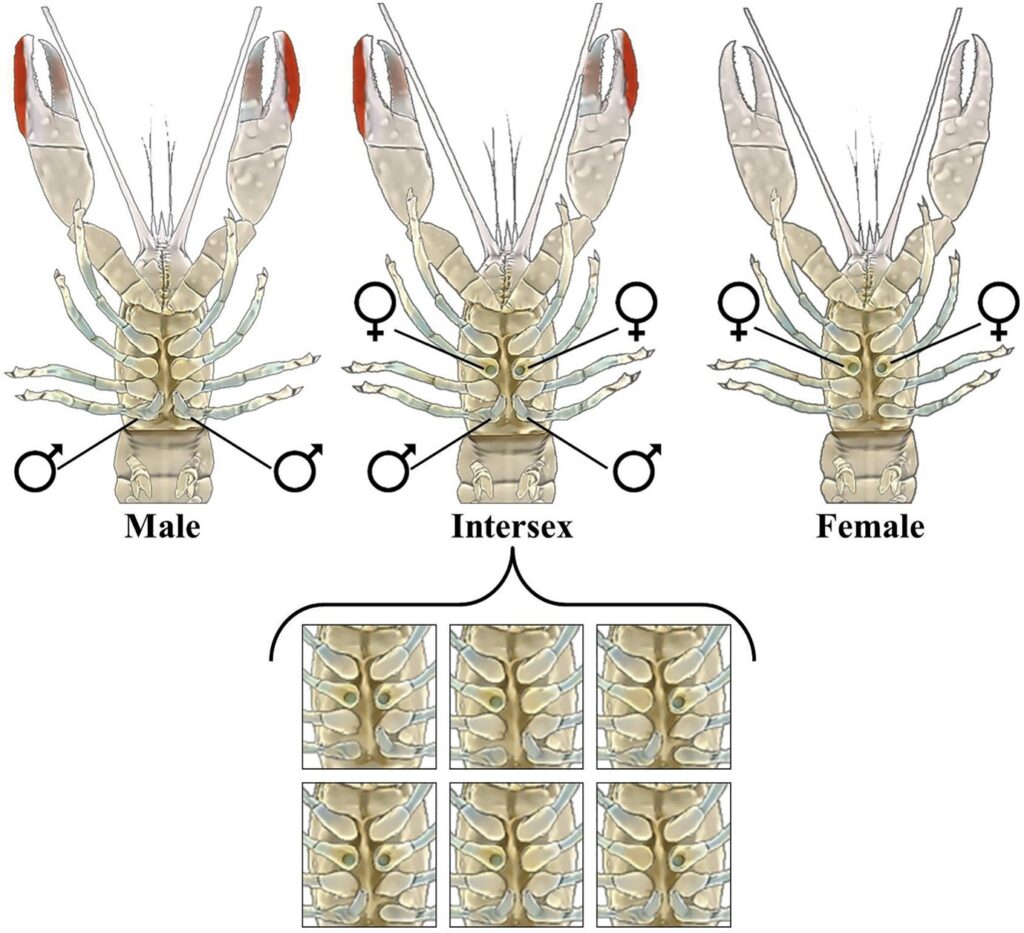
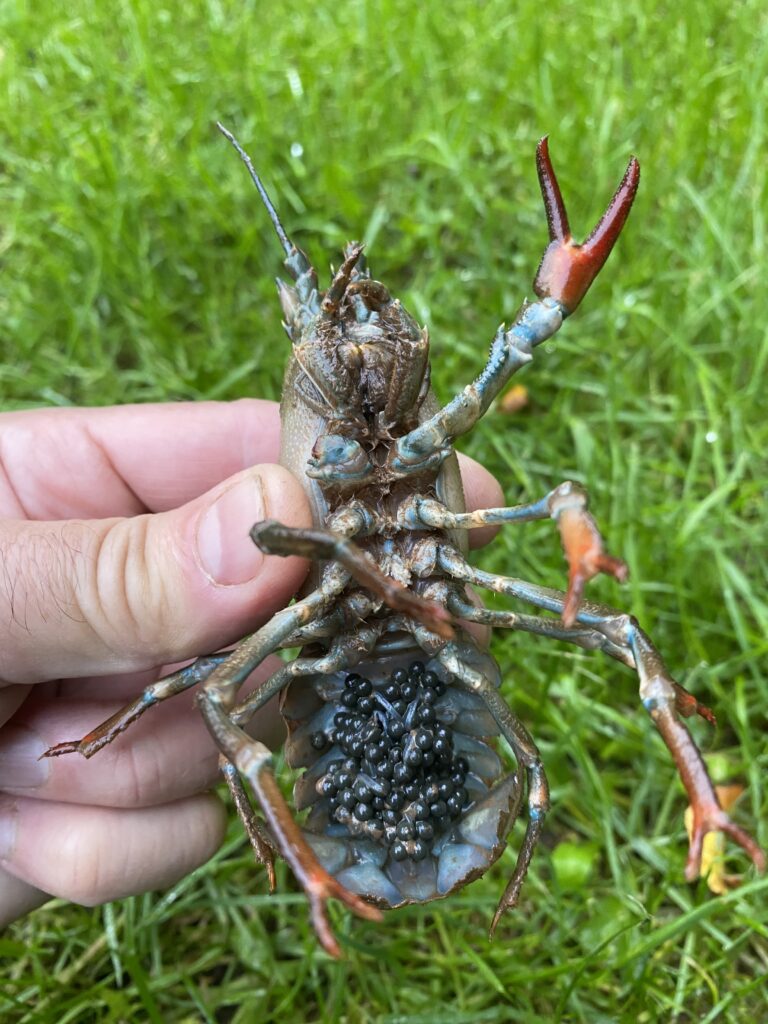
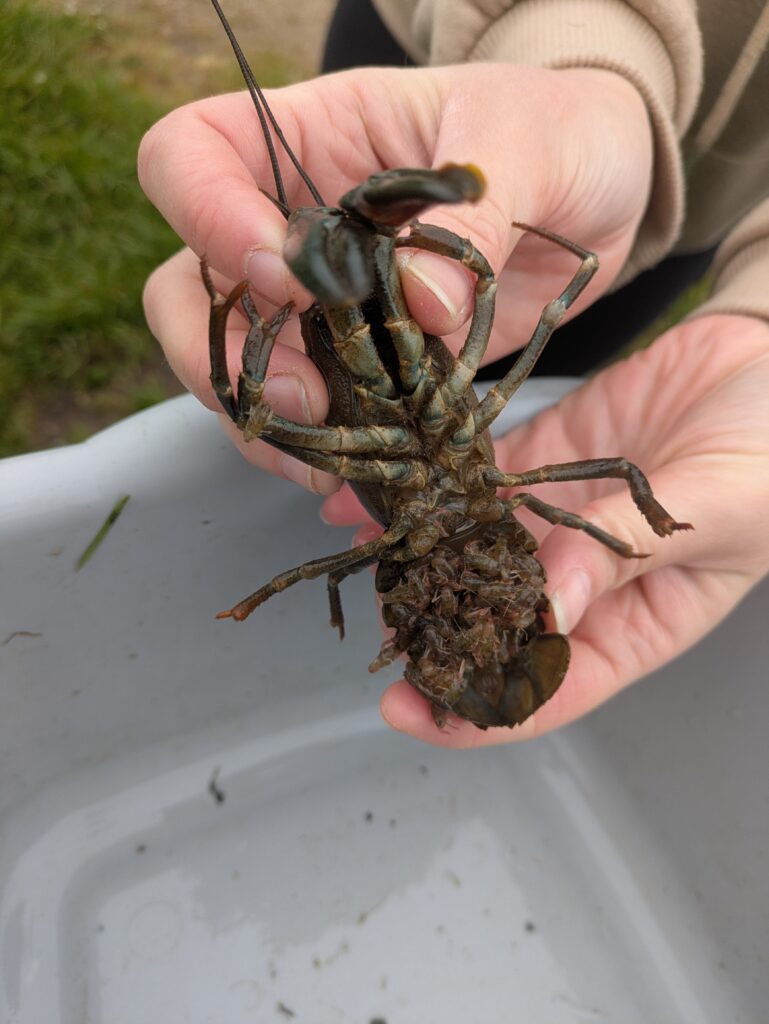
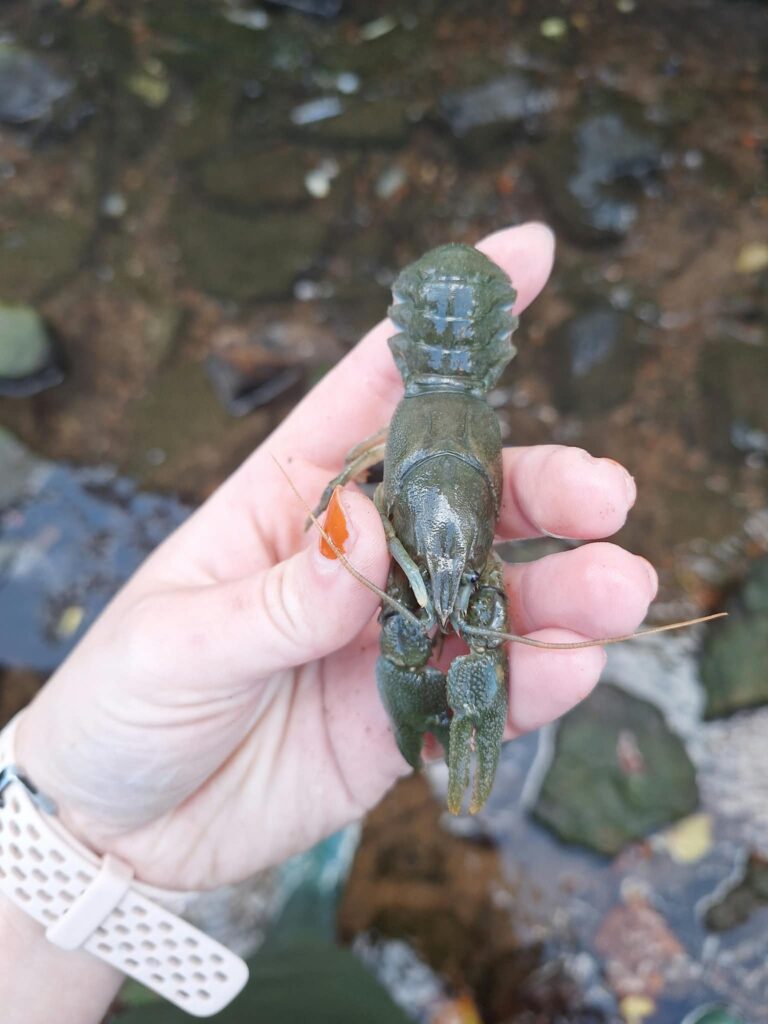
Every crayfish we caught was then measured and checked for disease, injury, moult and breeding condition. As per licensing conditions, diseased and injured crayfish were released back into the stream to ensure an optimally healthy breeding population. Additionally, crayfish below and above a certain size threshold were released back into the stream for biosecurity purposes. For example, juvenile Signal crayfish below a certain size could be easily misidentified as White-clawed crayfish.
-
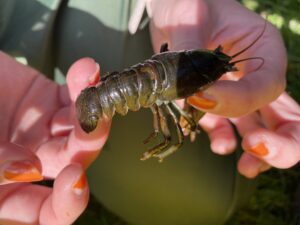
- An unhealthy WCC with burnspot disease.
-
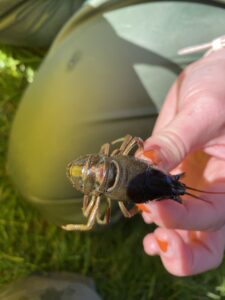
- Another angle.
-
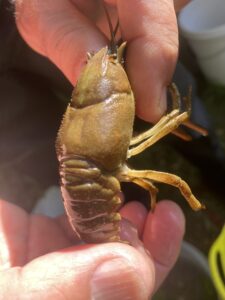
- Another unhealthy WCC with burnspot disease.
-
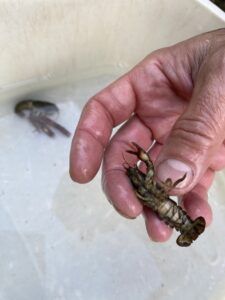
- WCC with advanced porcelain disease – see how opaque white spreads from the tail to the claw.
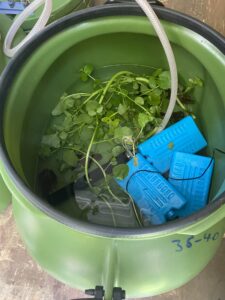
Healthy White-clawed crayfish were placed in water-filled buckets with vegetation for hiding, continuously oxygenated by a pump. They were then transported to a tank to be quarantined for 4 weeks. If they survive the quarantine process, they will then be relocated to a confidential ark site where their population can hopefully thrive, protected from crayfish plague.
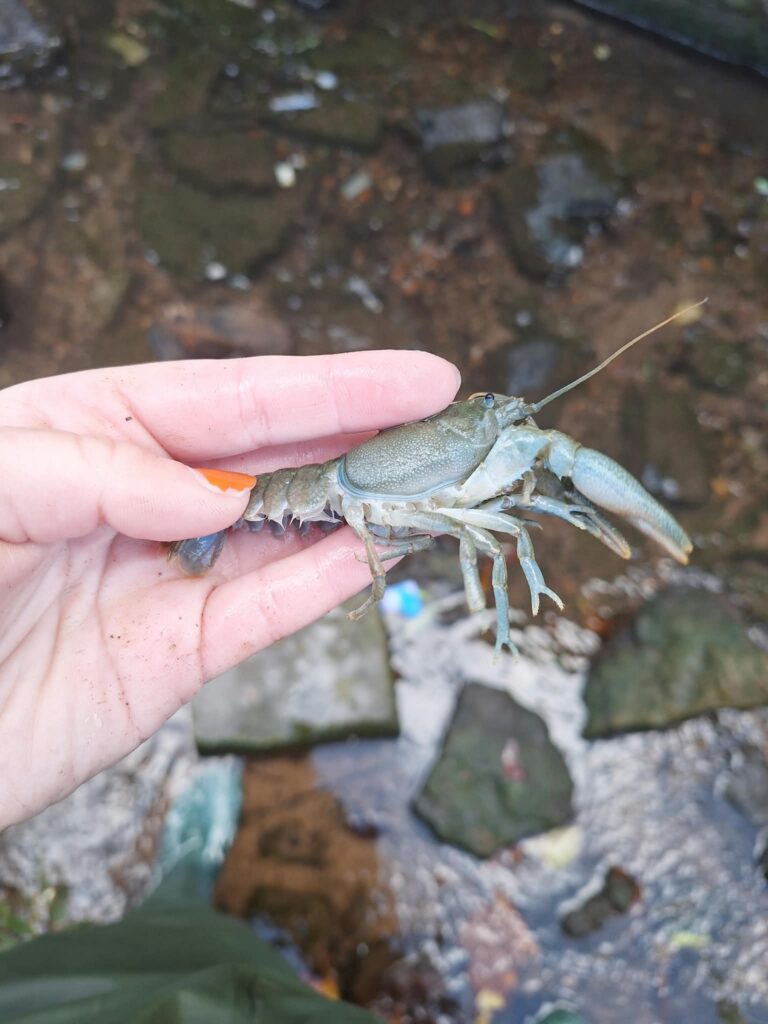
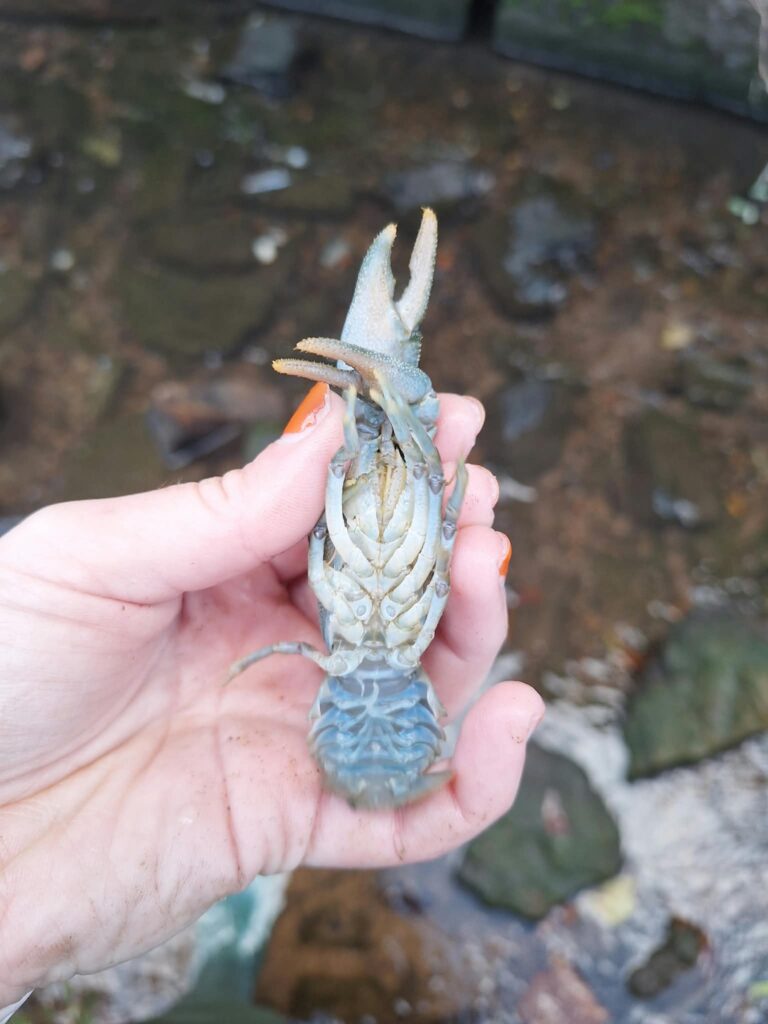
We also found a blue crayfish, which is a very rare colour variation. This would increase their risk of predation compared to a more inconspicuous brown crayfish, elucidating why the colour variation is so rare. Though probably unlucky for the crayfish, it definitely felt lucky to the team!
For more regular updates, you can join us on Instagram or Facebook.